Playbooks
Top-of-Funnel Marketing to Drive New Bookings
You currently already have a top-of-funnel plan: spending on ads, making sure you show up on Google, you may even have a sign outside your storefront. The channels are working, people are finding you. But what's next?
Alex Boyles
You currently already have a top-of-funnel plan: spending on ads, making sure you show up on Google, you may even have a sign outside your storefront. The channels are working, people are finding you. But what's next, and what can be done to level up your growth efforts?
Someone clicks your Meta ad and lands on a booking form, but they abandon on mobile.
Someone finds you on Google Maps and calls, gets no answer, and moves on.
Someone walks past your storefront, scans nothing, and keeps walking.
The interest was real, but the booking never happened, and it becomes a frustrating cycle.
Top-of-funnel isn't a traffic problem for most businesses; it’s often a handoff problem. And fixing that handoff (across the channels you already invest in) can be a real problem and is where the conversion opportunity sits.
Where this fits in the booking lifecycle
Most of the conversation around AI agents focuses on the middle and bottom of the funnel: booking flows, rebooking reminders, and cancellation saves. Those stages matter, but the lifecycle starts earlier.
Awareness → Interest → First Contact → Booked
The top-of-funnel is where a potential customer moves from awareness to first contact. It's the moment where a customer decides to make a booking, or they don’t. The channels below are where that decision happens, and in each one, there's a specific friction point that can mean a new customer booking or a missed opportunity.
The three first contact channels
Channel 1: Meta Ads
Meta is where a significant share of customer discovery happens, especially for salons, spas, family entertainment, and franchise locations. But the standard path from ad to booking is full of friction and customer drop-off.
The typical flow: customer sees an ad → clicks → lands on a website → finds a form or calendar integration → tries to navigate it on mobile → drops off.
The customer who clicked your ad already showed intent. There is a faster way to honor that intent than a form.
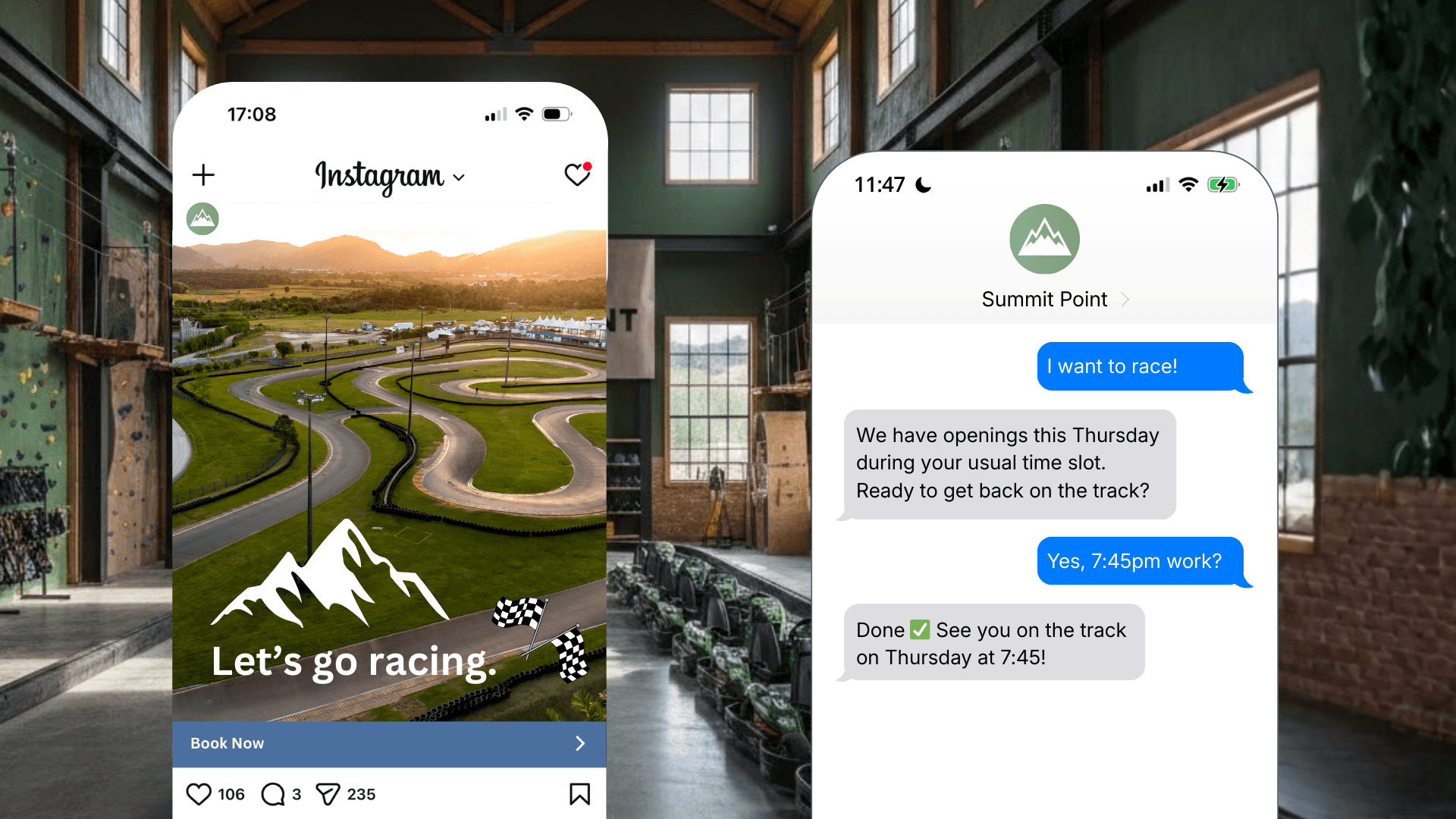
The better handoff: Click-to-message ads open a direct conversation instead of sending someone to a page. If that conversation is handled by an agent that can check your real availability, match a customer to the right service, and confirm the booking, the customer goes from interested to booked in the same session, on their phone, without ever touching a form.
The same logic applies to organic social: A post that prompts "DM us to book" or "Comment BOOK" isn't just an engagement play. If your agent handles those DMs, answering questions, checking availability, and confirming appointments, every piece of content you publish becomes a live booking channel. Paid and organic work exactly the same way, with no separate setup required.
Meta's own data reflects where consumer behavior is going: Click-to-message ad revenue in the US grew more than 50% year-over-year in Q4 2025. Businesses aren't running these ads to experiment; they're running them because they convert.
Channel 2: Google Business
When someone searches for your business on Google, they typically see two options: call or visit your website. Both are high-friction for someone who's ready to book.
The problem with calling: They reach voicemail, get put on hold, or call during a gap between the ad and your actual hours. The moment passes, and the customer moves on.
The problem with the website: Most websites are not optimized for mobile booking, and there are too many steps between "I want to book" and "I'm booked." or they incorporate long-winded forms with multiple steps.
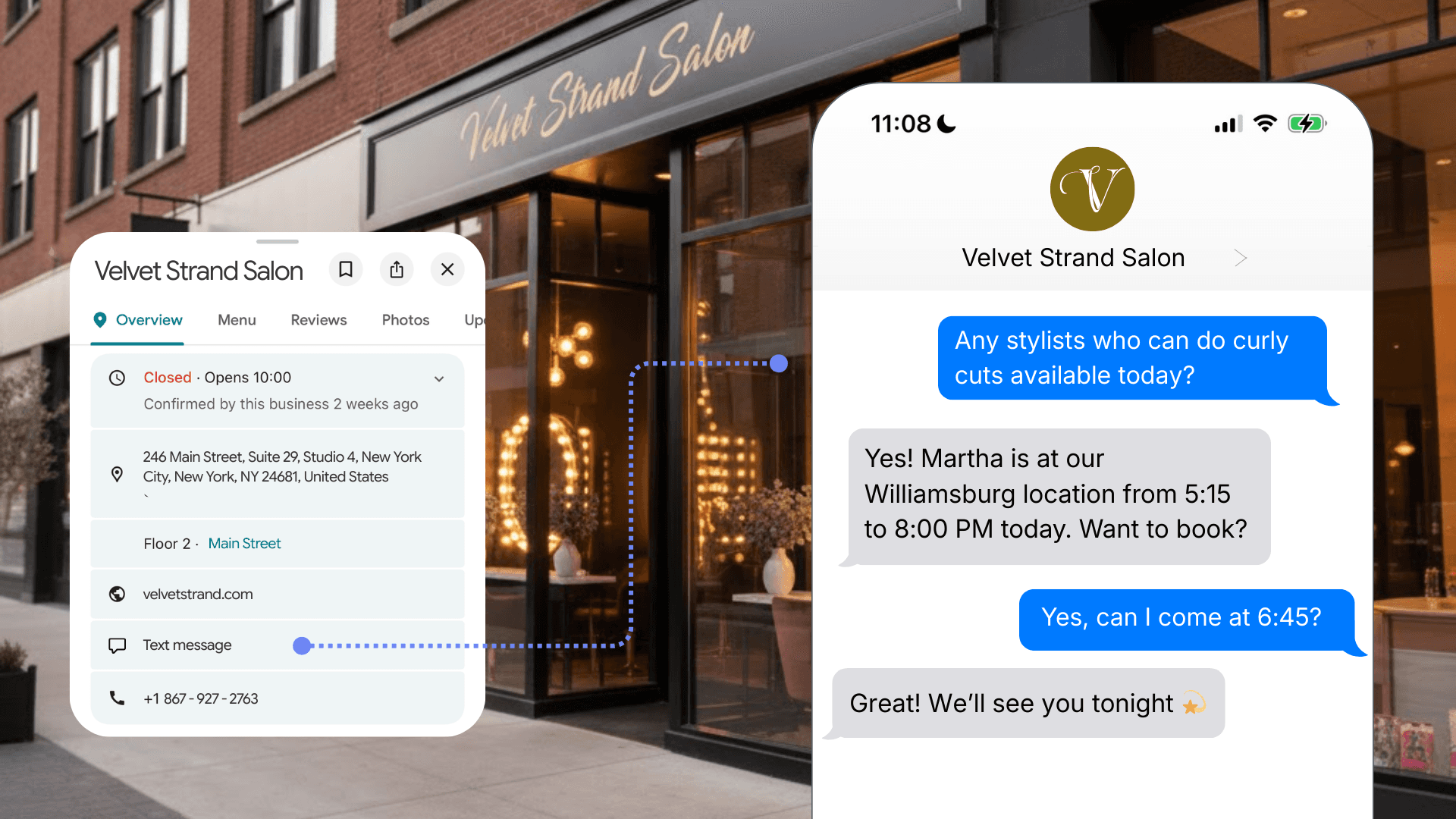
The better handoff: Google Business profiles can surface a text CTA, instead of "Call" the button says something like "Text us to book." The customer taps it, their messaging app opens, and they're immediately in a conversation with your booking agent. There is no hold music, no unnecessary website navigation, and no form on a 5-inch screen.
For businesses that rely heavily on Google Search and Maps for discovery, this is a meaningful conversion lever. The customer's intent is highest in the search moment, and the faster you move them from search to conversation and on to a confirmed appointment, the more of that intent you capture.
Channel 3: In-Store and In-Real-Life
Walk down any commercial street, and you'll see the same thing: QR codes everywhere, on window clings, A-frames, receipt footers, and fitting room mirrors. Some of them go nowhere useful.
The ones that work do something specific: they open a conversation at a high-intent moment.
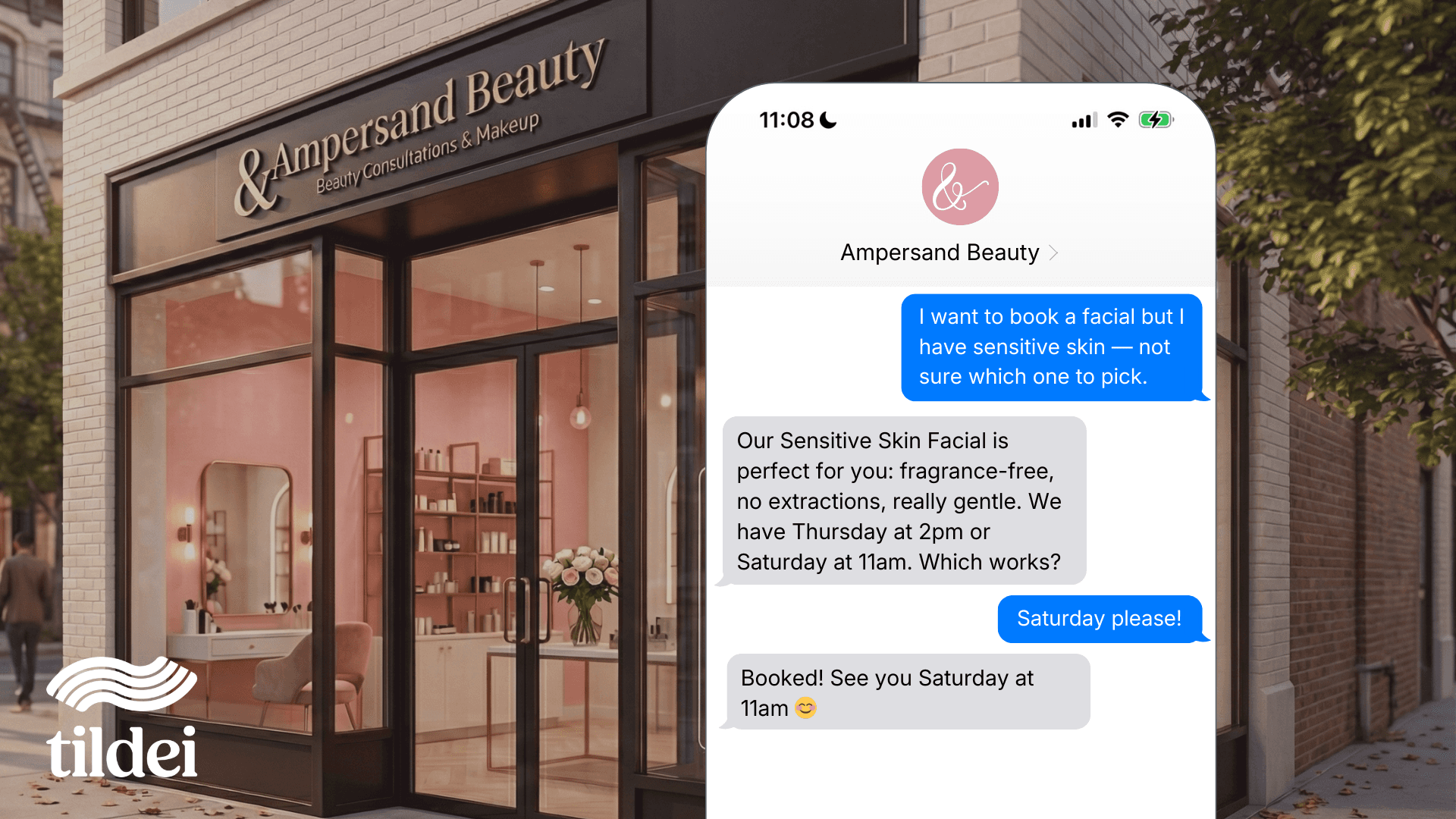
The opportunity: A customer who is already in your space, or walking past your door, is a high internet opportunity. They may have just had a great service and want to rebook, or they may be walking by and thinking, "I should really do that." A QR code that says "Scan and text to book your next appointment" gives them a frictionless way to act on that impulse right now, before they forget.
When that QR code opens an SMS conversation (or the app of their choice) with an agent that can actually make the booking while checking availability, confirming the service, and sending a confirmation, the lead that started at a sidewalk board turns into a confirmed appointment, often before the customer has left the block.
The in-store moment is one of the highest-intent touchpoints you have, but it often walks out the door.
Why do current tools fall short?
Each of these channels already gets traffic, but the reason they don't convert at the rate they should comes down to one thing: there is too much friction in the handoff, and the customer is asked to do too much work.
A form requires five fields and a separate login.
A calendar widget on mobile requires scrolling, tapping, and re-tapping.
A phone call requires timing, patience, and someone on the other end.
At every one of these steps, a percentage of customers who were ready to book decide not to.
Generic chatbots don't solve this. The moment someone wants to actually book, it's "let me connect you with our team" which is just another handoff, not a resolution.
What closes the gap is an agent that can handle the full conversation: answer the question, check real availability, confirm the service, and complete the booking, in the same channel where the customer already is.
No slow redirects.
No unnecessary forms.
No lengthy waiting.
What to measure?
Top-of-funnel success isn't just traffic. Once you've connected your booking agent to these channels, the metrics that matter are:
Click-to-conversation rate: What percentage of the people who click your ad or tap your Google CTA, start a conversation?
Conversation-to-booking rate: From the number of conversations that start, how many end in a confirmed appointment?
Time to confirm: How quickly does an interested customer become a booked one?
Channel source: Which touchpoint (Meta, Google, in-store) is driving the most confirmed bookings, not just the most clicks?
The shift worth making isn't spending more on any one channel. It's measuring whether the channels you already invest in are actually converting intent into bookings, and fixing the handoff for the ones that aren't.
Where to start?
You don't need to overhaul every channel at once. Pick the one where you're already generating the most interest and losing the most potential customers.
If Meta ads are a core part of your acquisition strategy, start there: Swap your landing page CTA for a click-to-message flow and let the agent handle the booking conversation end-to-end.
If Google Search and Maps drive significant discovery for your business: Check whether the text CTA is available in your Google Business profile and activate it. This is one of the lowest-lift changes with meaningful upside.
If you have physical locations with foot traffic: Put a QR code in the right place with the right prompt. "Text to book" on a window cling or receipt card is a simple test with a clear feedback loop.
Start with one, measure it, and then extend the same pattern to the next channel.
Tildei's agents work across Meta ads, social DMs, Google Business, SMS, and in-store QR flows to turn top-of-funnel interest into confirmed bookings, without adding headcount. Book a demo to see it in action.
Previous post: