3 Marketing Tactics Salons and Spas Should Steal From Retail Marketers

Retail brands have spent decades perfecting the art of converting browsers into buyers. They've mastered website popups, abandoned cart recovery, and post-purchase engagement. Meanwhile, the salon and spa industry has largely relied on traditional booking methods and basic appointment reminders.
But here's the thing: your salon guests behave exactly like retail shoppers. They browse your services, get distracted, abandon bookings halfway through, and need gentle nudges to return.
So why not borrow the conversion tactics that e-commerce brands use to drive millions in revenue?
Let's explore three powerful retail marketing techniques that salons can adapt to fill appointment books and increase rebooking rates.
1. Instant Booking Popup: Capture High-Intent Visitors
Visit almost any retail website and within seconds, a popup appears offering to collect your email or phone number in exchange for a discount code. It's simple, direct, and incredibly effective at capturing contact information while visitors are actively browsing.
Salons can use the same tactic, but instead of offering a coupon, offer something more valuable: an instant way to book an appointment.
Here's what it looks like: A visitor lands on your website, maybe they're browsing your services page or checking out your team of stylists. Within a few seconds, a clean, simple popup appears. They enter their number and immediately receive a text message:
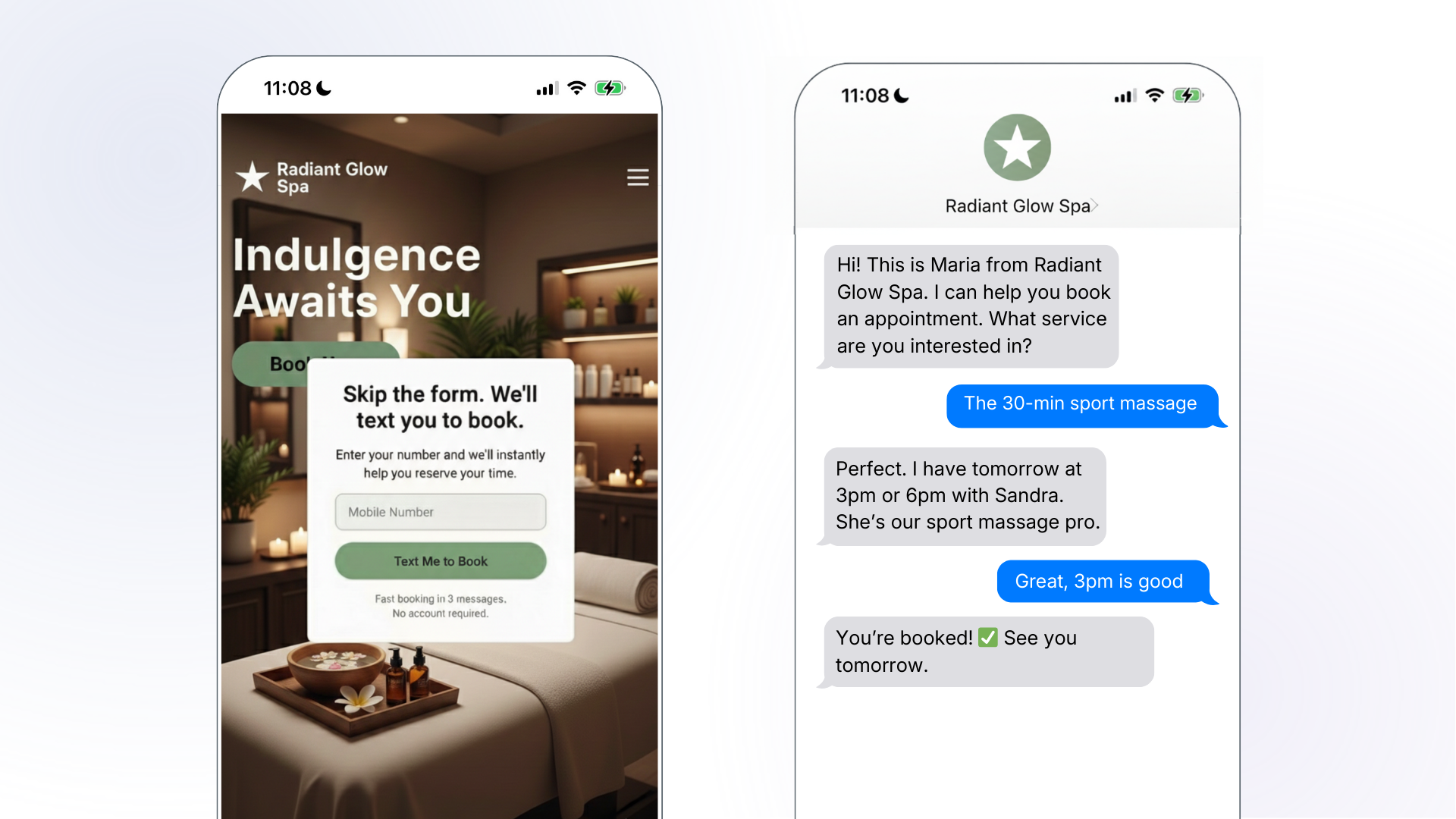
From there, a quick text conversation asks a few qualifying questions: what service, which stylist, preferred day and time. With these details confirmed, it books the appointment directly into your system. The entire process happens via text, which means they can respond immediately or come back to it later when they have their calendar handy.
Why this works:
The visitor came to your website with booking intent. They're already interested. But traditional booking forms require multiple steps, dropdown menus, calendar navigation, and full attention. Many visitors aren't ready to commit to that process right now - but they are willing to share their phone number for a simpler option.
By offering to complete the booking via text, you're meeting them where they are: on their phone, multitasking, possibly browsing during a work break or while watching TV. Text conversations can happen over minutes or hours, fitting into their schedule instead of demanding immediate completion.
The key insight:
Retail popups work because they reduce friction while intent is high. For salons, the biggest friction isn't price - it's the complexity of the booking process itself. A simple popup that offers to handle booking via text removes that friction entirely.
2. Abandoned Booking Recovery: Rescue Half-Completed Appointments
E-commerce brands know that nearly 70% of online shopping carts get abandoned. Their solution? Automated recovery messages that bring shoppers back to complete their purchase.
Salons face the exact same challenge. A potential guest starts filling out your online booking form, selects their service, maybe even chooses a time slot, and then disappears. A phone call interrupts them. They realize they need to check their calendar. They get confused about which service they actually need.
That potential appointment just vanished.
The retail-inspired solution: When someone abandons a booking mid-process, automatically reach out via text with a helpful message like:
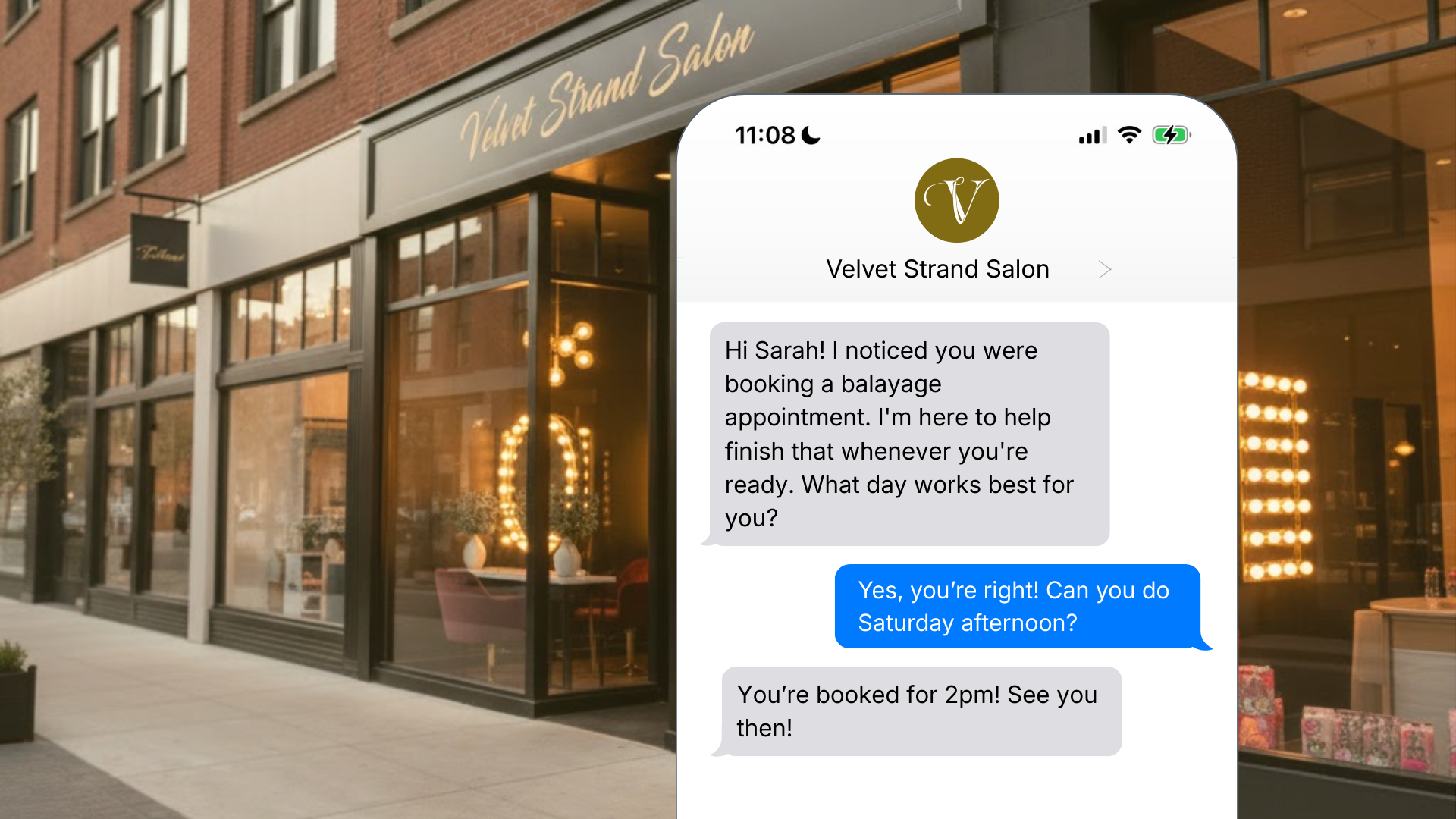
Notice the difference from a simple reminder: you're not just saying "you didn't finish booking." You're offering to complete the booking together via conversation, removing whatever friction stopped them the first time.
Why SMS outperforms email here:
Text messages have a 98% open rate compared to email's 20%, and people respond to texts within minutes rather than hours or days. More importantly, unlike abandoned cart emails that just link back to the same form they already left, a text conversation can adapt. If their preferred time isn't available, the agent can suggest alternatives. If they're unsure which service they need, they can ask qualifying questions. The conversation removes the friction that caused abandonment in the first place.
Exit-intent technology: The most sophisticated version detects when someone is about to leave your booking page entirely. The moment their cursor moves toward the close button, a message appears:
"Wait! Having trouble booking? Enter your number and we'll text you to finish scheduling."
This transforms abandonment from a lost opportunity into a new conversation channel. The guest who was about to leave your website is now in an SMS thread where booking can happen on their timeline.
3. Post-Appointment Engagement: Turn One-Time Guests into Regulars
Retailers have mastered the post-purchase experience. Buy a pair of running shoes, and you'll receive care instructions, styling suggestions, and recommendations for complementary products. They know the moment right after purchase is when customers are most engaged with your brand.
Salons have an even better opportunity here - but most completely miss it.
What most salons do: Have the front desk ask the guest to rebook during checkout. Put the burden on the stylist or service provider. Hope the guest remembers to rebook in 6-8 weeks.
The retail-inspired solution: Create a multi-touch post-appointment journey that keeps guests engaged and makes rebooking effortless.
Immediately after the appointment:

This flips the traditional retail sales model on its head. Instead of pushing products during the appointment (when everyone feels pressured), you're providing genuine value when the guest is home, trying to style their hair, and realizing they need help. You've transformed your stylist from salesperson to trusted advisor.
3-4 weeks later, based on their specific service:
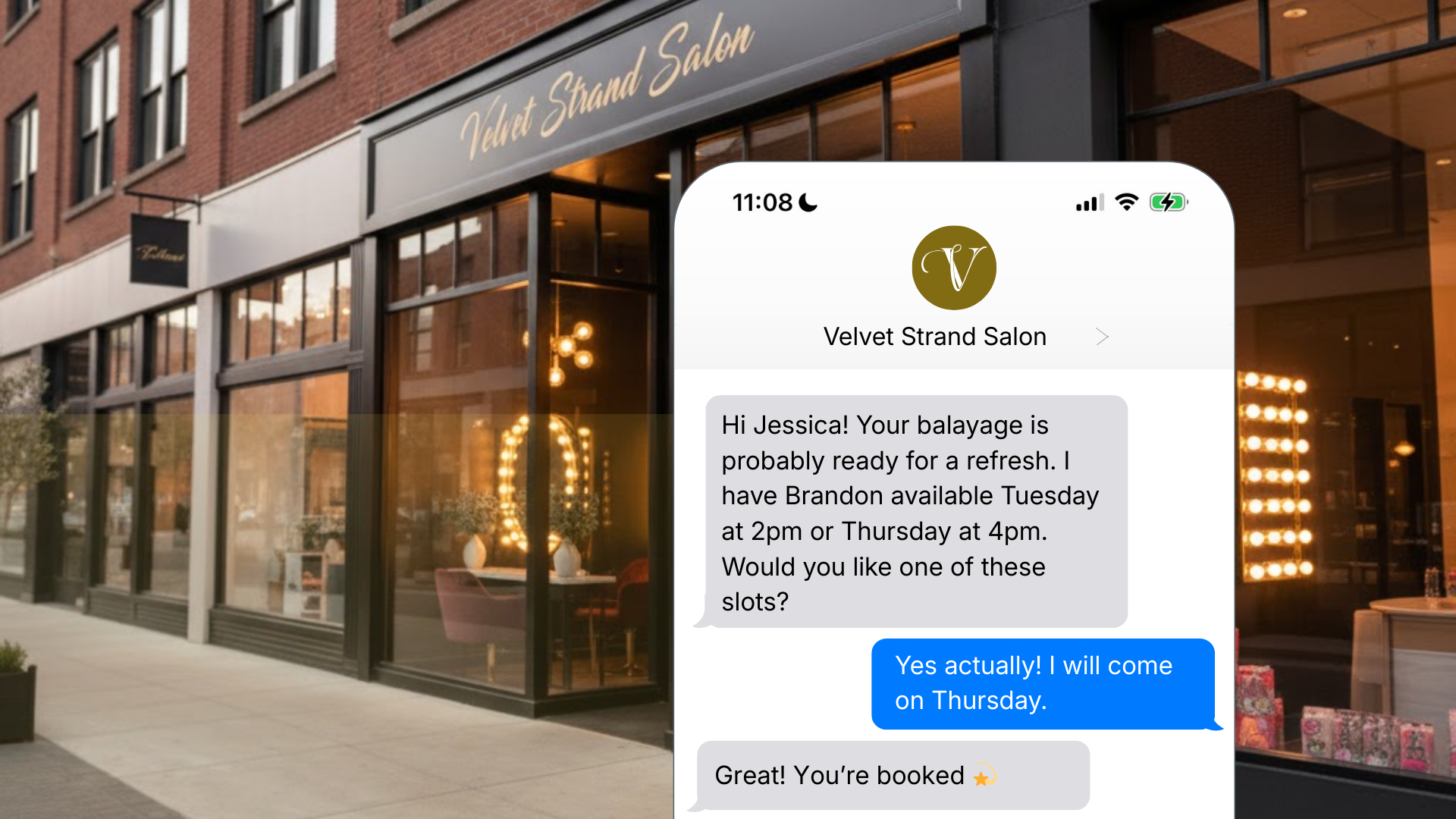
Notice what's different from a typical rebooking reminder: you're not saying "it's been 90 days, time to book." You're reaching out at the optimal moment based on the actual service they received. And instead of making them research availability, you're offering pre-selected times with their preferred stylist.
Rebooking becomes a one-text decision: "Yes, Tuesday at 2pm works" instead of a multi-step research project.
Why personalized product recommendations work:
Retail brands don't blast random product emails - they recommend items based on your purchase history and browsing behavior. Apply the same logic to salon retail: when you text guests the specific products their stylist used, you're not selling, you're helping them maintain the investment they just made in their appearance.
Why This Matters Now
These retail marketing techniques work because they acknowledge a fundamental truth: people are busy, distracted, and overwhelmed with choices. The businesses that win are those that reduce friction and make the next step obvious and easy.
Traditional salon marketing treats booking like a transaction: call us, fill out our form, show up on time.
Retail-inspired marketing treats booking like a conversation: let us help you find the right service, book at your convenience, and make it easy to come back.
The technology to do this finally exists. AI-powered agents can handle these text conversations at scale, understand intent, ask qualifying questions, and complete bookings without requiring your staff to manually respond to every message.
The question isn't whether these techniques work: retailers have proven they do, to the tune of billions in recovered revenue. The question is: which salons will adapt them first?
Want to see how these techniques could work for your salon? Book a demo!
.jpg)