Text-to-Book: How Marketers Can Turn Conversations Into Confirmed Bookings
.jpg)
Customers don't want to "fill a form": they want an answer and a slot. Here's how to design messaging flows that finish the booking.
The booking moment where everything falls apart
A customer is ready to book, but they have one question. "Can I bring my 8-year-old?" "Which service is right for my skin type?" "What's included in this package?"
Forms work fine when customers have no questions and are ready to commit immediately, but booking decisions aren't like buying a t-shirt. Customers arrive with constraints, such as date, time, group size, and uncertainty: which service is right? What are the policies? Is this suitable for my situation?
The moment that uncertainty hits, you're at risk of losing them. They either abandon, submit something incomplete that requires follow-up, or fire off a separate email that kicks off days of back-and-forth. A design services company takes 48-72 hours to respond because submissions need clarification. A salon chain sees a significant drop-off at the service selection stage. A furniture design company where the booking process is "a pain."
Time to confirm: Hours to days | Drop-off risk: HIGH | Team effort: High
Why this matters more than ever
Your customer doesn’t need a better form, they need (and expect!) instant resolution: the ability to ask questions and get answers without breaking the booking flow. Meta reports over 600 million daily conversations between people and businesses across its platforms. Meta's click-to-message ads revenue in the US grew more than 50% year-over-year in Q4 2025, with WhatsApp paid messaging crossing a $2B annual run rate globally.
So why are we still forcing booking conversations into forms when customers prefer to message?
What Text-to-Book actually means
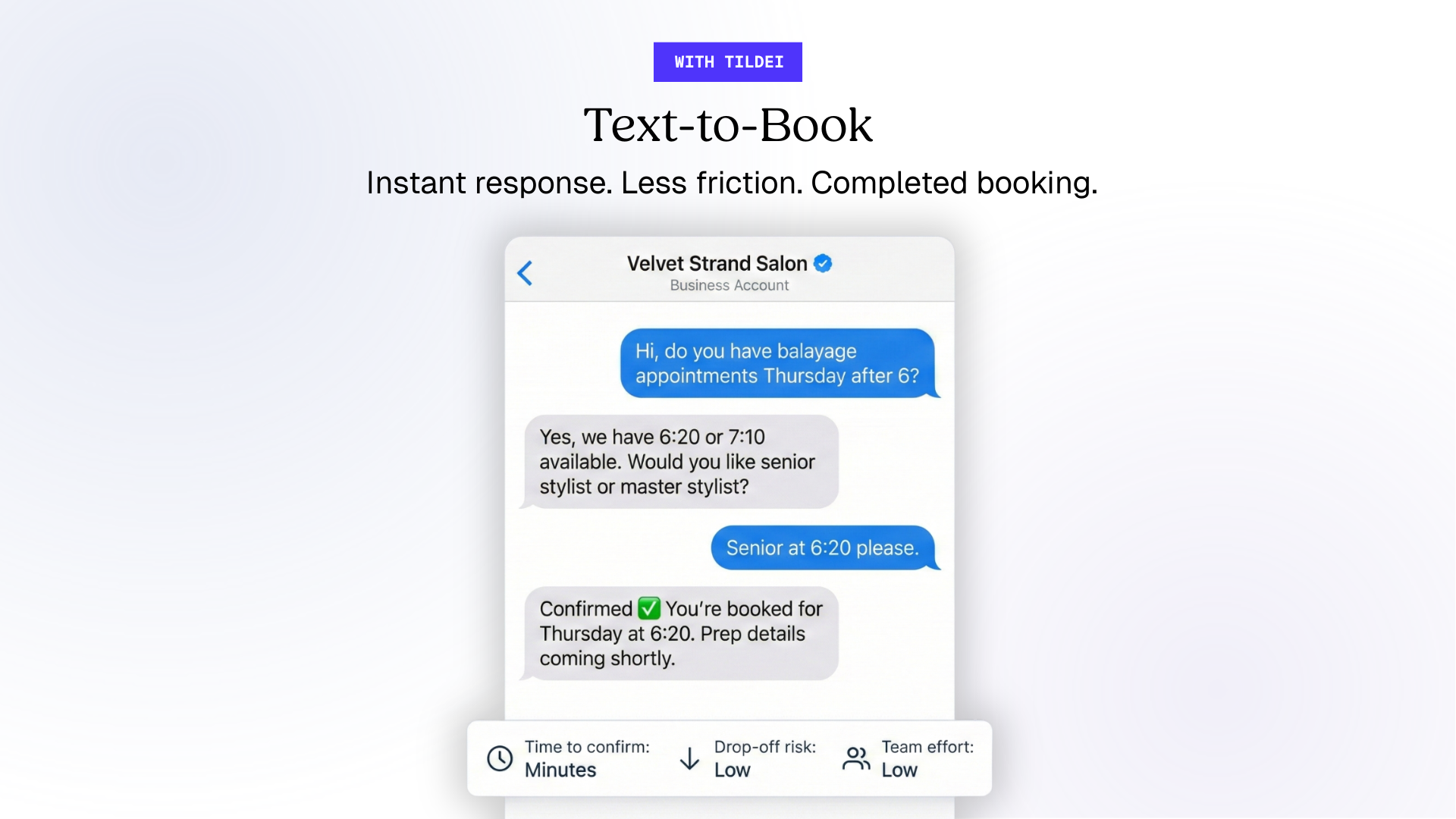
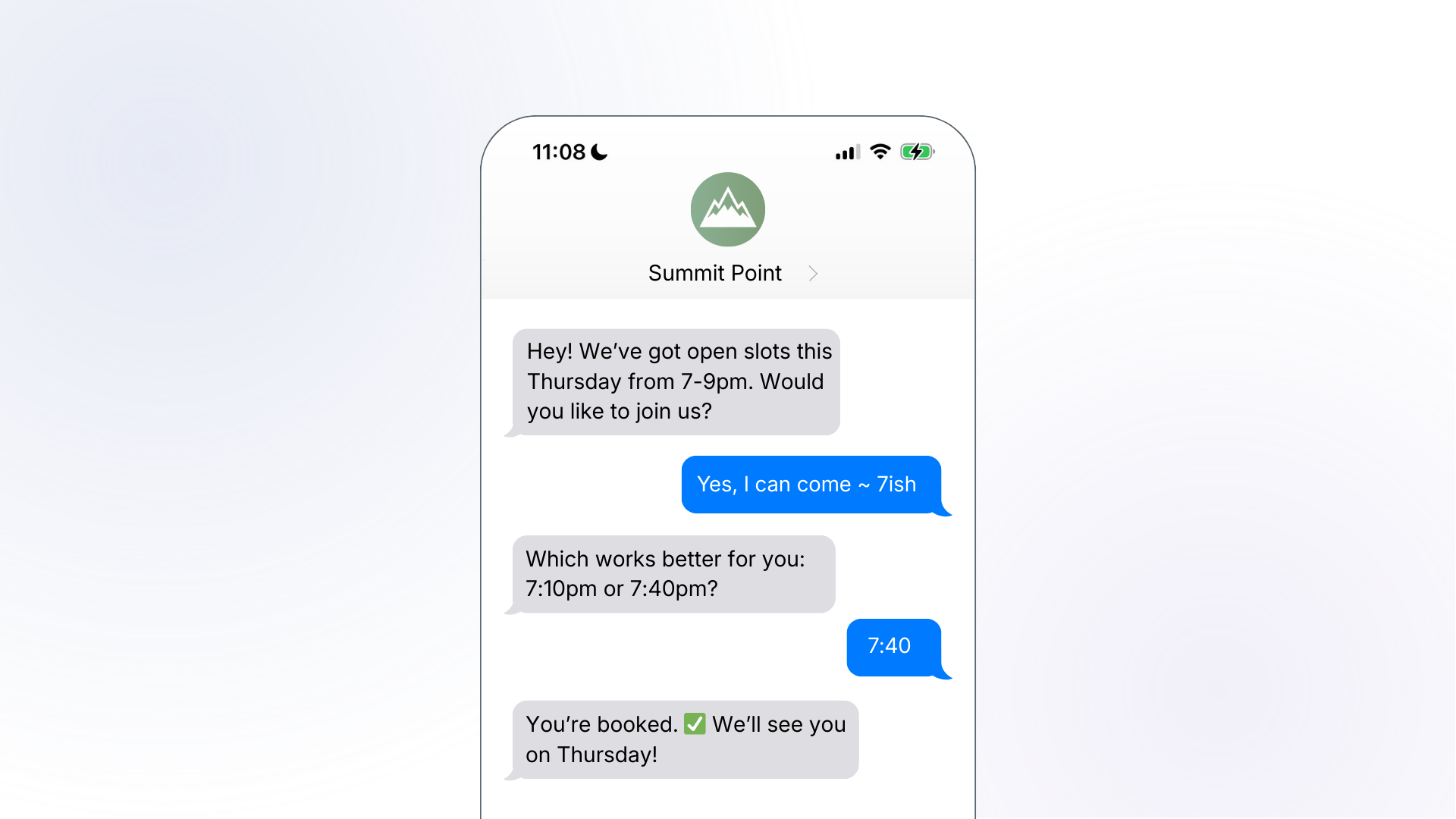
You need an intelligent business partner that handles complete booking workflows autonomously: one that knows your services, availability, and policies, and can have the full conversation from "Do you have slots Thursday?" to "Booked ✅" without a human typing every response. Instead, your team will finally have the time to focus on complex inquiries and high-value tasks.
That's Text-to-Book. It's not "collect a phone number for later", it's finishing the booking in the conversation.
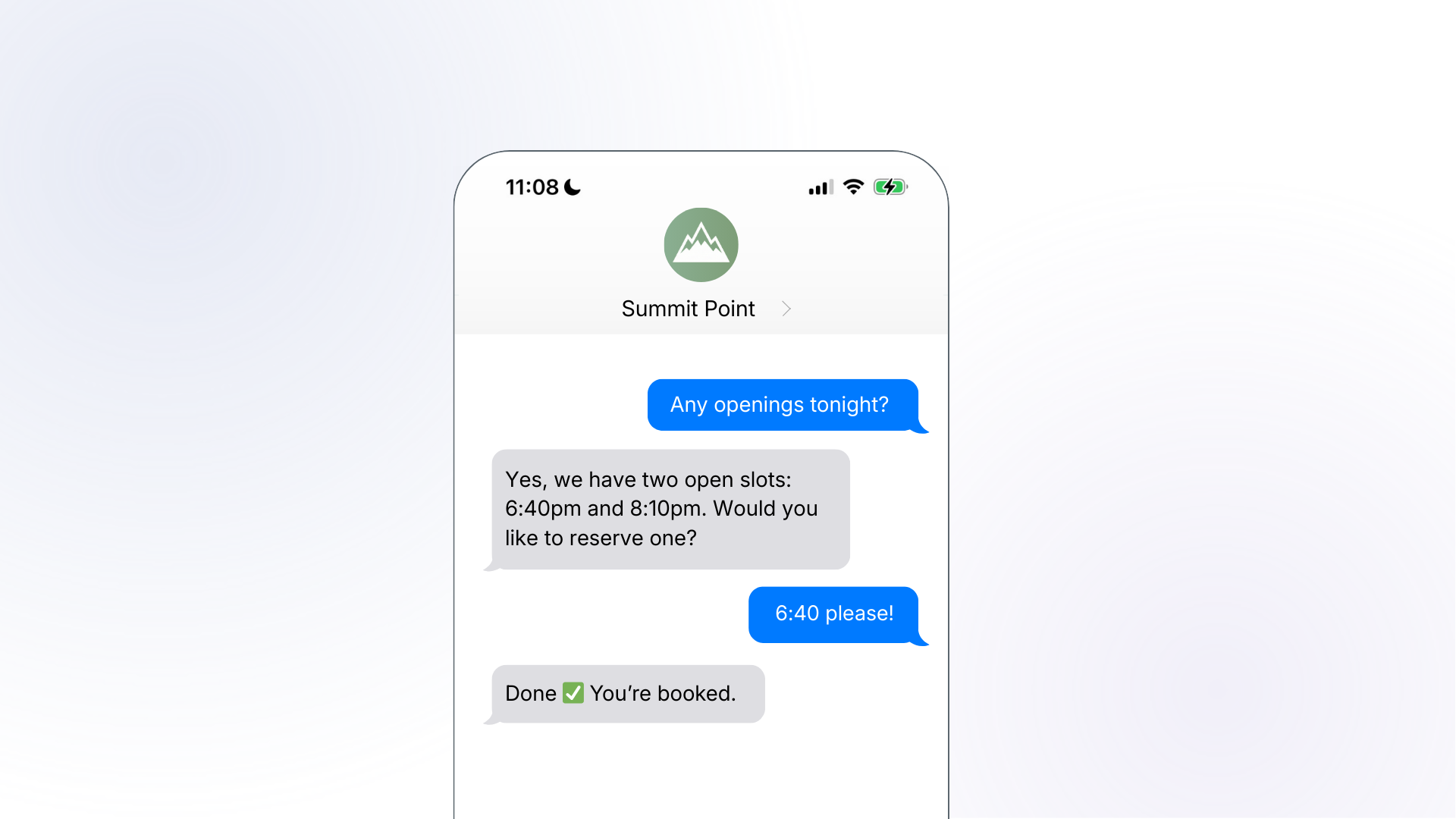
Four messages. Confirmed booking. Notice the time: 11:47 PM. Your team isn't working. But the booking happened because the AI understands your availability engine, capacity, and booking policies.
Time to confirm: Seconds to minutes | Drop-off risk: LOW | Team effort: Zero
Four entry points you can deploy this month
Entry Point #1: Skip the Form, We'll Text You to Book
This is the game-changer, especially on mobile. Give customers a choice: "Skip the form, we'll text you to book."
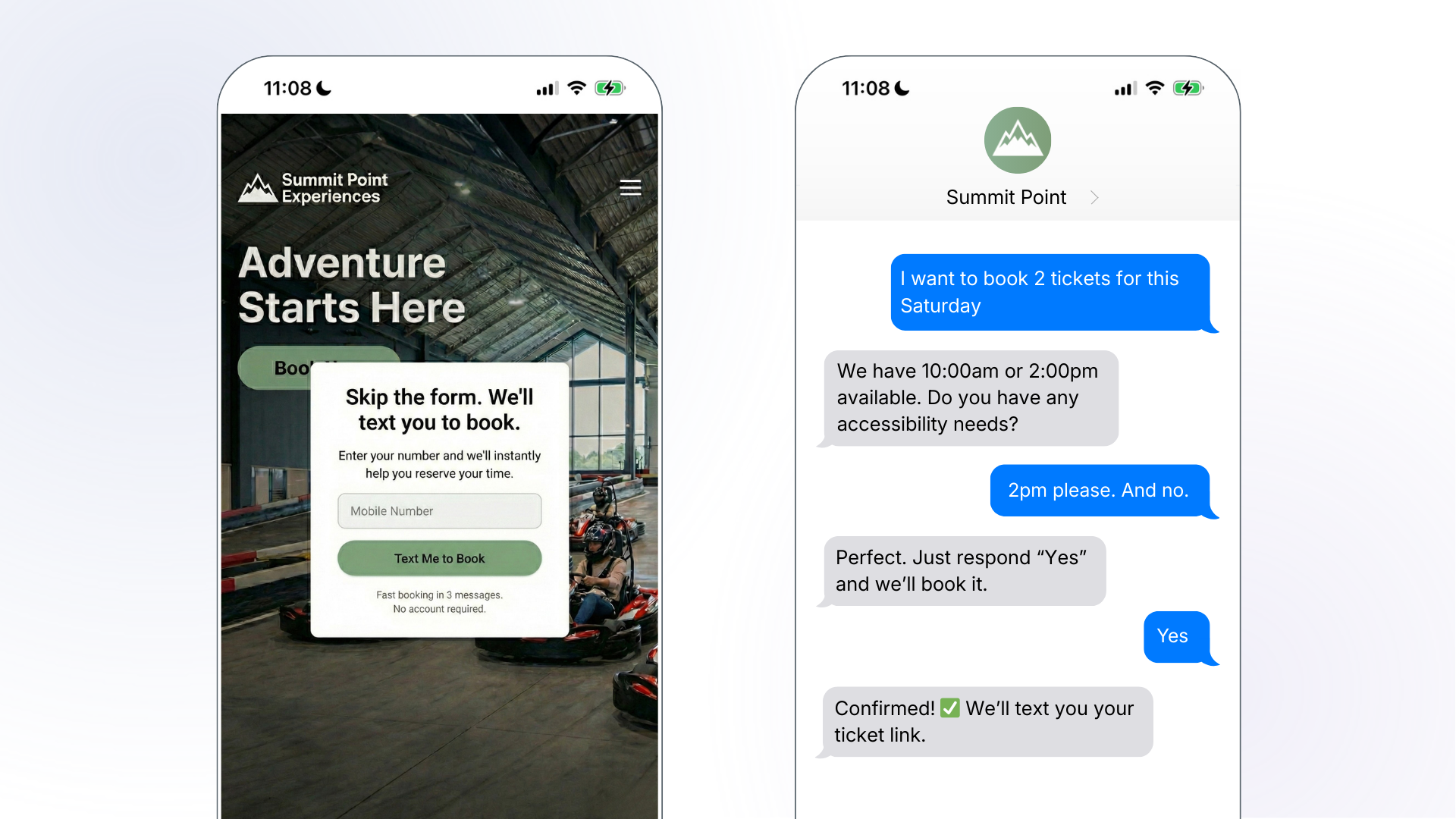
When someone lands on your service page with a question: "What's the difference between these packages?" or "Can I bring my kids?", a form can't help them. With Text-to-Book, the conversation starts the moment they enter their number.
Entry Point #2: Exit-Intent Save
Exit-intent Text-to-Book catches abandoning customers: "Want us to text you available times?" Research shows 65% of digital users find app downloads frustrating, and 40% abandon purchases when pushed to install apps. Every handoff is an exit ramp.
Entry Point #3: Social DMs, Where Intent Already Lives
Run click-to-message ads or "DM 'BOOK'" prompts where the DM flow confirms the booking end-to-end. Meta's Q4 2025 earnings showed click-to-message ads revenue growth accelerated, with the US up more than 50% year-over-year.
Entry Point #4: Proactive Rebooking
A salon owner told us, "Our customers need touch-ups in 4-6 weeks, but rebooking is always a struggle." Automated Text-to-Book outreach fills off-peak inventory with customers who already trust you.
Why most "Conversational AI" can't do this
The AI isn't just responding to questions, it’s also checking availability, understanding service differences, booking appointments, updating calendars, and sending confirmations.
Most chatbots can't do this. The moment someone wants to book, it's "let me connect you with our team." That's not automation, that's another handoff.
The Booking-First Foundation
Text-to-Book works because the AI knows:
- Experiences: What you offer, duration, rules, which services work for which situations
- Schedules: Real-time availability across locations and staff
- Employees/Capacity: Who can deliver what, when they're working
- Guests: Preferences and visit history
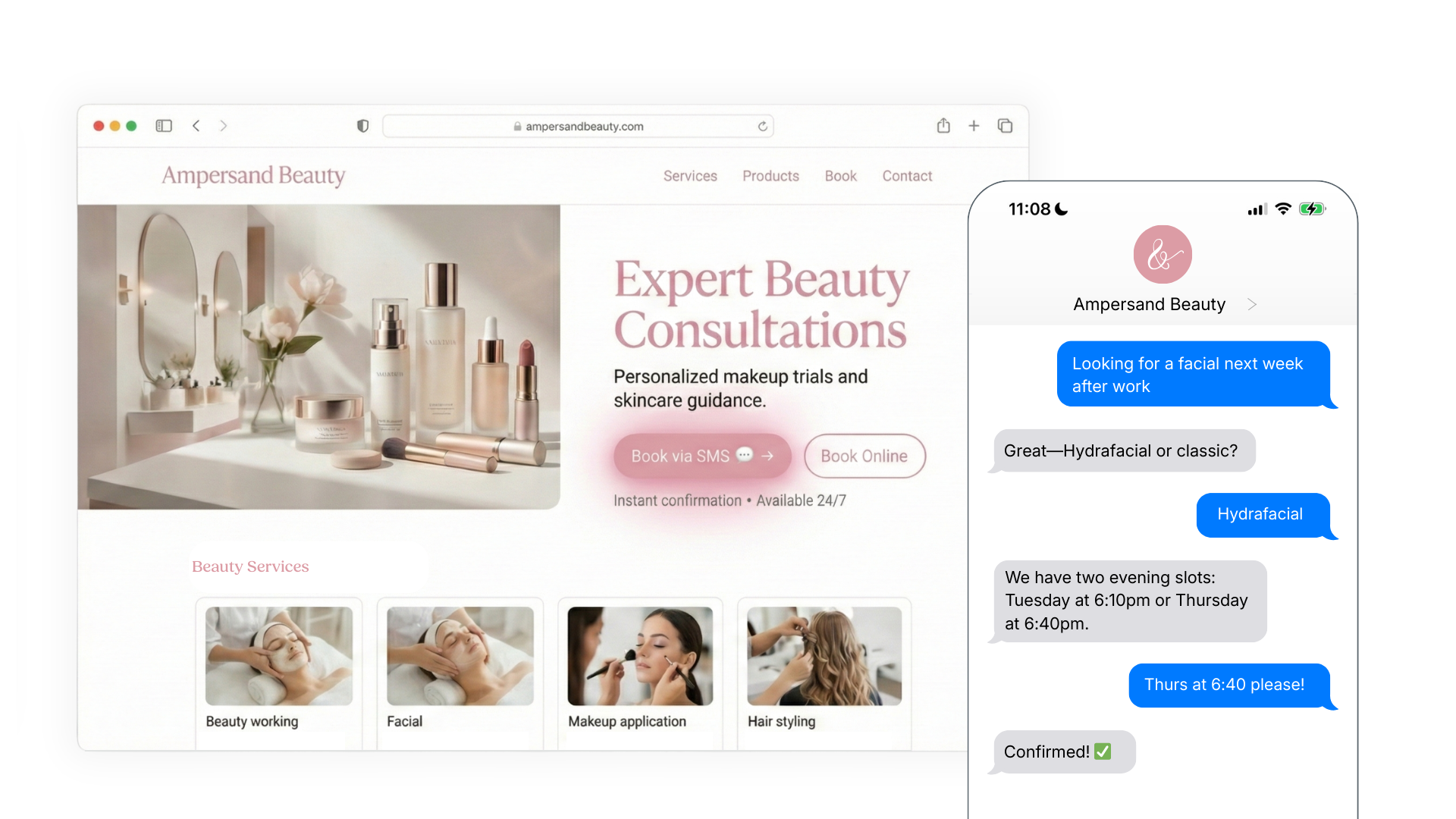
This is why it can handle situations like this one:
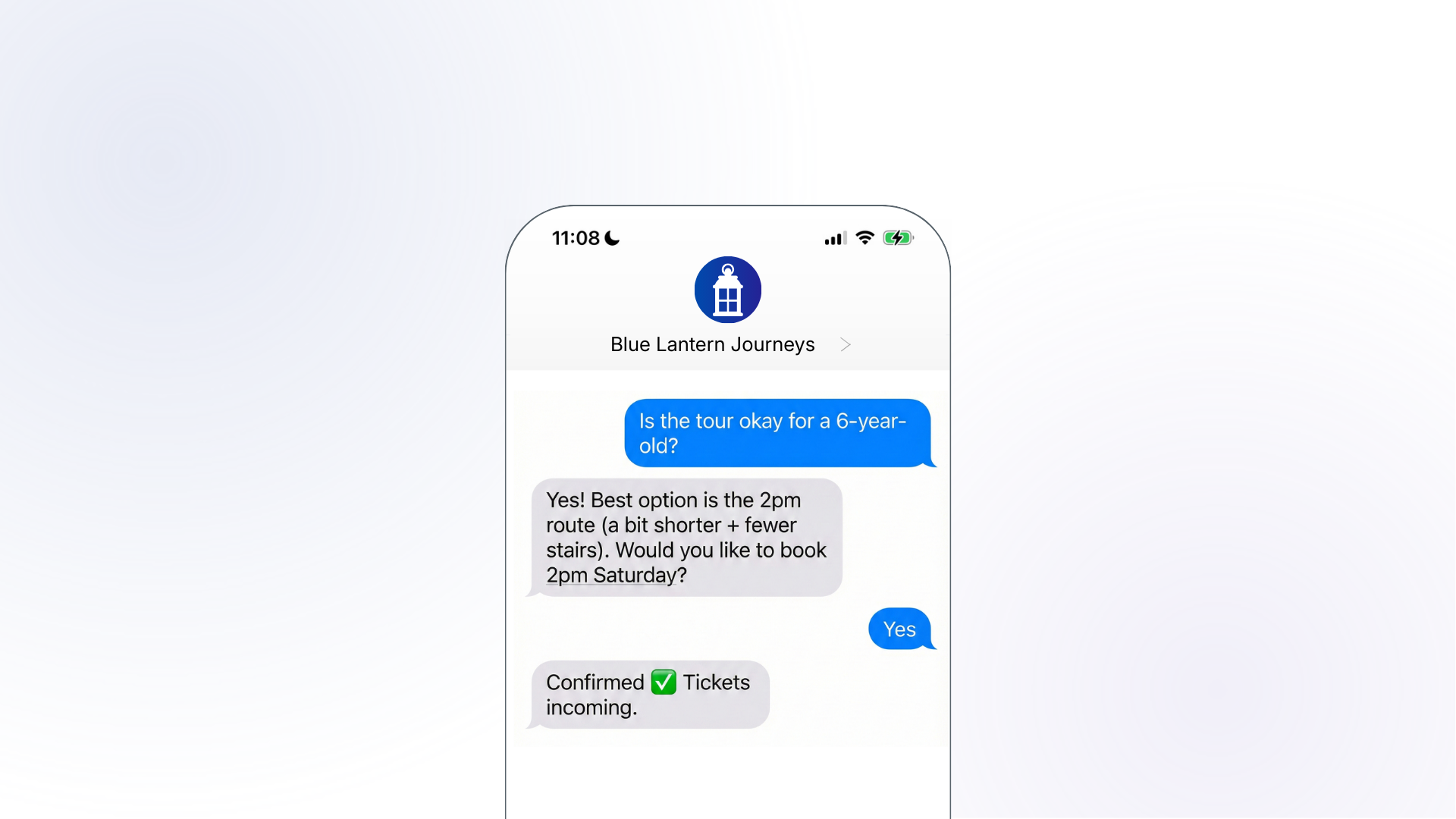
One med spa described their industry as "intricate: a lot of treatment options, products. People have tons of questions." Generic chatbots crumble under that complexity, but purpose-built booking AI like Tildei thrives in it.
Beyond booking: the complete lifecycle
Every interaction is an opportunity to protect or grow revenue. Text-to-Book autonomously handles:
Rescheduling (60 seconds vs. 15 minutes of back-and-forth)
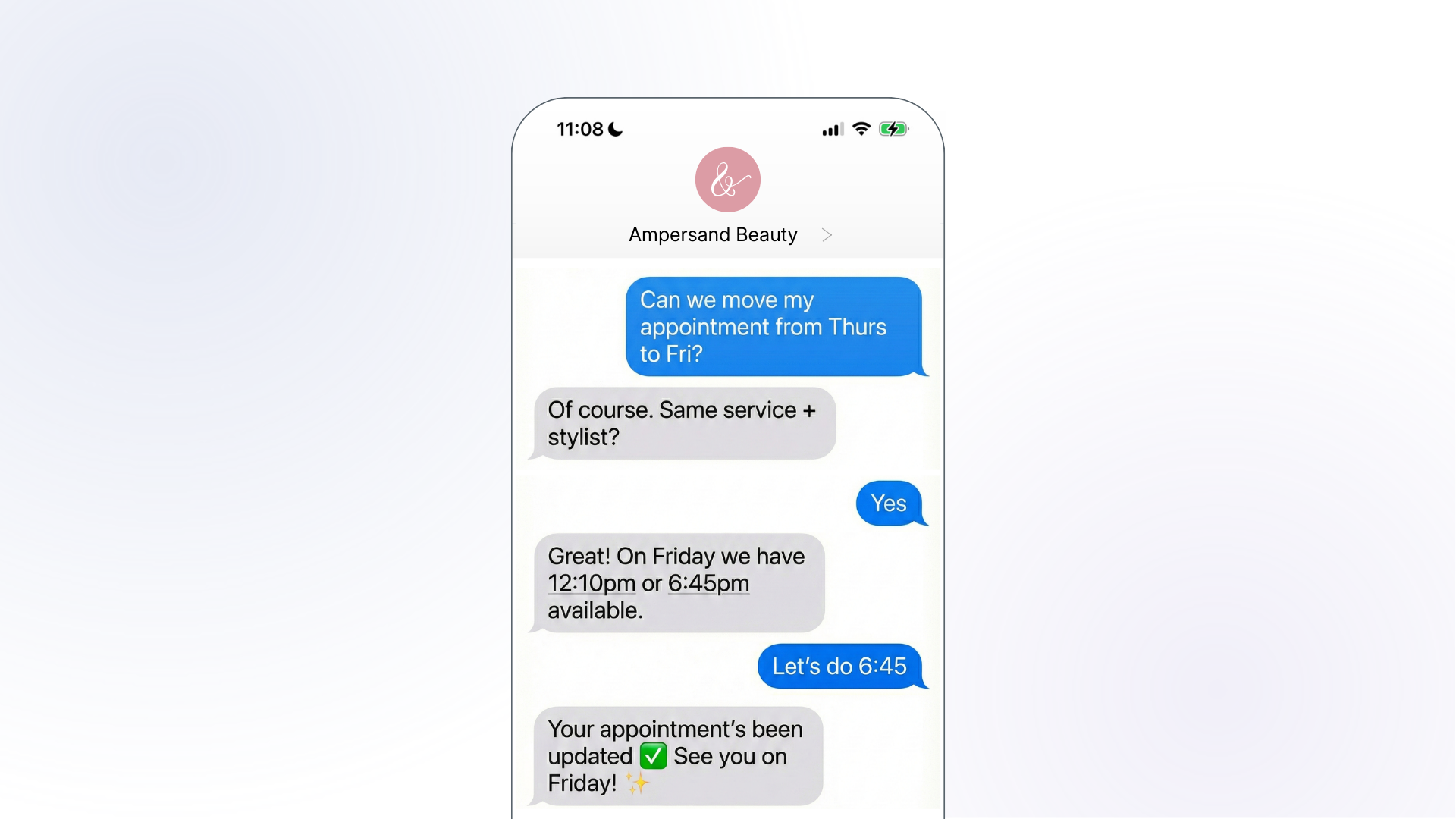
Cancellation-Save (retain bookings at risk)
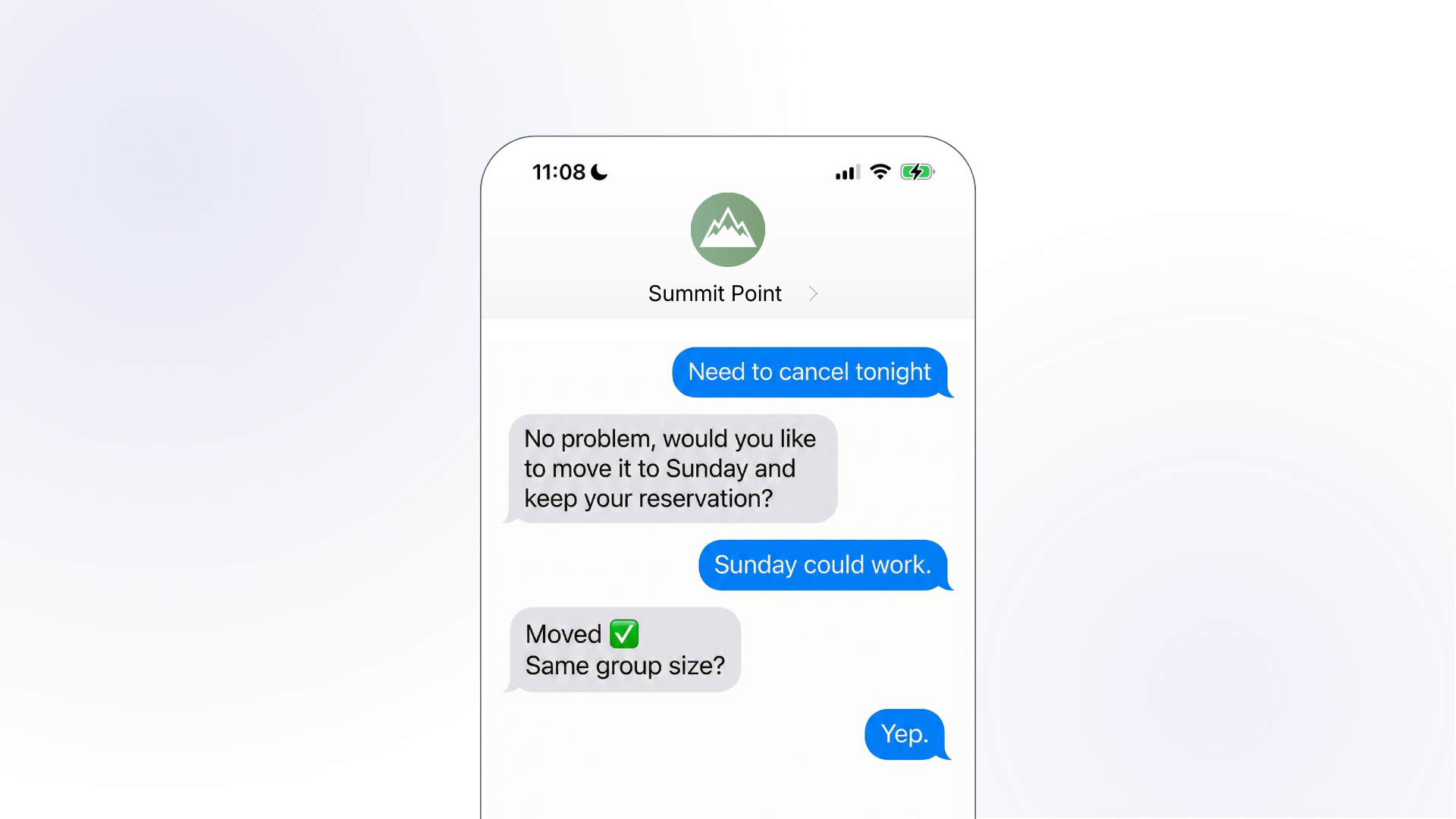
Pre-Visit Communication (reducing no-shows without adding team hours)
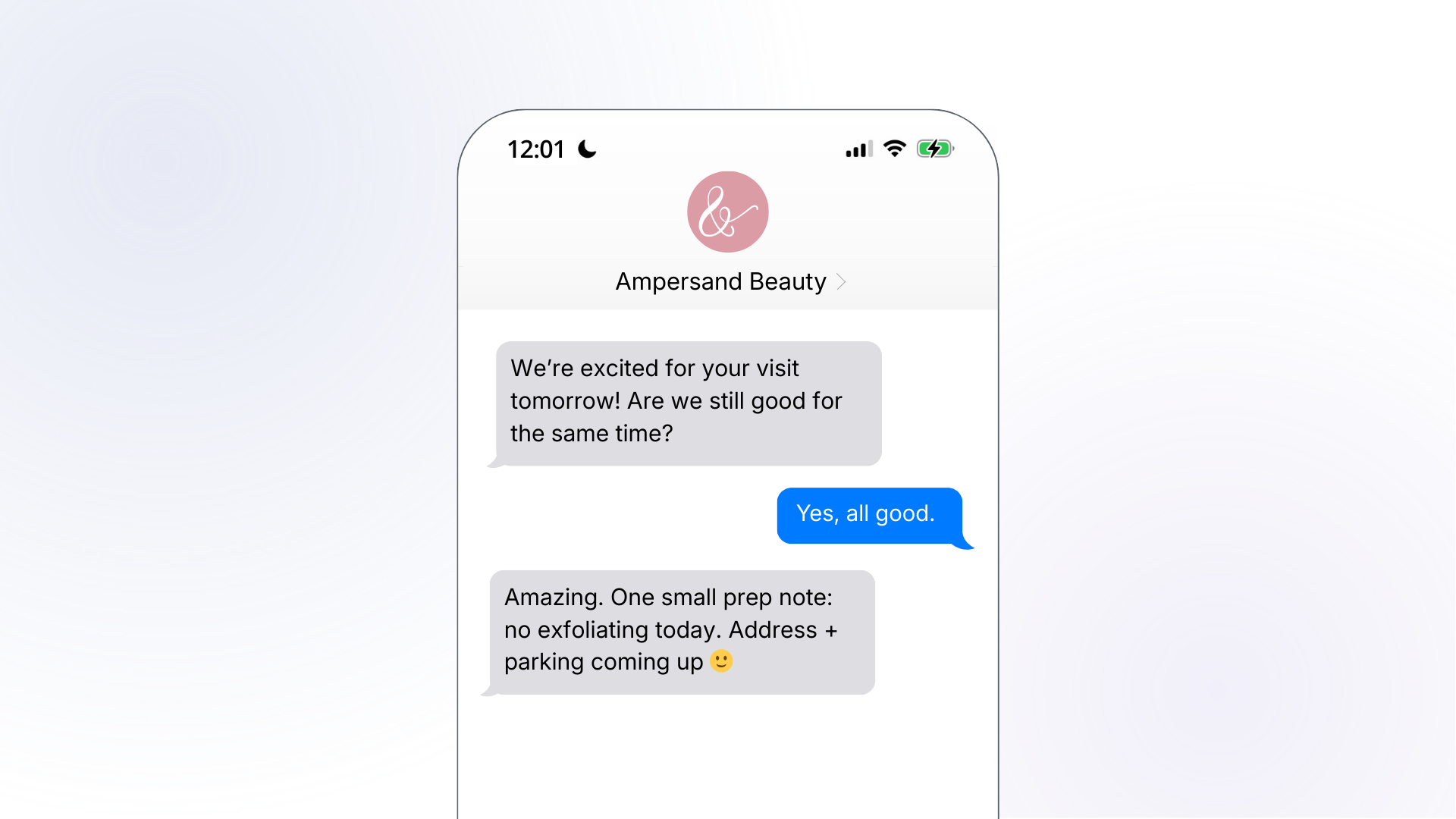
Post-Visit (product recommendations, rebooking prompts, review requests)
A salon owner: "Your stylists aren't salespeople." His team has struggled with retail sales for many years. An AI agent doesn't feel uncomfortable following up with product recommendations or rebooking prompts.
The complete chain: Inquiry → Booked → Changes → Reminders → Rebook/Winback. Every link either works autonomously or creates work for your team.
Measure business outcomes, not chatbot metrics
Owners ask "how many appointments did we book today?", not "how is my AI performing?"
What matters:
- Bookings Created
- Chat-to-book conversion rate
- Time to confirm
- Cancellation save rate
- Reschedule success rate
- No-show rate
You as a marketer can structure agents like operational roles and measure by outcomes, not messages sent. You can really measure whether it did the job.
Why Tildei is built differently
Generic AI can chat but can't complete workflows. Tildei is purpose-built to autonomously own the customer lifecycle layer, turning any message into a completed booking while seamlessly integrating with your existing booking platform (Zenoti, Acuity, Boulevard) and marketing tools.
Omnichannel: Web, SMS, WhatsApp, Instagram DMs, Facebook Messenger: one platform, every channel.
We check real availability, understand complex booking rules, know which staff member is right for which service, and remember guest preferences. While other solutions offer operational platforms for day-to-day execution, they aren't equipped with the AI backbone to understand and convert customers through complex, multi-turn conversations.
Your 30-Day Onboarding
Pick one entry point where you're losing the most bookings:
Week 1: Define success as incremental confirmed bookings.
Week 2: Get your booking-first foundation accurate. Let it run.
Week 3: Add one lifecycle workflow, rescheduling or reminders.
Week 4: Measure conversion, time-to-confirm, cost per booking.
Convert intent faster
The booking businesses winning today aren't the ones with the most traffic: they're the ones converting intent into confirmed revenue the fastest.
Stop asking customers to wait. Give them a path to "Booked ✅" that matches how they already communicate.
Ready to see how Text-to-Book works for your business? Book a demo today!
Tildei is an intelligent business partner for marketing and brand leaders who want to increase bookings and provide guests with smoother, faster experiences. We handle complete booking workflows autonomously across every channel and stage of the booking lifecycle.