The Pre-Visit window: How to turn confirmed bookings into guests who show up ready
.jpg)
The booking is confirmed. The slot is in the calendar. From a reporting standpoint, you've done your job.
But the guest hasn't arrived yet, and a lot can happen between confirmation and the moment they walk through the door. They're at home trying to remember whether they need to prep anything. They have a vague memory of seeing a parking note somewhere but can't find it. They're quietly reconsidering whether Thursday at 11am really works, now that they're looking at their actual week. And in a meaningful percentage of cases, they'll either cancel last minute, no-show entirely, or show up unprepared and have a worse experience than they should have.
The pre-visit window is the period between a confirmed booking and the moment a guest walks through your door. It doesn't generate new demand and it doesn't close the initial booking, so it tends to get treated as optional infrastructure: a confirmation email from the platform, maybe a reminder text the morning of. But what happens in this window has a direct effect on no-show rates, day-of experience quality, and whether a first-time guest turns into a repeat guest.
What's actually at stake in this window
Most businesses send something between booking and arrival. The gap isn't effort, it's specificity. A generic platform confirmation tells a guest when and where, but it doesn't tell a spray tan client to exfoliate the night before, or a medspa guest to avoid retinol for 48 hours, or a family arriving at an adventure park to bring grip socks. When that context is missing, one of two things happens: the front desk fields the same five questions every single morning, or guests show up unprepared and get a result that's worse than it should have been.
That second outcome is the more expensive one. A guest who followed the prep instructions and had a great first visit will come back. A guest who showed up without exfoliating, got a patchy result, and quietly blamed the studio is gone. The prep note didn't feel like a big deal. The outcome it prevented absolutely was. As one multi-location brand put it plainly, "You really only have one chance at a first impression." The pre-visit window is when that impression starts taking shape.
There's also the no-show problem, which is more visible and quantifiable. A guest who no-shows isn't usually unhappy; they're disengaged. Life got busy, enthusiasm softened a little, and no one re-engaged them between the booking and the appointment. A well-timed message in the right window doesn't just remind them of the appointment. It re-activates the excitement that made them book in the first place.
The pre-visit sequence: four moments that change the outcome
The Confirmation That Actually Prepares
The moment a booking is confirmed, most guests have a version of the same unspoken question: now what? A confirmation message that answers this proactively sets the guest up for a better experience and removes the ambiguity that creates last-minute friction.
For a medspa, that's "avoid retinol for 48 hours, arrive with clean skin, and plan for about 75 minutes total." For a family entertainment centre, that's "wear comfortable clothes, bring grip socks (we also sell them at the door), and use the main entrance off the south car park." The specificity is what makes it land, and the specificity has to come from knowing the service and the business, not from a generic template.
This is also where expectations matter. A guest who knows what to expect when they arrive, how long the service takes, and who they'll be working with walks in with a different energy than one who spent 48 hours with unanswered questions. That difference shows up in the experience itself.

Prep Instructions at the Right Time
A reminder that lands six days before a spray tan is effectively useless. The information arrives too early, gets forgotten, and the client shows up without exfoliating anyway. The same reminder arriving 24 hours before, "Your spray tan is tomorrow. Exfoliate tonight and skip the moisturiser in the morning for the best result," gets acted on.
Timing is service-specific, and getting it right matters more than most businesses realize. For a hair colour appointment, the prep advice might be as simple as "come with dry, unwashed hair," which is easy to follow but only if someone tells you at the right moment. For a laser treatment, the pre-care window involves multiple steps across several days, and the reminder needs to account for that sequence. For an outdoor experience, the guest needs enough lead time to pack the right kit.
When a guest follows the prep instructions, their result is better. A better result produces a better review, a higher likelihood of rebooking, and a stronger sense that the business knows what it's doing. The prep message that gets ignored is a lost opportunity across all of those fronts.
The Add-On Conversation
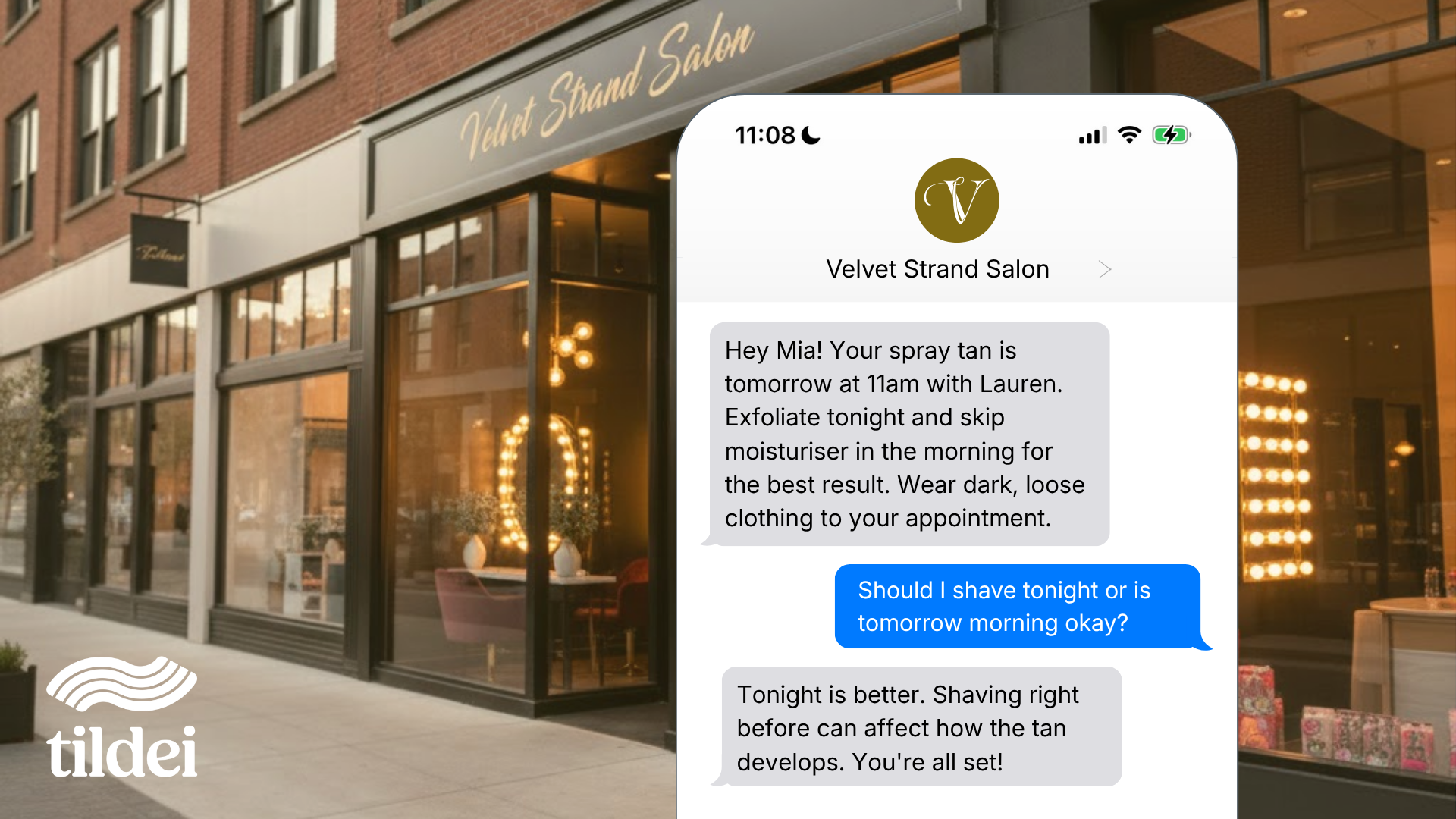
A guest who has already committed to a booking is in a different mindset than a guest who's still deciding. They're past the evaluation stage, their interest in the experience is high, and their openness to an upgrade is real in a way it wouldn't be on a cold outreach.
This moment works best when the offer is genuinely relevant. A guest who has booked a 60-minute facial is a natural candidate for a dermaplaning add-on. A family with a birthday party reservation is already thinking about making the day feel special, so a premium package offer lands as helpfulness rather than a sales push. The key is that the offer reflects what the guest actually booked, not a generic upsell campaign that goes to everyone on the list.
Done well, the add-on conversation generates incremental revenue from a guest who's already coming in, at a moment when they're disposed to say yes. Done badly, it's just another thing for the guest to ignore. The difference is whether the offer is clearly connected to their specific booking.
The Day-Before Reminder
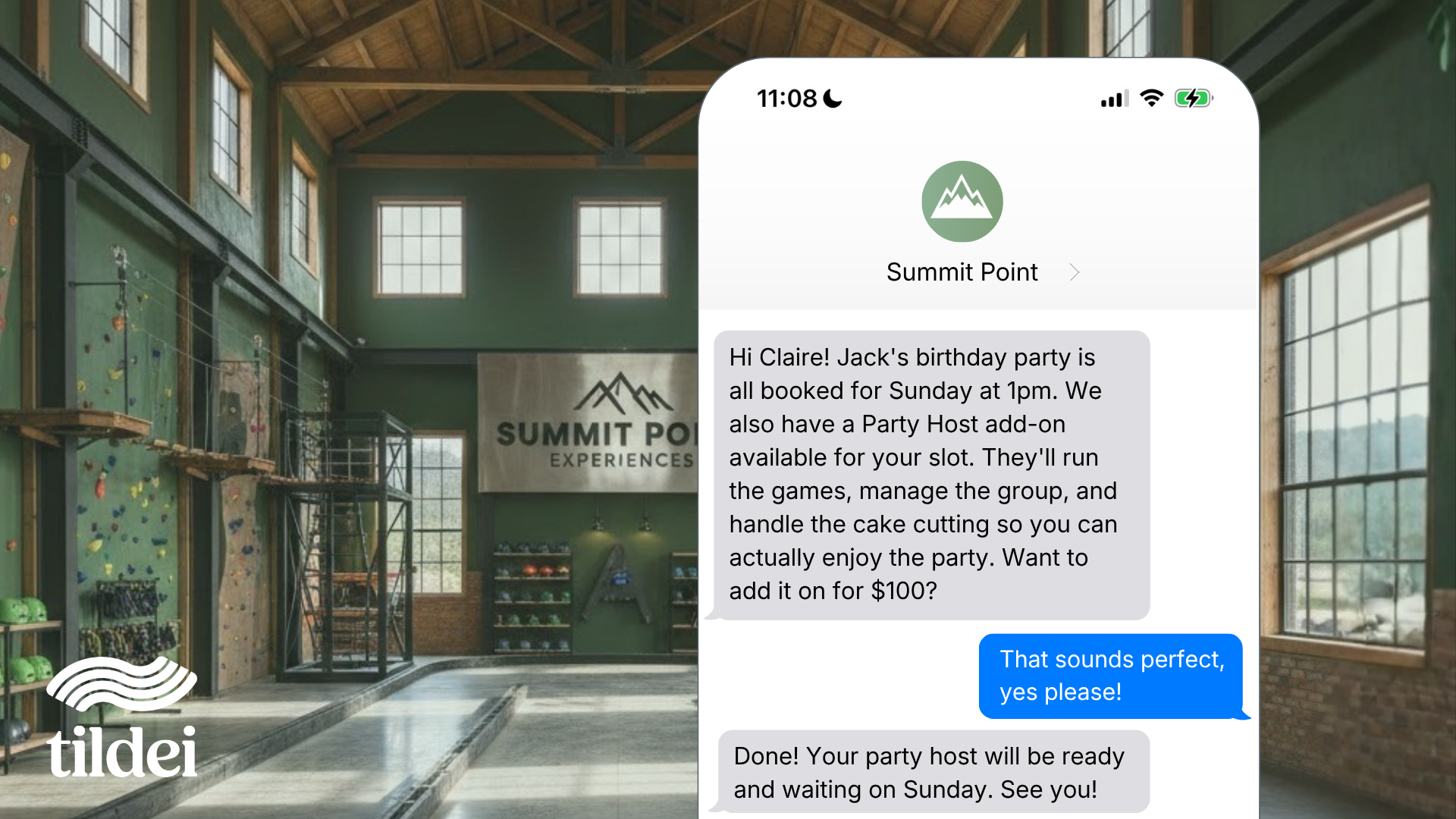
The most direct lever on no-show rate is a well-timed message the day before the appointment. Not a generic "don't forget!" alert, but a short and warm confirmation: "You're booked with Jen tomorrow at 2pm at our Soho location. Reply if you need to reschedule."
Two things happen here. First, the reminder re-activates the guest's mental commitment to the appointment at the moment when it's most likely to slip. Second, the open door to reschedule rather than simply ghost reduces no-shows by giving guests an easy path that still keeps them in the calendar. A guest who reschedules is not a lost booking; they're a future visit. The difference between a no-show and a reschedule is often just whether someone made it easy to reschedule rather than disappear.
Why this doesn't happen consistently
These conversations aren't complicated. Every business knows, in the abstract, that good pre-visit communication reduces no-shows, improves the experience, and increases the likelihood of a second visit. The gap is execution: sending the right message to the right guest at the right time, for every booking, across every service type, without it becoming someone's manual job.
Front desks are managing check-ins, cancellations, and phone calls simultaneously. Marketing teams can send blast campaigns, but a blast is the same message to everyone on a fixed schedule that has nothing to do with when any individual guest actually needs to hear from you. The result is that most businesses pick one approach, usually a generic platform reminder, apply it uniformly, and lose most of the value in the process.
A spray tan studio that sends one reminder at the wrong time gets half the results of one that sends the right prep note 24 hours out. A medspa that doesn't confirm pre-care instructions loses guests who show up unable to be treated. A Family Entertainment Centre that doesn't send wayfinding information in advance spends the first 15 minutes of every visit helping families figure out where to go.
What the pre-visit sequence looks like with Tildei
When Tildei's Booking Agent handles the pre-visit sequence, every message is triggered by the specific booking: the service, the timing, the provider. The initial confirmation goes out with service-specific context rather than a generic receipt. The prep reminder arrives at the right window for that particular treatment type. The add-on offer reflects what that guest actually booked, not a campaign list. The day-before reminder goes to every guest, every time, without anyone on the team having to remember to send it.
None of these messages are the same for every guest, and none of them require your front desk, marketing team, or stylists to initiate. The pre-visit experience just happens, consistently, at the right moment.
What to measure
No-show rate is the most direct signal that pre-visit communication is working, and it's worth tracking by service type rather than as a blended average. A medspa laser appointment and a walk-in trim have very different no-show profiles, and a single number across the whole business hides what's actually happening.
Beyond no-shows, the metrics that matter are:
- Day-of cancellation rate: Good pre-visit communication converts last-minute cancellations into reschedules rather than straight drops.
- Add-on conversion rate from pre-visit messaging: Of the guests who received an add-on offer, how many took it up?
- First-visit repeat rate: Guests who arrive prepared and have a smooth experience are significantly more likely to book again, and the pre-visit window is a contributing factor even when it's not the only one.
The gap you don't see until it's costing you
A no-show is visible. You see the empty slot, you feel the revenue impact, and you know something went wrong. What's harder to see is the guest who showed up unprepared and had a slightly worse result, or the guest who arrived unsure and left without feeling the connection that would have brought them back. Those outcomes don't appear in a single report, but they accumulate over time in lower repeat rates and weaker word-of-mouth.
The pre-visit window is where you close that gap before it opens. It's quiet work, but it shapes the experience more than most businesses realize, and it's the last stage you fully control before the guest is in the room.
Tildei's Booking Agent handles the full pre-visit sequence: service-specific confirmations, timed prep instructions, relevant add-on conversations, and day-before reminders, automatically, for every booking.
Want to see what the pre-visit sequence looks like for your business? Book a demo.