What we’re chatting about
All the latest trends and best practices in conversational marketing.
Today’s Customers Expect Relevance and Innovation in Retail Experiences
Remember when online shopping just meant using a search box, a few filters, and maybe getting free shipping on orders over $50? That’s not enough to entice today’s customers, who expect retail experiences that blend ease of purchase with connection, education and entertainment.
Over the past ten years, marketers have led the charge in the evolution of retail. To build more connection with customers, for example, many successful brands have a social media strategy focused on reposting user content, helping create a cult of personality around their brand’s ethos. For the individuals who enjoy browsing, social media efforts around community building offer an endless scroll of content. Unlike traditional search-based online shopping, the feed serves as entertainment, even for users who aren’t planning to make a purchase right away.
Effective Retail Marketing Requires a Layered Strategy
Both direct to consumer and larger retail organizations have integrated values like sustainability into their offerings, allowing customers a way to match their identity with their consumption and further deepen relationships. Marketers have created content to serve individuals interested in learning more about these values. Brands that have started as online-only have expanded into physical stores and ensure that their in-store environments match their online aesthetics, creating one more way to distinguish their brand.
The brick and mortar storefront also must give shoppers a reason to visit in order to succeed. For example, prospects can touch and feel products, they can photograph themselves with the store’s decor, and they can get tips and opinions from the experts on the floor. In addition, sales associates use mobile devices to help customers complete purchases, eliminating traditional cashier areas and bridging the online and offline shopping experiences—compelling, cutting-edge retail.
The goal of these new initiatives is to provide opportunities for deeper interactions and points of connections with customers. Each activation, new channel, and event is a way to create conversation.
In this post, we will introduce conversational marketing as the central pillar of supporting a truly innovative retail marketing strategy. By blending elements of relationship building online and in person, entertainment, and thought leadership—conversational marketing powers customer conversion, customer satisfaction, and other retail KPIs.
Conversational Channels Power Conversion
When someone enters a website or store with the intention to buy, they expect an individualized experience, not an endless one. In physical retail stores, a knowledgeable sales associate plays a crucial role. For example, let’s say you’re looking for a gift for your daughter’s 16th birthday. You want to give her a keepsake, but also want to ensure it’s something that speaks to her interests. A sales associate can ask the right questions, bring in their experience around what’s popular, and find an item in store that you may have overlooked on the website. The conversation powers the conversion.
Just as the online aesthetic influences the in-store experience, the in-store human touch must be infused back into the online experience. How can marketers create this symbiotic relationship at scale?
Conversational marketing enables businesses to engage customers on their terms through tailored interactions across various channels. The ease of back and forth customer and brand interaction builds trust and loyalty by emulating in-store experiences with the best sales associates. Conversational marketing also can ensure that transactional email marketing messages aren’t lost in an inbox. Messaging around abandoned carts or targetted upsell based on previous purchases, for example, can be moved to a conversational channel and drive immediate next steps. A recent study by Juniper Research predicts that spending on conversational campaigns will soar to $290 billion globally by 2025, a staggering 590% increase over the next four years.
Tildei’s Conversational Marketing changes the way marketers build campaigns
Traditionally, building a truly personalized experience across channels means marketers spend hours creating flowcharts for each persona’s potential actions. They set up triggers, craft responses, and then QA the entire experience. This process is often limited by time, competing priorities, and the complexity of the build.
Tildei’s Conversational Marketing platform changes this by leveraging AI to streamline campaign creation. Marketers simply describe the strategy and experience they want, and the AI generates the campaign. Marketers can then refine or modify the copy as needed.
We’re excited to give marketers the ability to scale their direct connections with customers and further integrate the online and in-store experience.
Here’s an example of how conversational marketing can work for retail brands. An interaction with the QR code in store or a chat option on the website starts a conversation with a brand on WhatsApp. The WhatsApp for business conversation is verified and reflects the brand’s style. In this example, the brand starts with an invitation to ask a question.
-2.png)
In this example, conversational marketing strategy combines product discovery with entertainment, as the end user can see how items pair together or brainstorm outfit ideas for an event. Additionally, the conversational campaign allows the brand to better understand the customer's shopping habits. The conversational data can be stored, shared with other brand channels, and used to influence communication with this customer in the future.
Conversational marketing is cutting edge retail
- Conversation is the central aspect of all retail innovation
- Conversational marketing makes product discovery easier for customers and prospects.
- Conversational marketing allows brands to educate customers about their values and mission. Customers know where to find this information instead of looking through multiple pages, as everything lives within the chat.
- Conversational marketing also provides options for entertainment through gamification.
In our next post, we will explore some examples of integrating conversation into your retail marketing strategy.
Want to talk to the Tildei team about conversational campaign strategy and the future of retail? Reach out to us here.
Today's shoppers expect retail experiences that combine convenience with personal connection, education, and entertainment. Conversational marketing, which uses real-time, personalized interactions, is emerging as a key strategy to meet these demands, enhancing customer engagement and boosting performance metrics.

Today, we’re celebrating the launch of our brand new site. This new experience is a realization of our goal to elevate marketers and empower customers.
After our many conversations with marketers, leaders, and their broader teams, we’ve strengthened our point-of-view. Marketing is a difficult task, consumer behavior is rapidly changing, and marketers need an easy-to-use tool to facilitate and automate back-and-forth, outcome-driven marketing conversations with their customers.
As we honed our point-of-view, our platform advanced along with it. Our customers are actively building AI-powered marketing conversations in a matter of clicks, and we’re excited to share the tools and secrets of success in conversational marketing on a broader scale.
Welcome to the new digital home of Tildei!
What You’ll Find on the New Tildei Website
Our new website is designed with marketers in mind. Here’s what you can expect:
A Fresh Perspective: We strive to elevate marketers and empower customers, and our new site is a reflection of our commitment to that belief. You’ll discover how Tildei’s AI-powered platform can boost your marketing strategies, helping you capture and hold consumer attention in an increasingly noisy digital world.
An Insightful Platform Page: We’ve added a platform section to give you a comprehensive look at the Tildei toolset. This isn’t just a list of features—it’s a deep dive into how our platform can transform your marketing efforts across multiple channels. Whether you’re new to conversational marketing or a seasoned pro, you’ll find valuable insights on how to leverage Tildei to its full potential.
Inspiring Use Cases: Words can only get you so far. We’ve worked hard to build countless use cases and conversation examples to show you how the vision becomes reality. We’ve included examples of conversations that convert, exciting ways you can grown your community, and how the platform helps you bring it to life.
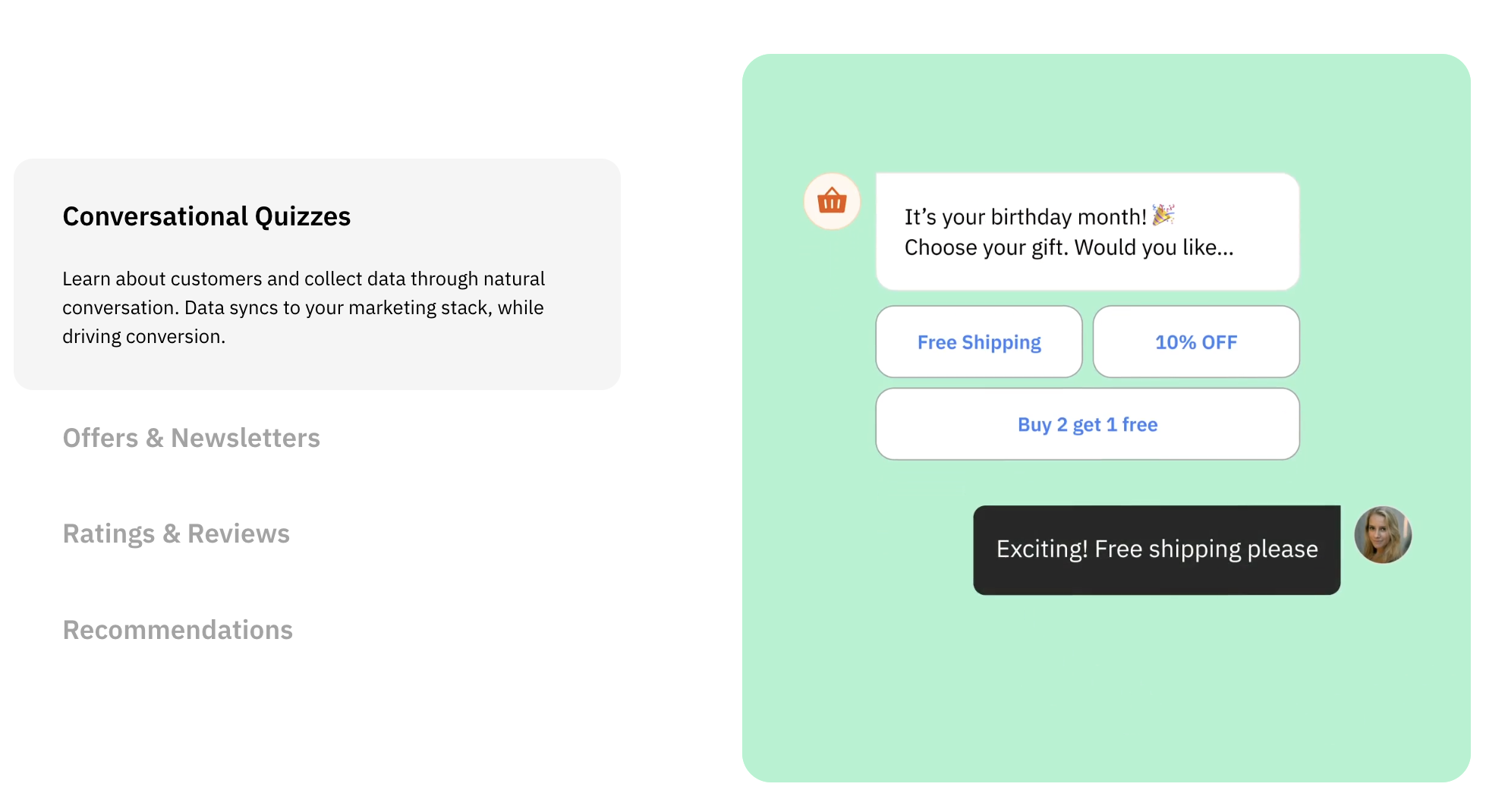
Real, Impactful Testimonials: Don’t take it just from us. On our new site, we’ve included case studies and quotes from marketers and brands actively making conversations a key component of their strategy. See how they do it and the success they’re having.
Empowerment and Ease of Use: We want visitors to leave our site feeling empowered, not overwhelmed. Tildei is built to be user-friendly, with an intuitive interface that allows marketers to quickly create and manage campaigns. You don’t need to be a tech expert to make Tildei work for you—and we hope that message comes through loud and clear.
Explore the Future with Us
We invite you to explore our new website and discover how Tildei can transform your marketing strategies. Whether you’re looking to engage customers in new ways, expand your reach into a new channel, or simply make your marketing efforts more effective, Tildei is here to help.
Visit Tildei.com today and take the first step towards a more conversational, customer-centric future for your brand.
Schedule a conversation or a book a demo with us to learn how you can launch conversational marketing today.
We’re excited to be on this journey with you.
Celebrating the launch of our brand new site and realizing our goal to elevate marketers and empower customers.

It’s a summer afternoon and you’re scrolling through Instagram during your lunch break. The algorithm has you mostly figured out: aspiring runner (well, runner—you just finished your first 10K), obsessed with your espresso machine, and planning your first trip to Japan. Because your feed is so attuned to your interests, you naturally use your social media for product discovery and product research. But, you’re a discerning shopper—reading reviews and asking questions on forums before clicking buy.

The traditional buyer journey includes three stages:
- Awareness: Buyer realizes they have a problem
- Consideration: Buyer begins to search for solutions
- Decision: Buyer may need an extra push to make the purchase
Seems simple enough, but today’s technology has complicated each stage. Consumers are inundated with information and as a result, they are always passively researching. Up to 77% of buyers are conducting their own independent research before contacting a salesperson or making a purchase (Spotio). Consequently, the buyer has the power when it comes to engaging with the brand. Marketers everywhere understand this struggle. How can they ensure that their message rises above the noise and stands out to their target audience? How can brands reframe consumer interactions and meet buyers where they are?
In a recent edition of Not Boring, Packy McCormick writes about optimization, algorithms, and the state of the internet. He says, “Good content and good business get drowned out by good optimizers, and that’s bad for us all.” Consumers and marketers alike are struggling to find and create truly different experiences, ones that inform and surprise. At Tildei, we want to give marketers more control of the buyer journey by centering conversation instead of the generic messaging on multiple channels.
Conversational marketing engages prospects through dialogue and gives brands the ability to prioritize foundational relationship building with the buyer, allowing the brand to become the central source for product discovery. Conversational marketing campaigns have a 45% higher engagement rate compared to traditional methods (Sinch).
Okay, let’s get back to you: the runner, the discerning shopper, and the espresso addict. Your shoe is bothering you while running and you’re getting blisters on your left heel. You open the shoe brand’s Instagram page and watch a short video about fit and it gets you thinking. You go to the website and notice that you can start a conversation with an associate about fit on WhatsApp.
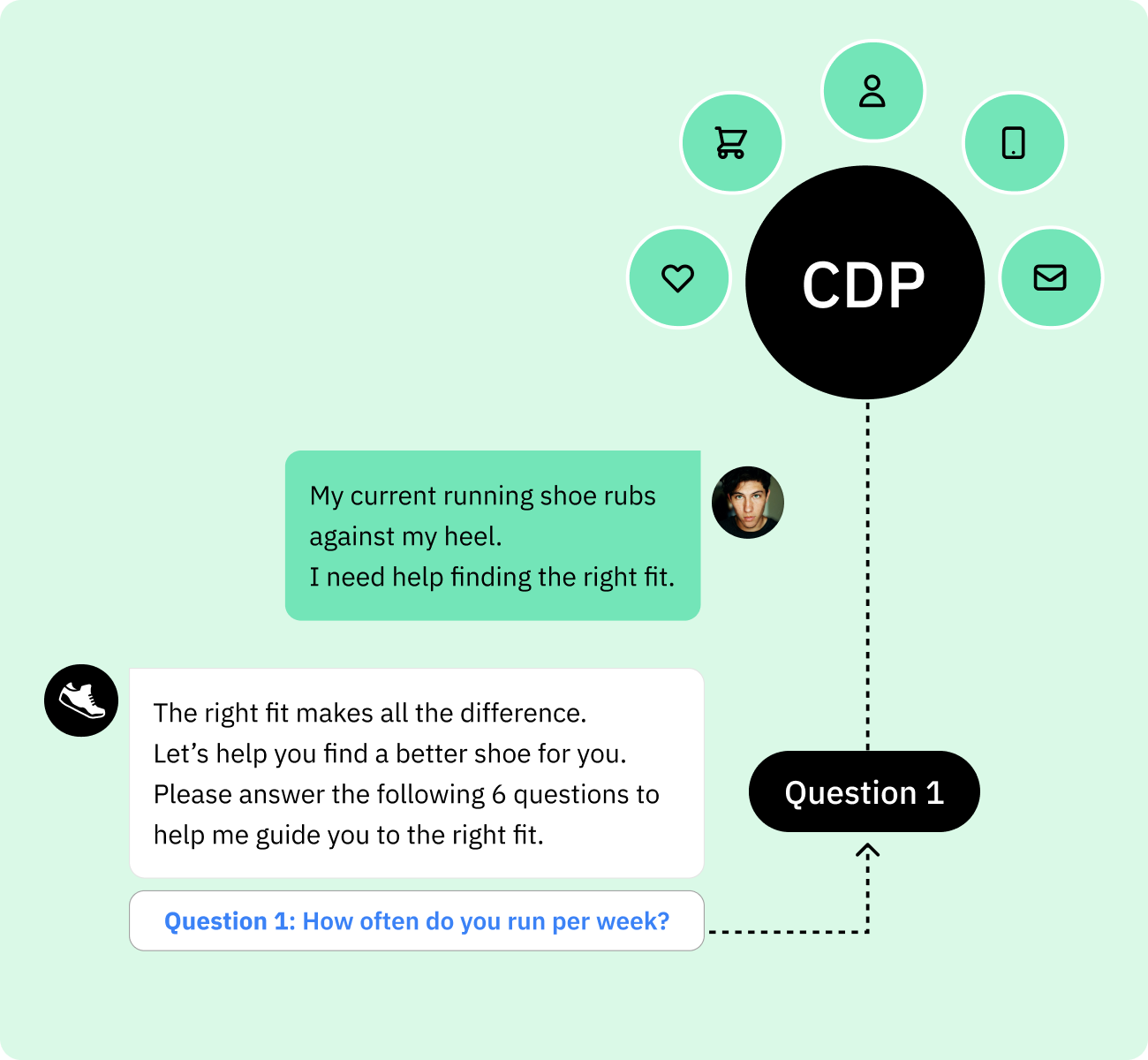
The sales associate AI sends over a questionnaire and then recommends two styles of shoes that could help you with your problem. She asks you if you have any more questions and lets you know that one shoe is available in the store about 30 minutes away, but both shoes are available online. The sales associate continues and recommends two tests you can do at home to make sure that you’re getting the right fit. She sends a video of the test–combining elements of the awareness stage and consideration stage in a personalized interaction.
You have a week to try the shoes, make your decision, and return the second pair. You ask a few more questions on the return policy and the AI sales associate lets you know that it’s easy to set up and that you can message right back into the chat when you’re ready to begin the return process. This conversation is the push you need to make a purchase, combining the consideration stage and decision stage into a single conversation.
Conversational Marketing Centralizes The Brand Journey
Conversational Marketing is a response to the fractured and fragmented way customers today interact with brands. It centralizes the entire buyer journey and holds the customer’s attention through deep personalization and immediate back and forth.
Benefits of AI-powered conversational messaging:
- Engagement: Understand a customer's wants, needs, and concerns, taking control of the buyer journey through personalized, real-time interactions
- Accessibility: Communicate with customers anywhere and at anytime
- Cost Effectiveness: Power personalized conversation without adding more resources in terms of time and employees
- Collected Customer Information: Collect customer preferences and gain insight into their decision-making
Tildei’s AI platform is built to create impact for the marketer and the customer. Marketers no longer have to think of a singular workflow for multiple persona types or section out content for specific moments in the buyer journey. Tildei simplifies creating conversational messaging and adds the benefits of AI to your marketing stack.
After a week of trying on both pairs of shoes, you commit to a pair. Happy with your decision, you re-open your conversation and receive a return form from the sales associate. It was easy and you’re relieved that you don’t have to waste time anymore researching sneakers, you have a trusted advisor waiting for you on the other end of the line.
Tildei’s AI turns a traditionally complex process into a simple set of steps to power conversational marketing and build connection and loyalty.
Have a use case perfect for a conversational message? Talk to us about it.
Imagine it's a summer afternoon. You're scrolling Instagram, discovering new products, and researching before making a purchase. But how do brands ensure their message stands out in a crowded digital space?
The Challenge: Simplifying the Purchase Process
Double, a leading Australian rug retailer, faced a common e-commerce challenge: helping customers navigate an overwhelming array of options. Their existing chat support, while functional, was underutilized, tied to their website, and often forgotten mid-conversation. Double needed a solution to guide customers effectively towards purchase and boost conversions.
The Solution: Tildei's Interactive Stylist
Enter Tildei's conversational marketing platform. Double reimagined their customer experience by moving the marketing campaign out from their support chat and onto an engaging, WhatsApp-powered conversational interface. This approach allowed customers to:
- Share their preferences through natural dialogue
- Send Double photos and videos of their space right from their phone
- Receive personalized recommendations from Double’s stylist
The reimagined quiz feels more like consulting a personal stylist than completing a stale form. By moving the experience to WhatsApp, customers could continue their journey on-the-go with mobile marketing, enhancing engagement.
Implementation: Seamless and Visible
Double prominently featured a "Chat with a Stylist" button on their homepage, making the new experience highly accessible. Tildei's no-code setup allowed for easy integration, empowering Double’s marketing team to implement the solution effortlessly.
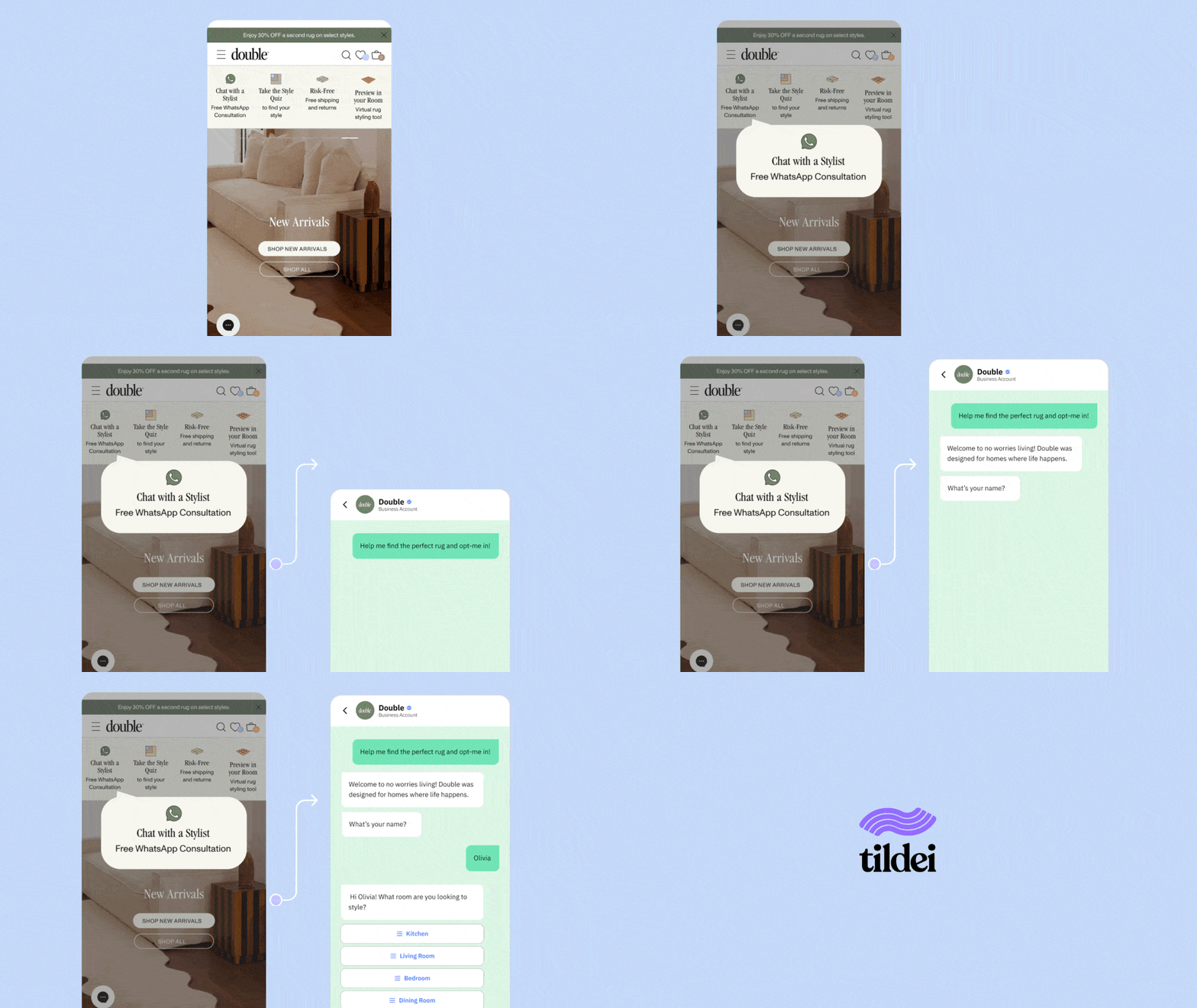
Impressive Results: Engagement and Sales Soar
The impact of Tildei's solution was significant:
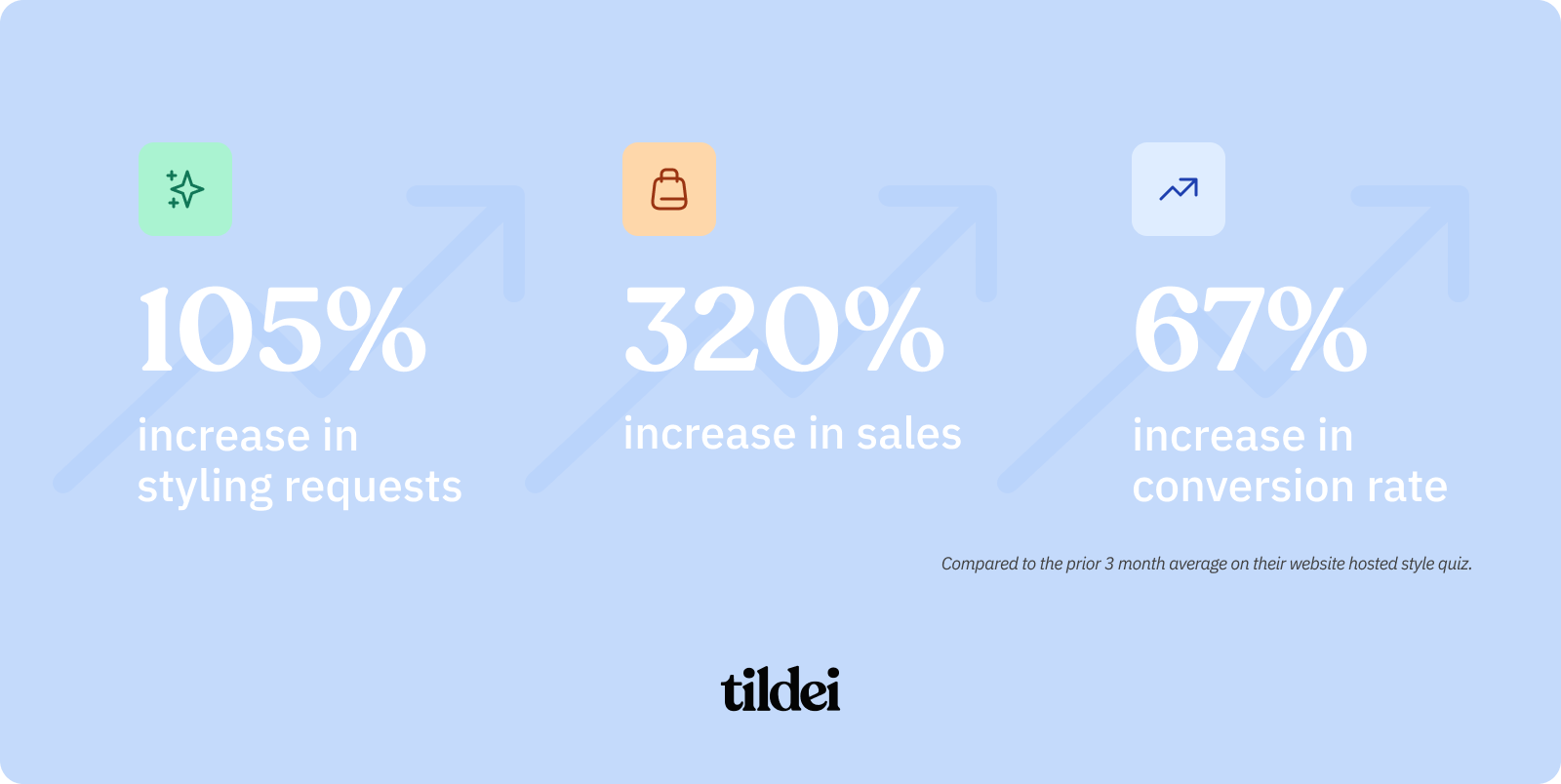
Importantly, these conversations generated valuable opt-ins to be used in future marketing campaigns, allowing Double to nurture customer relationships well beyond the initial interaction.
Notably, these results were achieved without tying the quiz to any specific promotion. The organic boost in engagement and sales showcases the power of Tildei’s personalized, conversational marketing solution.
Data-Driven Insights and Ongoing Engagement
Beyond immediate sales, Double gained valuable customer data and opt-ins. This information not only fueled real-time conversions but also provided insights for future marketing strategies across their marketing stack. The opt-ins created a pipeline for ongoing customer engagement, enabling Double to continue the conversation and drive repeat business over time.
Building Customer Relationships
The new conversational style finder served as a powerful tool for guiding customers through the rug selection process. The interactive nature of the quiz fostered positive sentiment and subscriber growth. With the partnership of Tildei, Double created a more relaxed and engaging experience for their customers; this approach not only helped customers find the perfect rug but also fostered a deeper connection with the brand, driving brand loyalty.
Future-Proofing the Customer Experience
The success of this initial campaign has laid a strong foundation for Double to continue growing relationships with their customers. The wealth of data collected through these interactions, including preferences and room images, will enable further refinement of offerings and marketing approaches. Double will use the data gathered from this quiz information to tailor future conversations effectively.
Interested in driving sales through the power of conversation? Get started with Tildei today.
Boost your sales and engagement with Tildei's AI-powered conversational platform, offering personalized recommendations and turning chats into marketing gold!

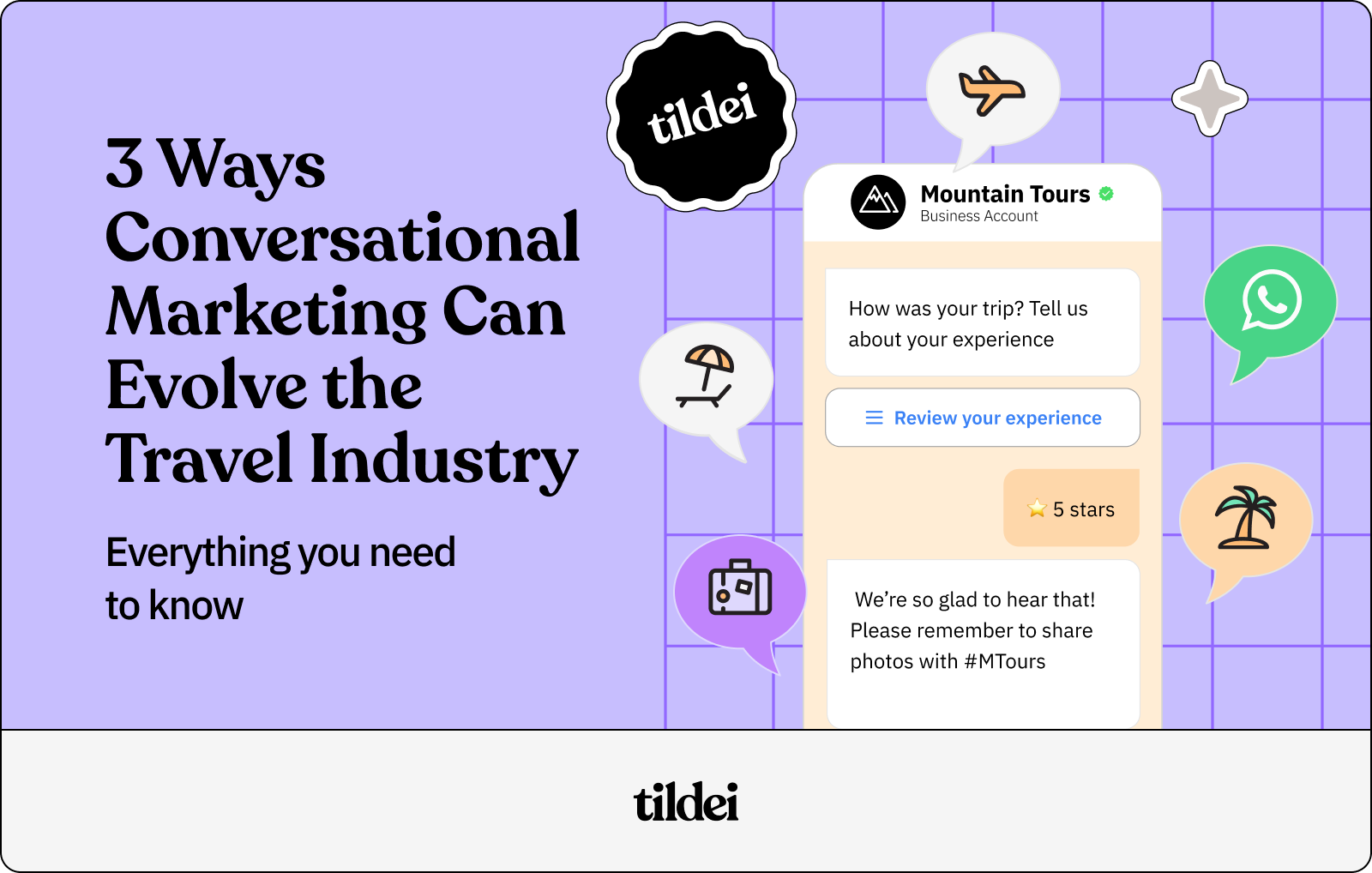
When deciphering trends and implementing strategy, marketers look everywhere for inspiration to get ahead of the curve.
For example, during my recent work sabbatical in Northern Argentina, I observed local tour groups taking a personalized, conversational approach to their path to purchase. These small businesses prioritized immediate connections via WhatsApp or Instagram, rather than traditional website-driven interactions.
This shift to conversational channels transformed their sales and booking processes (and my experience as a customer). My interactions with travel guide companies and their focus on converting conversation into revenue offer three valuable marketing lessons applicable across industries.
Lesson 1: Conversational marketing enables better recommendations
I landed in Salta without a real plan and no car. The mountains were calling to me, and I knew I needed to get up there. I looked up tour groups online, but it was difficult to differentiate on factors other than price. My Airbnb host recommended a local tour company. I visited the group’s website, which featured photos and embedded links to their Instagram and WhatsApp that opened a conversation. I was uncertain about the experience, but I messaged them on WhatsApp, sharing my travel dates and name.
The person on the other end introduced himself and began asking about the type of tour I wanted, my preferred travel style, and the purpose of my trip. I was surprised by the thoughtful nature of his questions. It felt genuine. We chatted for a few minutes and he suggested a unique itinerary based on my responses - joining a group traveling to the small village of Iruya in a Jeep.
I would have never even thought of this type of tour on my own. He went on to explain more about the region, expressed why he thought I’d like it, and sent over a few photos of other groups on the tour.
.gif)
Conversational messaging, I realized, helped him understand my needs, timeline, and budget. The guide's approach and information gathering helped me discover options with the support of an expert. The WhatsApp business verification made me feel safe in the channel and the immediate back and forth made me feel like I was planning an adventure with a friend - resulting in an easier sale.
I went from no plan to a booked adventure in a matter of minutes through the power of conversation.
Lesson 2: Conversational marketing creates lasting relationships
The tour company reached out before my excursion, making sure I was comfortable. They sent over information about the driver and a checklist of items that I should make sure to bring. All of our communication was through WhatsApp and I could refer back to our conversation if I had any questions.
The drive was breathtaking, the guide was informative and we made a few stops at viewpoints before arriving at the village.
A few hours later, back at my hostel, I received a message from the tour group asking for feedback about the trip. I sent over photos and told them about how our guide, who grew up in the area, shared stories that helped us understand the region from a personal perspective. I wished that we had more time for lunch at the village, and they said they’d take my feedback to the guide.
Looking back on the trip, I knew I’d recommend this group to another traveler because of the ease of communication. Conversational messaging combined with the authenticity of in-person experiences and the ease of digital communication to make an unforgettable experience.
Lesson 3: Conversational marketing sets the stage for growth
I was incredibly impressed and inspired by the tour and tour company. Although it was being run by a handful of individuals, they were building a business based on engagement, strong buyer progression, and customer satisfaction. They tailored interactions based on individual preferences and behaviors and introduced visitors to their country on their own terms.
As a marketer, I thought of how they were actually facilitating the collection of customer data and insights. They just needed the right tools to allow them to scale their company ethos, which was based on ensuring customers and prospects felt valued when communicating with them.
.gif)
Combine the right use case with a powerful platform
Now that I’m back home, I am looking at my surroundings in a new way. Where is the potential for connection? Where are the moments for engagement?
Conversational marketing revolutionizes the way companies connect and engage with customers. 53% of consumers are more likely to buy from a company that they can message directly (Kalera). The tour company understood the importance of building 1:1 conversations and, with the right resources, could easily scale their campaigns.
Automation and AI bring the benefits of a human high-touch experience to high volumes. In addition, automated conversational marketing experiences improve the efficiency of the conversation by making it easier for customers to engage on their own time in their own way.
The tour company’s entire conversational experience could be automated with Tildei. Here’s how:
- The tour details and guide knowledge can be loaded into Tildei to train the AI. So when potential guests ask about specifics, the right details can be shared instantly.
- Conversational campaigns can address each phase of the customer lifecycle that the company currently manages manually through multiple channels. For example, advertising QR codes at the airport at tourist destinations or letting potential customers know that they can trigger conversations with the brand through specific keywords. Campaigns can include:
- Discovery - through QR codes and customer initiated conversations
- Consideration - for when I first asked about options
- Decision - for when I narrowed down my options and choose between the top few
- Pre-trip - giving me all of the tips and resources I needed to feel prepared and helping the tour company avoid any mishaps
- Post-trip - checking in, gathering feedback, and building loyalty
- As customers ask different questions or new requests that veer from the intended campaign path, AI can support by providing answers and guidance while also ensuring customers don’t miss out on critical information from the campaign flow.
- With automation these powerful conversations can happen at any time, whether someone is messaging in the middle of the night from a different time zone or while the guide is out with a group.
By implementing a conversational marketing platform with AI and automation, the tour company can also build on their current campaigns.
To help prospects like me find the right trip, they could have triggered a quiz within WhatsApp and powered data-based customizations and recommendations. The quiz improves the speed of the back-and-forth conversation and the gamification increases engagement.
Reviews are very important to their business and automated reminders to complete one would benefit their company. Bringing automation into their campaign, they could collect feedback through a form in WhatsApp and sync it directly into their review platform. Real-time customer conversations powered by automation and AI enable companies to build trust and foster strong relationships.
Tildei’s conversational AI platform allows brands to easily set up conversational marketing experiences at scale. The AI powered platform allows:
- Customers to initiate a personalized experience through keywords
- Marketers to direct customers to next best actions with no code required
- Marketers to sync customer data to their CDP, CRM, or marketing stack
There are so many places and channels to explore. Did inspiration strike? Learn how you can get started with conversational messaging.
When deciphering trends and implementing strategy, marketers look everywhere for inspiration to get ahead of the curve.
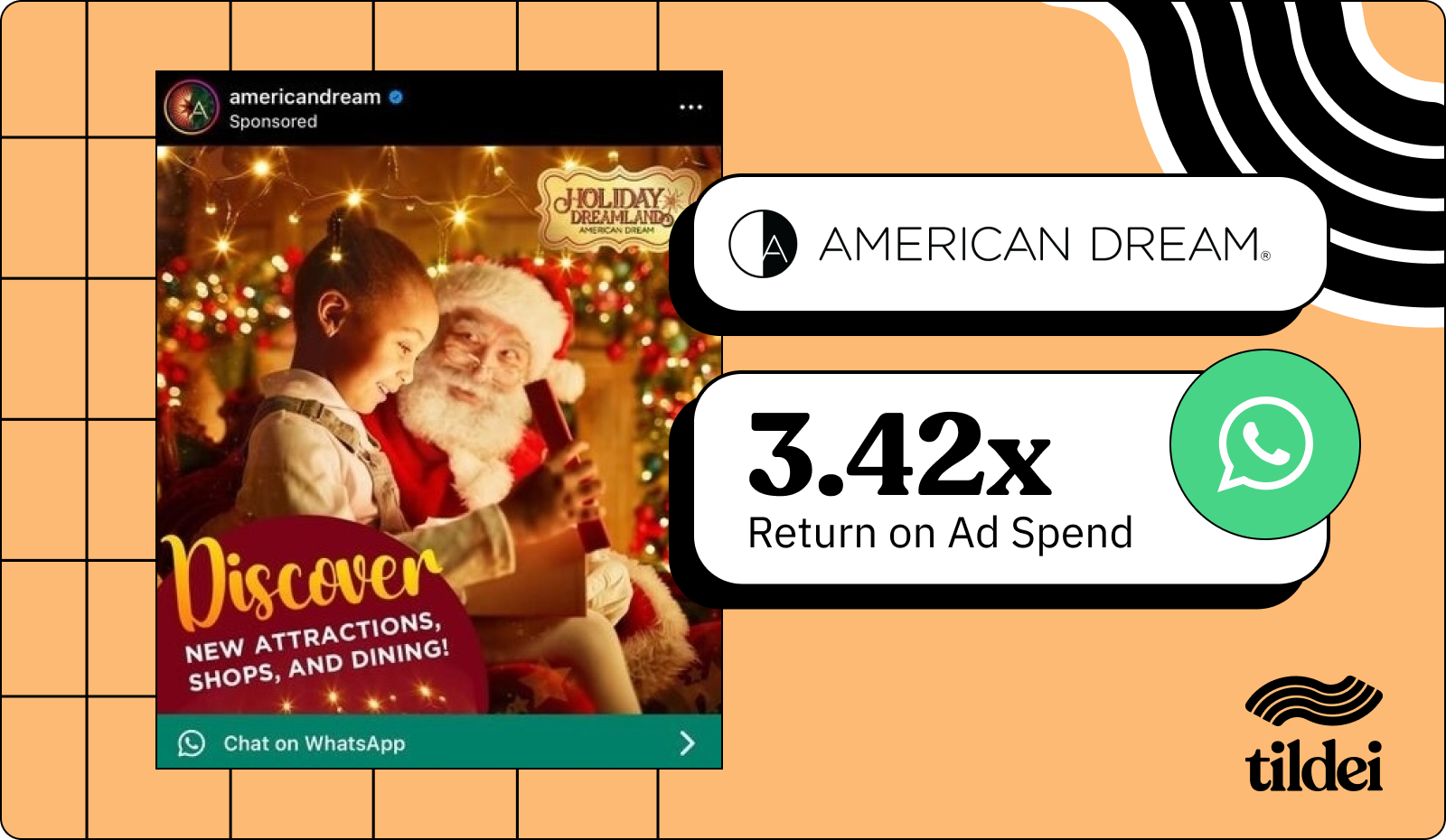
The holiday season is a busy time. It’s filled with shopping for gifts, spending time with family and friends, and taking part in holiday traditions. Most consumers don’t have a minute to spare, let alone time to sit down and search for holiday experiences that they’d rather just be, well, experiencing. American Dream used WhatsApp conversations powered by Tildei to guide their customers in discovering and booking the best holiday experiences yet.
American Dream — a center for fashion, food, family, and fun — is not only a place to find the perfect item, but also a place where visitors can ride a rollercoaster, glide down a water slide, and ski groomed slopes all under one roof. American Dream customers expect mind-blowing experiences, and 2023’s Holiday Dreamland was the opportunity to craft the perfect holiday getaway. The challenge was, how do they make it easy for their customers to discover all of the fun they had on offer?
Driving Event Awareness: Meta Ad
For similar events in the past, American Dream used Meta Ads to reach their target audience. A click on the ad would direct the customer to an event landing page or individual booking and events pages. The American Dream team wanted to elevate the experience and provide personalized information. They were in search of a tool that would continue the conversation, foster engagement, and make life easier for their customers versus just linking them out to a landing page.
That’s where American Dream turned to WhatsApp marketing with the help of Tildei. By launching their WhatsApp channel and leveraging the ‘Send Message’ action from the Meta Ad, American Dream was able to use a single ad to target a broader audience and build the deeper connections they sought. Instead of the ad opening a new page, the ad now led directly to a 1:1 automated conversation for the customer to learn more about the holiday experiences.
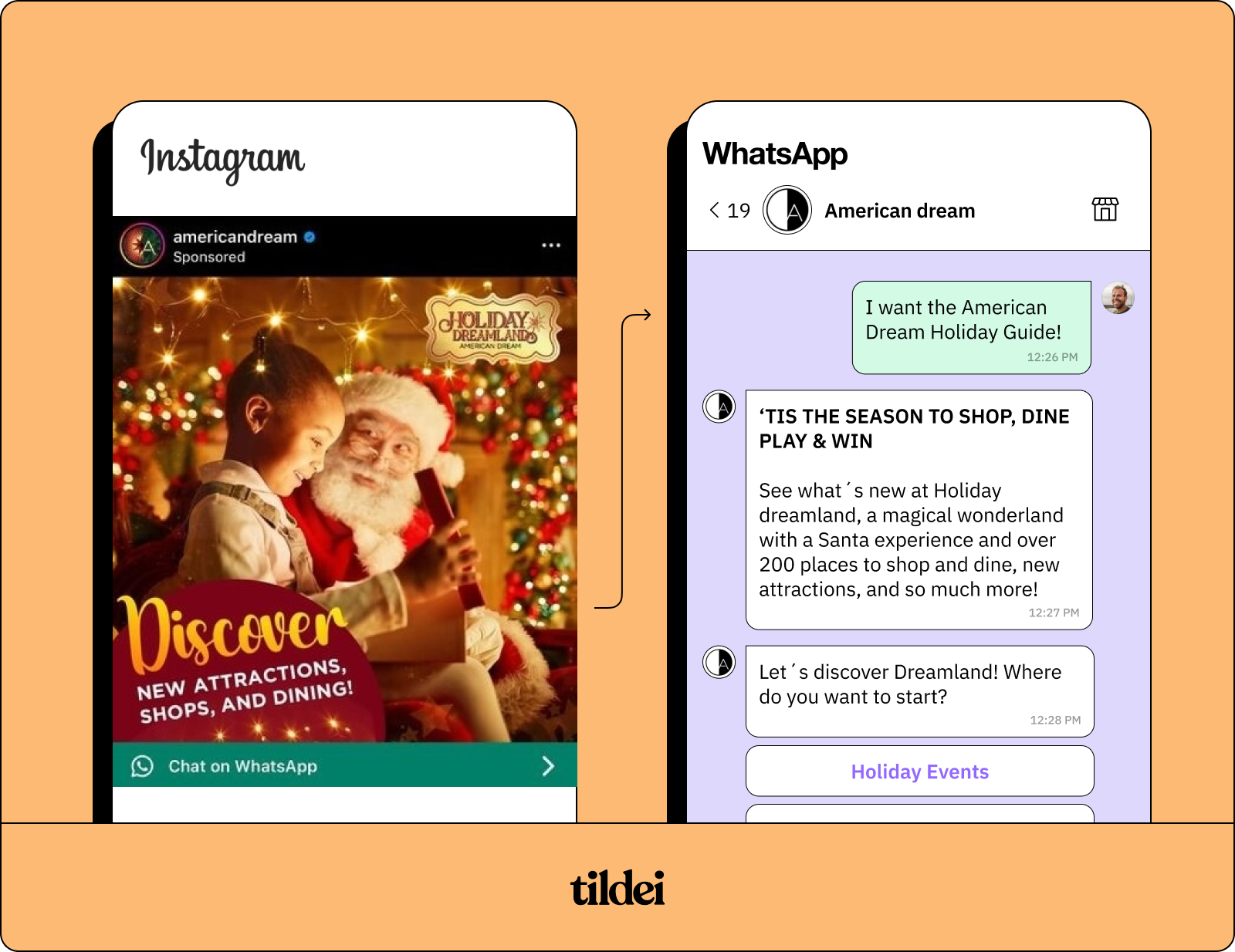
Boosting Engagement and Supporting Discovery: WhatsApp Conversation
The primary goal of the campaign was to take the stress out of the holiday season and make it easier for their customers to plan meaningful holiday experiences using the American Dream Holiday Guide. The conversation allowed customers to choose their own adventure by giving them three main categories from which to select: Holiday events, shop and dine, and entertainment.
Within each of the three main categories, they included additional areas to explore from photos with Santa to finding the perfect restaurant. Based on the unique customer’s area of interest, the automated conversation shared a link directly to that landing page on the American Dream website.
Growing Conversions: Tickets sold
This was American Dream’s first foray into WhatsApp marketing. As an exploratory campaign, their main goal was to drive awareness for their events. They were quickly surprised to find that not only did their customers engage in conversations, but they also went on to book experiences: 1 in 5 conversations started, resulted in a purchase.
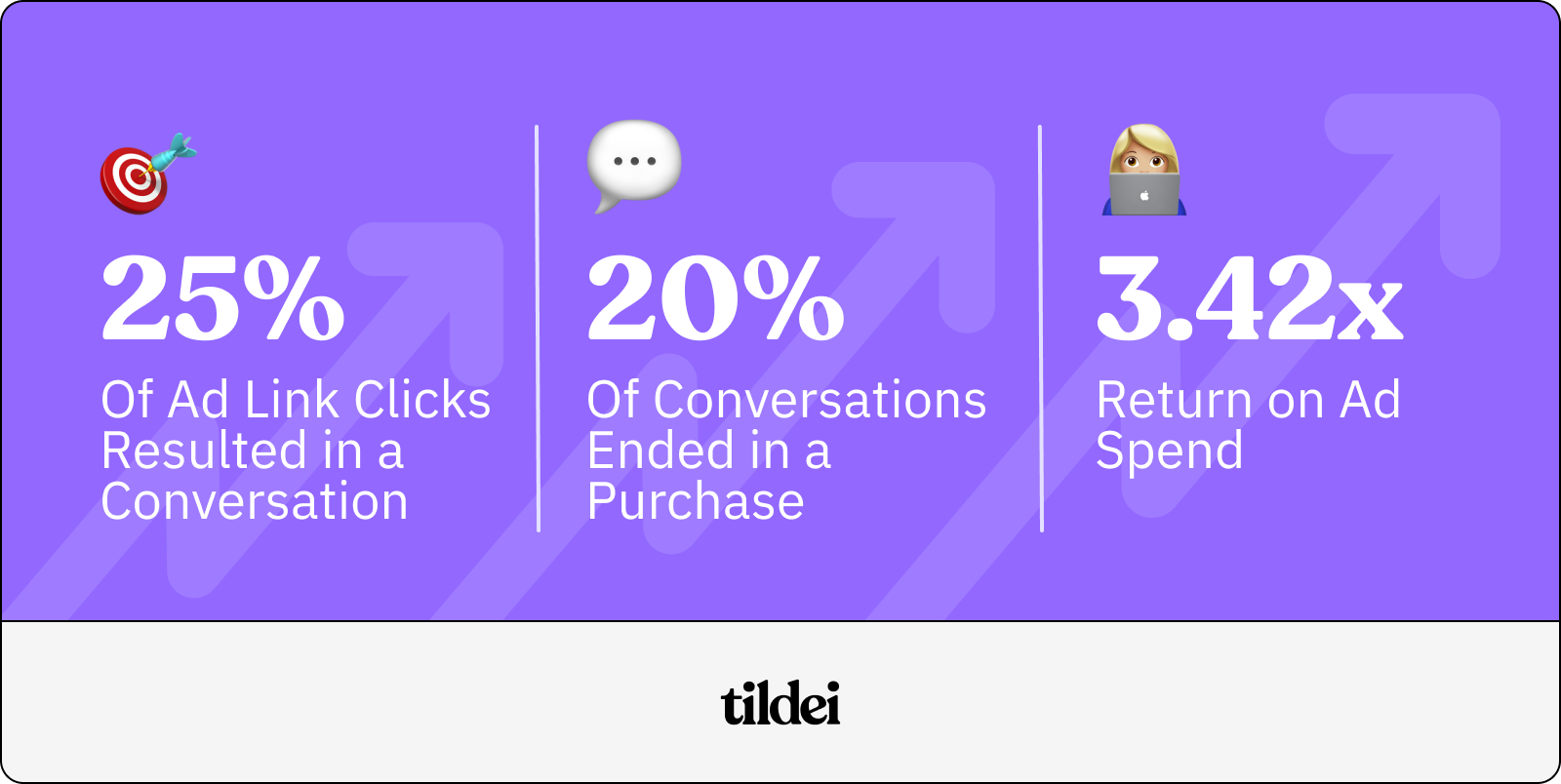
Higher Conversions Through Conversational Messaging
The American Dream Holiday Guide on WhatsApp served as a single source for relevant event information and ticket booking for their customers. The conversational style of WhatsApp marketing was a perfect fit for event discovery. Customers communicated with American Dream similarly to how they interact with their family and friends. The conversation provided a relaxed dialogue where they could explore the American Dream holiday offering in their own time and in their own way.
The initial campaign has set the foundations for growing deeper relationships with those who started conversations and has inspired American Dream to test new WhatsApp campaigns in the future.
Interested in getting more return from your Meta ad spend? Get started with Tildei today.
A choose your own adventure guide to holiday fun that converts!

In today's fast-paced digital landscape, leveraging WhatsApp marketing strategy has become a game-changer for businesses of all sizes. Whether you're a seasoned marketer looking to expand your outreach or a beginner eager to explore new avenues, this guide will equip you with the knowledge and tools you need to tap into the immense possibilities of WhatsApp marketing. WhatsApp marketing can boost brand visibility, increase engagement with your audience, and drive conversions.
What is WhatsApp Marketing?
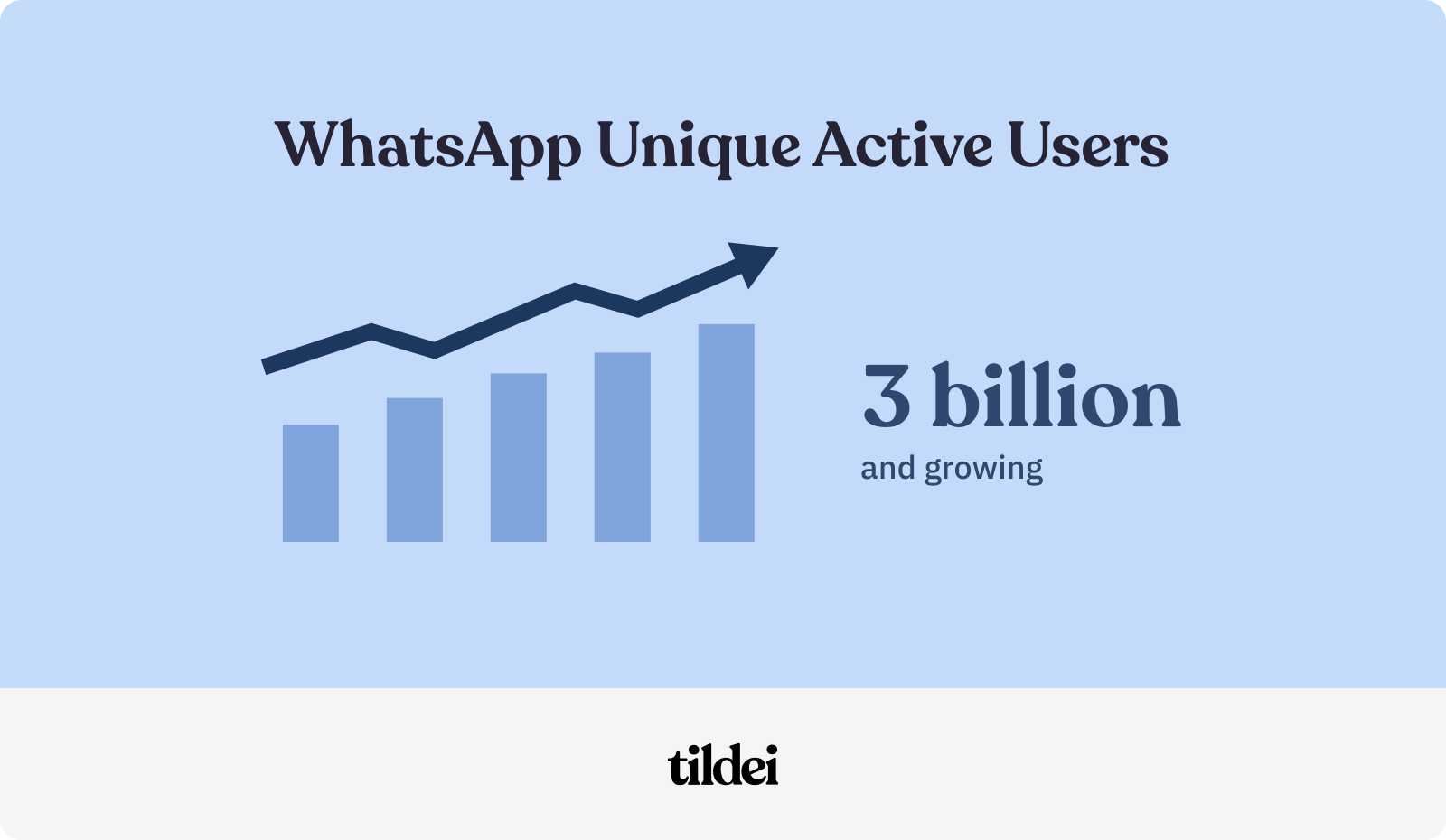
WhatsApp is a fast-growing, versatile messaging channel. With 3 billion users actively worldwide, it’s one of the most popular messaging apps and is quickly becoming the preferred channel for people to communicate with family and friends as well as brands. It has messaging, voice, image, and video capabilities allowing for more dynamic conversations.
In terms of WhatsApp messaging between brands and customers, businesses can reply to customers who contact them directly and initiate conversations once a customer has opted into receiving marketing messages.
What are the Benefits of WhatsApp Marketing?
There are many benefits to why you should be marketing on WhatsApp. With approximately 3 billion unique active users worldwide, there’s a good chance your customers are already using it. Even more, the number of WhatsApp users is growing. Worldwide, WhatsApp monthly users increased by 12% between June 2022 and June 2023, and it’s predicted to keep growing.
Let us take a look at other WhatsApp-based statistics:
- 100 million people in the US now using WhatsApp, growing at a whopping 10% year-over-year.
- Over 25% of 35-44 year olds in the US own a WhatsApp account while 33% of 18-34 year olds have one.
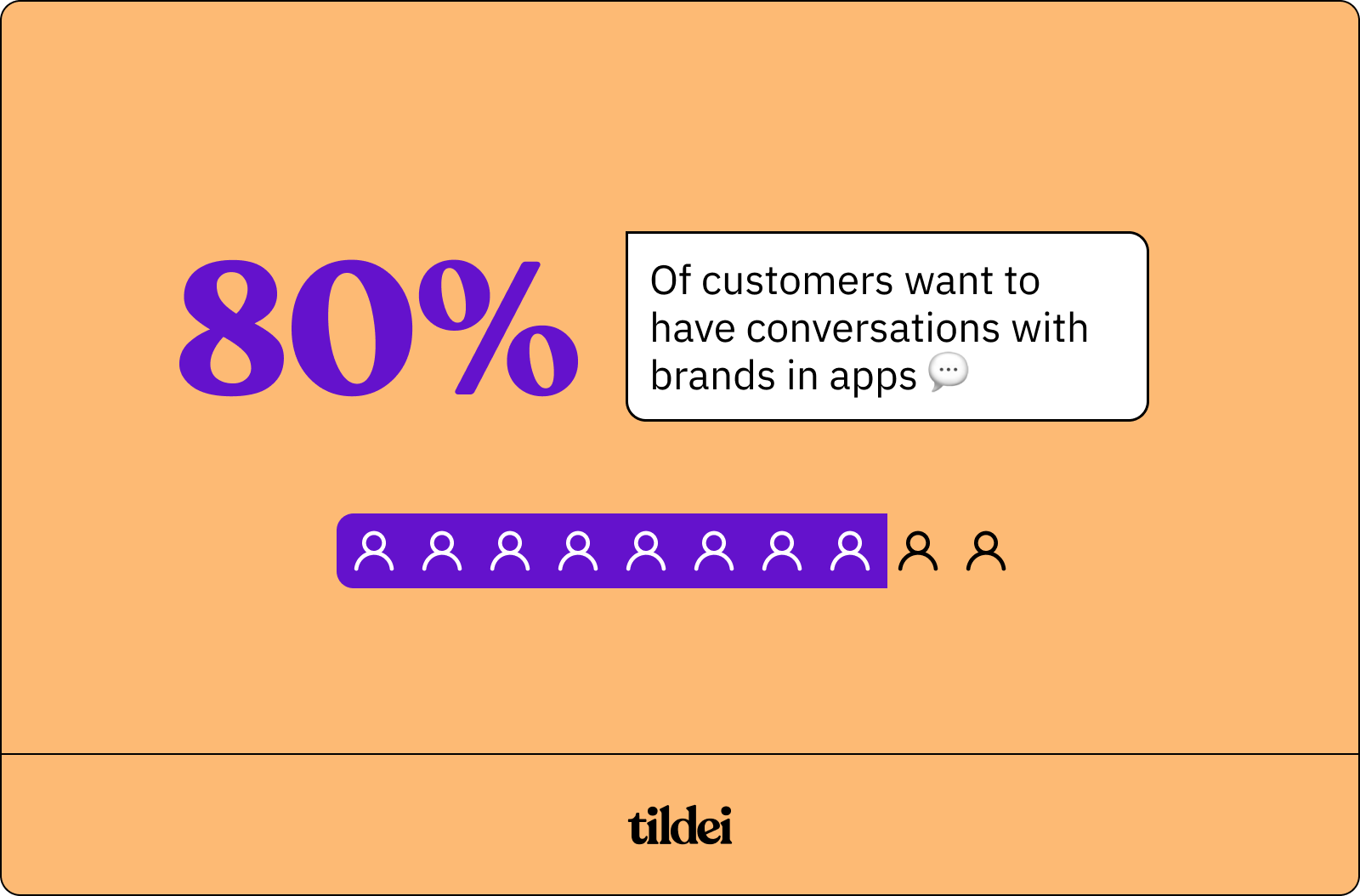
- 80% of customers want to have conversations with brands in apps.
- Globally, 66% of online adults surveyed agree that messaging is their preferred way of communicating with a business, with that number growing to 72% among 18-34-year-olds.
Early Marketing Advantage
Right now is the perfect opportunity to gain an early marketing advantage on WhatsApp. WhatsApp didn’t launch a business part of the app until 2018, making it a less saturated conversation channel when compared to the busy traditional marketing email inbox or the noisy SMS space. Companies using WhatsApp messaging can stand out, easily connect with their customers, and get the benefits of a first mover.
Conversational Marketing Messaging
The interaction between brand and customer is now expected or preferred to be a conversational experience. WhatsApp is a conversation-first channel, so building a dialogue is inherent in the technology. With an average 98% open rate of WhatsApp messages, it has one of the highest engagement rates of any channel and messaging app. This almost guarantees your messages will be viewed and exponentially increases the effectiveness of your marketing campaigns.
How Does WhatsApp Support the Marketing Funnel?
Full Funnel Marketing
WhatsApp views the marketing funnel from a full-funnel perspective. They’ve built their product with the three main stages of the funnel cycle in mind:
Top of Funnel (TOFU) - send media-rich messages to customers to help engage and drive product awareness.
Middle of Funnel (MOFU) - message customers with unique offers and personalized messages to nurture and convert.
Bottom of Funnel (BOFU) - send helpful reminders when a customer has abandoned their cart and create re-marketing ads that send customers to a WhatsApp conversation.
Similar to how marketers are solving for their own funnels, WhatsApp has built a comprehensive tool addressing all phases of the customer lifecycle. Collecting opt-ins, driving customer awareness, newsletters, new product launches, returning to abandoned carts, and other marketing campaigns can all be done via WhatsApp marketing.
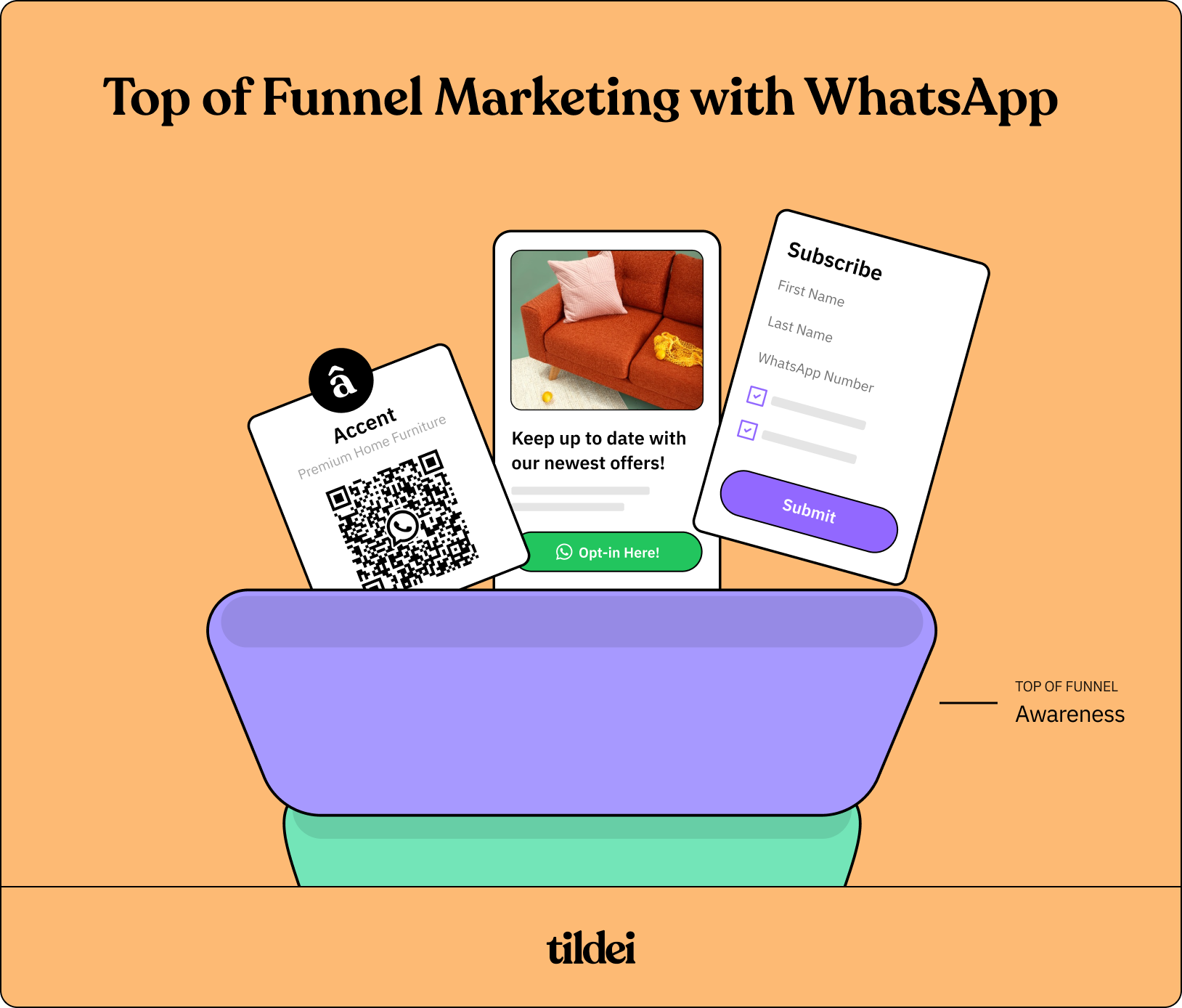
Top of Funnel WhatsApp Marketing and Its Importance
- To acquire opt-in and gain interest from new or returning customers.
- To build awareness, nurturing the relationship between brand and customer as they get to know each other better.
Historically the top of the funnel has been one of the most important and challenging stages of the funnel cycle. Marketers must turn to innovative and engaging ways to meet their customers where they are and recognize their needs.WhatsApp supports marketing efforts in feeding the top of the funnel with intuitive opt-in tools and strategies at key moments in the customer lifecycle. Additionally, the WhatsApp business app is a platform for marketers to meet those needs and for marketers to provide their customers, new and returning, with meaningful customer experiences.
How Do You Get Started with WhatsApp Marketing?
Establish a WhatsApp Business Account
The WhatsApp Business Platform unlocks the WhatsApp API. Through it, brands can connect with their customers at scale, send a variety of message types, and leverage the full power of WhatsApp. It can be accessed in 1 of 2 ways: you can build an in-house solution or you can work with a WhatsApp Business Partner (like Tildei!).
The WhatsApp Business Platform
The WhatsApp Business Platform unlocks the WhatsApp API. Through it, brands can connect with their customers at scale, send a variety of message types, and leverage the full power of WhatsApp. It can be accessed in 1 of 2 ways: you can build an in-house solution or you can work with a WhatsApp Business Partner (like Tildei!).
To start you will need to do the following:
- Get a phone number: You will need to own the phone number, and it can’t be tied to another WhatsApp account. If you need help with this step, let Tildei know!
- Get Meta Business Manager: If you have a company Facebook Page you should already have this. If not, it’s easy to get set up!
- Set up your WhatsApp Business profile: A WhatsApp business profile is your business name, business description, address, website, and image (logo). Bonus: if you are in a country that supports WhatsApp directory, it will also let customers find you there.
- Integrate with your WhatsApp provider: If that’s Tildei, we will take you the rest of the way and give you access to the Tildei Platform!
For a step-by-step guide on getting started, we recommend you go to our Getting Started on WhatsApp blog and follow the helpful instructions we made for you there.
Initial WhatsApp Marketing Campaigns
For your initial WhatsApp marketing campaigns, we recommend having 3 essential WhatsApp campaigns that will get you started. Here are the three campaigns that top our list:
- Welcome Campaign: The perfect start to the conversation
- Conversational Newsletter Campaign: A reason to continue the conversation
- Post-Experience Campaign: A moment to listen to the customer
5 WhatsApp Marketing Best Practices
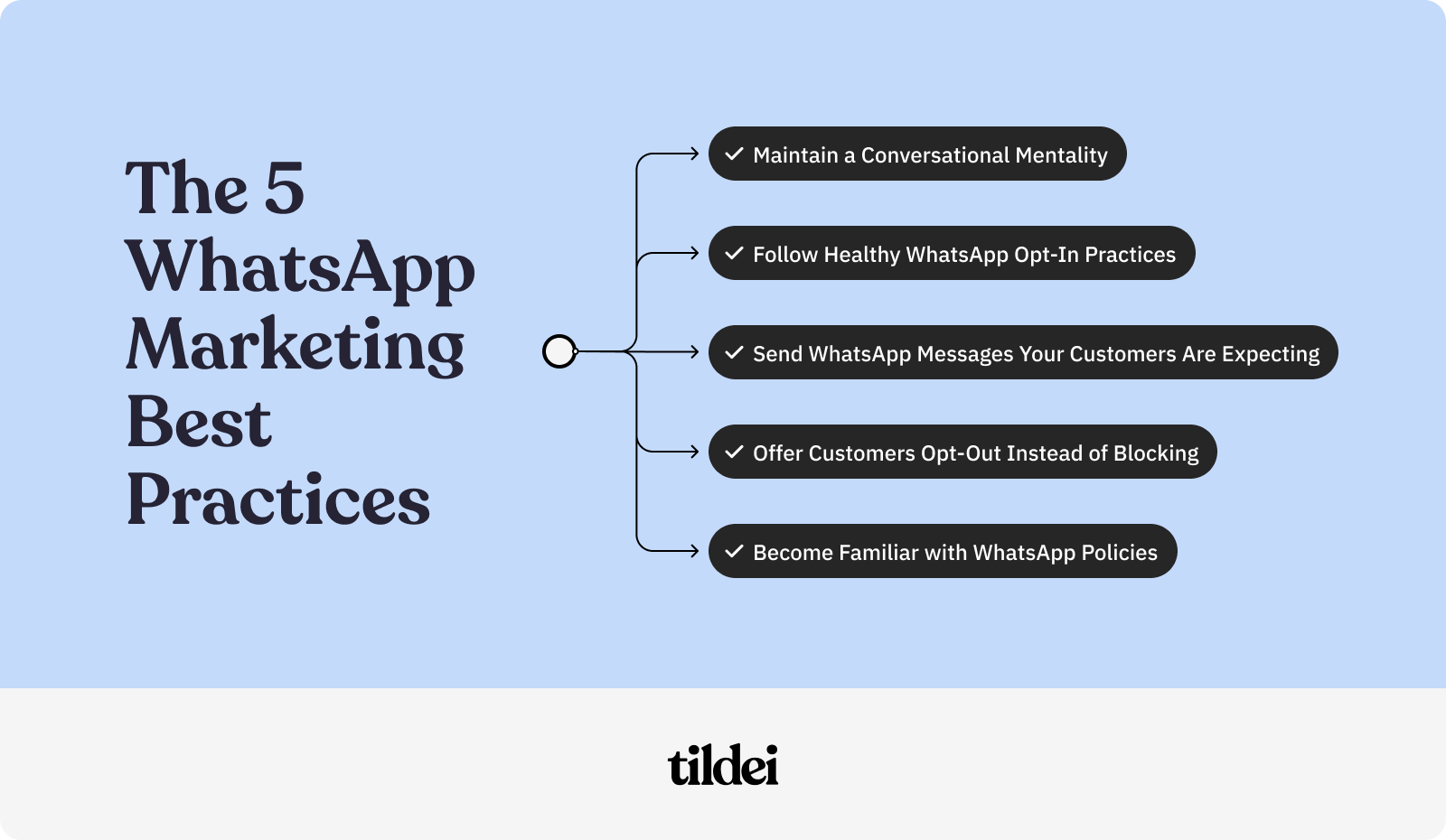
1. Maintain a Conversational Mentality
Conversational marketing is at the forefront of modern marketing strategy, and WhatsApp provides the perfect channel to communicate with your customers in that way. Subsequently, a shift in marketing strategy also requires a shift in how you think about the messages to send.
No more should marketing be thought of as a one-off message sent for the customer to consume. Instead, conversational marketing requires thinking through your marketing messages and campaigns in a dialogue form, or simply put, rethinking your campaigns as conversations.
Questions to ask to ensure you’re taking a conversation-focused approach:
- Does this sound like how customers would have a conversation with a friend or with an associate in a store?
- What opportunities are there for customers to engage and respond?
- What questions might the customer ask in relation to the campaign?
- What are ways to respond to a customer’s reply to make them sound heard?
If you find yourself directly copying and pasting the same content from an email or an SMS message, that’s your signal to rethink your campaigns as conversations. Use your existing campaigns as inspiration for creating new conversations.
Need more ideas? Scroll down to the Use Cases and Examples section below.
2. Follow Healthy WhatsApp Opt-In Practices
Similar to other digital marketing channels, WhatsApp marketing strategies require brands to follow specific rules around opting in new subscribers:
- Businesses must clearly state that a person is opting in to receive messages from the business over WhatsApp
- Businesses must clearly state the business name that a person is opting in to receive messages from
- Businesses must comply with applicable law
Beyond the WhatsApp requirements, we recommend brands follow additional best practices to provide a better customer experience.
WhatsApp Opt-In Best Practices Checklist
- Users should expect the opt-in message
- Communicate the value of receiving this information over WhatsApp
- Provide clear opt-out instructions
- Monitor the Quality Rating
3. Send WhatsApp Messages Your Customers Are Expecting
An important part of any successful WhatsApp campaign is sending the right message to the right customer. At opt-in opportunities, clearly state what the customer should expect and the types of messages and frequency at which you plan to send.
Ensure any messages sent to the customer are what they’ve opted in to receive. Additionally, don’t over-send messages to customers. Keep campaign messages relevant, targeted, informative, and conversational.
4. Offer Customers Opt-Out Instead of Customers Blocking Your Messages
If you’re sending a marketing message to your customers, it's a good idea to add an opt-out button on marketing messages. Although it’s a sad moment when your customers choose to opt out of receiving messages from you, it does help keep a healthy, high-quality rating on your templates as well as an engaged audience. The opt out helps avoid them reporting or blocking your brand which could impact your quality rating and lower customer experiences.
5. Become Familiar with WhatsApp Policies
WhatsApp has two policies that govern how businesses can use the channel: a Business Policy and a Commerce Policy. These policies essentially outline the kinds of messages brands can send and the types of products brands can advertise. Ultimately, their policies are focused on keeping the channel valuable for their users. It started as a channel for users to communicate with family and friends, and they want to ensure that remains the top priority. To show how important the user experience is, “Create a Quality Experience” is one of their top policies.
Creating Message Templates in WhatsApp
What are WhatsApp Templates?
Templates and their related rules and approvals are unique to WhatsApp. A template is a pre-built message that can include variable parameters, buttons, and quick replies. Templates are approved by Meta that allow brands to send business-initiated marketing messages to subscribers.
WhatsApp Template Approval
Any template a brand creates and wants to use must go through approval. Tildei can provide insights and guidance on helping build an approved template. WhatsApp will always have the final decision on the approval process. Once a template is approved, it continues to receive a quality rating that is monitored by WhatsApp.
WhatsApp Template Categories
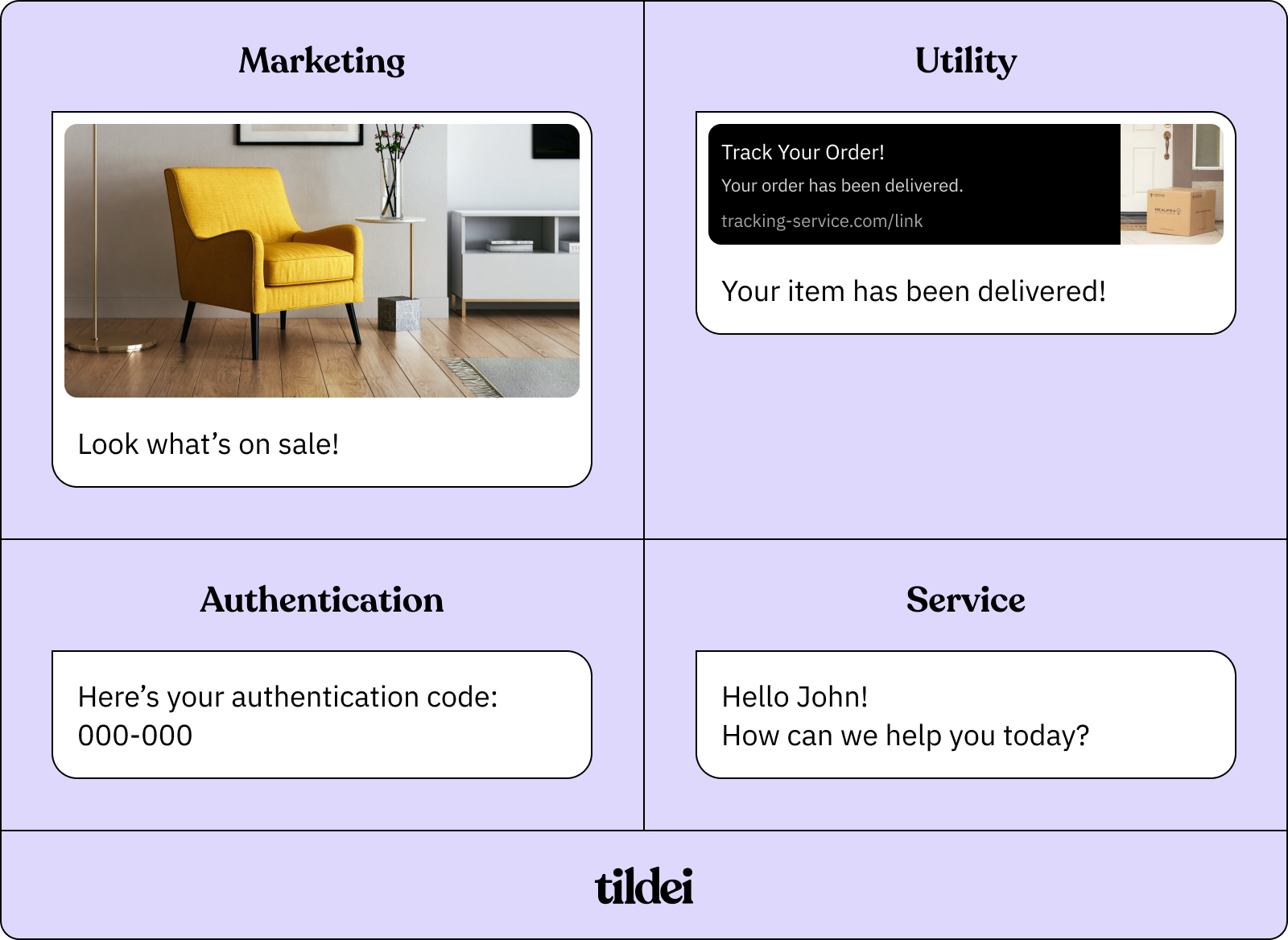
Message templates are required for messages sent to customers based on a trigger (opt-in/subscription) or sent to a group in a batch. There are four types of messages within WhatsApp, but you can only categorize templates as one of these three:
- Marketing - A conversation that relates to your business, products, or services. These conversations can include offers and promotions, product suggestions, and abandoned cart message follow-ups.
- Utility - A conversation that is directly related to a transaction your customers have made. This commonly can include a post-purchase notification and a recurring billing statement.
- Authentication - A conversation that provides users with one-time passcodes for authenticating their accounts during registration, account recovery, or if they’re experiencing any other challenges.
The final categorized message is a Service message, but you cannot label a Template as a Service message. Service messages are generally considered within the user-initiated category. Service messages are intended to be a one-off conversation, and follow a standard 24-hour response window.
Quality Ratings and Reviews
Quality ratings are one of the key ways WhatsApp monitors conversations in the messaging app between businesses and customers. The customer who receives a business-generated message can rate a message they’ve received. If a quality rating drops to a low quality, then those messages are stopped from being sent and the WhatsApp campaign comes under review by WhatsApp. Because of this, brands must monitor their customer experiences and ongoing WhatsApp messaging and create relevant conversational content.
Adding Message Samples
WhatsApp refers to additional visual files that are included with your template submission as Samples. They are highly recommended to be included when submitting your WhatsApp message templates to help the approvals team make a decision on your template. They help communicate a better understanding of the message and add context. Here are some Samples that Meta has provided.
WhatsApp Marketing Use Cases and Examples
WhatsApp is a new marketing approach, especially with its conversational focus. The best way to get up to speed is to immerse yourself in WhatsApp conversations. It can be as simple as reading about and viewing WhatsApp marketing campaign examples or interacting with consumer brands on WhatsApp yourself. An ideal WhatsApp marketing use case is to showcase new products to the right audience using WhatsApp open rates metrics, quick reply buttons, and impressive conversion rates.
WhatsApp Marketing Campaign Strategy and Ideas
Adopting a WhatsApp marketing strategy has the capability to support similar campaigns you may already be sending in other marketing channels. It also provides a platform to go above and beyond what other channels offer. Start with what you’re already doing and see if WhatsApp marketing messages can support or provide a better customer experience. Consider your customer lifetime value and see if there are any gaps that you may be able to finally fill using WhatsApp marketing strategies.
There are countless use cases that we’re excited about, and we’re sharing a few WhatsApp marketing examples here. If you’re just getting started with WhatsApp, we recommend you start with 3 essential WhatsApp campaigns. Looking to get more creative? Here are two WhatsApp marketing examples that will help drive ROI:
Conversational Newsletter Campaign - A reason to continue a conversation
WhatsApp can help you innovate the newsletter and connect with your customers on the topics that matter most to them. The newsletter no longer has to be a push of information, but instead, it can be turned into a conversation that makes the experience more personal. Provide the subscriber with a list of categories to pick from using quick reply buttons, and let them choose the topics that interest them the most. Take your newsletter content and turn it into a dialogue.
Product launch / ‘drop’ campaign - A reason to begin a conversation
A new product launch is an exciting time for you and for your customers. Use the product launch as an opportunity to grow your WhatsApp subscriber list and achieve higher conversion rates. Incentivize WhatsApp opt-in with countdown messaging, early access, or subscriber-only discounts. Leading up to the launch you can share more about the product and behind-the-scenes content.
Re-imagine Campaigns as WhatsApp Conversations
After spending some time thinking about conversational marketing, you may find yourself saying, “Wow this message would have been so much better as a conversation.” That thought happened to us a few times, and we felt inspired to show how email and SMS campaigns could be turned into conversations.
Want to give it a try? Look at the messages you already send, and start to re-imagine them as WhatsApp conversations. Here’s how we think about turning common campaigns into conversations:
Newsletters
- Scrap the long, text-filled emails that probably aren’t getting read all of the way to the bottom
- In the conversation, allow your subscribers to choose the information they’re interested in. You can also use that data to tailor content to them in the future
Reviews
- When gathering reviews via a conversation, simply ask one question at a time, making it easier for them to quickly tap through versus a long web survey
- Their answers can be stored to tailor future content your subscribers receive
- Overall, messages sent via WhatsApp campaigns have a high engagement rate, so you can generate more feedback responses improving customer care and customer satisfaction
Quizzes
- A great opportunity to create some fun in the conversation, take the quizzes you’d have on a website and bring them to WhatsApp messages
- Each answer can be a simple quick reply for the customer, you can have planned responses to their selections, and provide links to the recommendations and a customized landing page at the end
- Include rewards, discounts, and valuable product information to reward customer participation
Experience a WhatsApp Conversation for Yourself
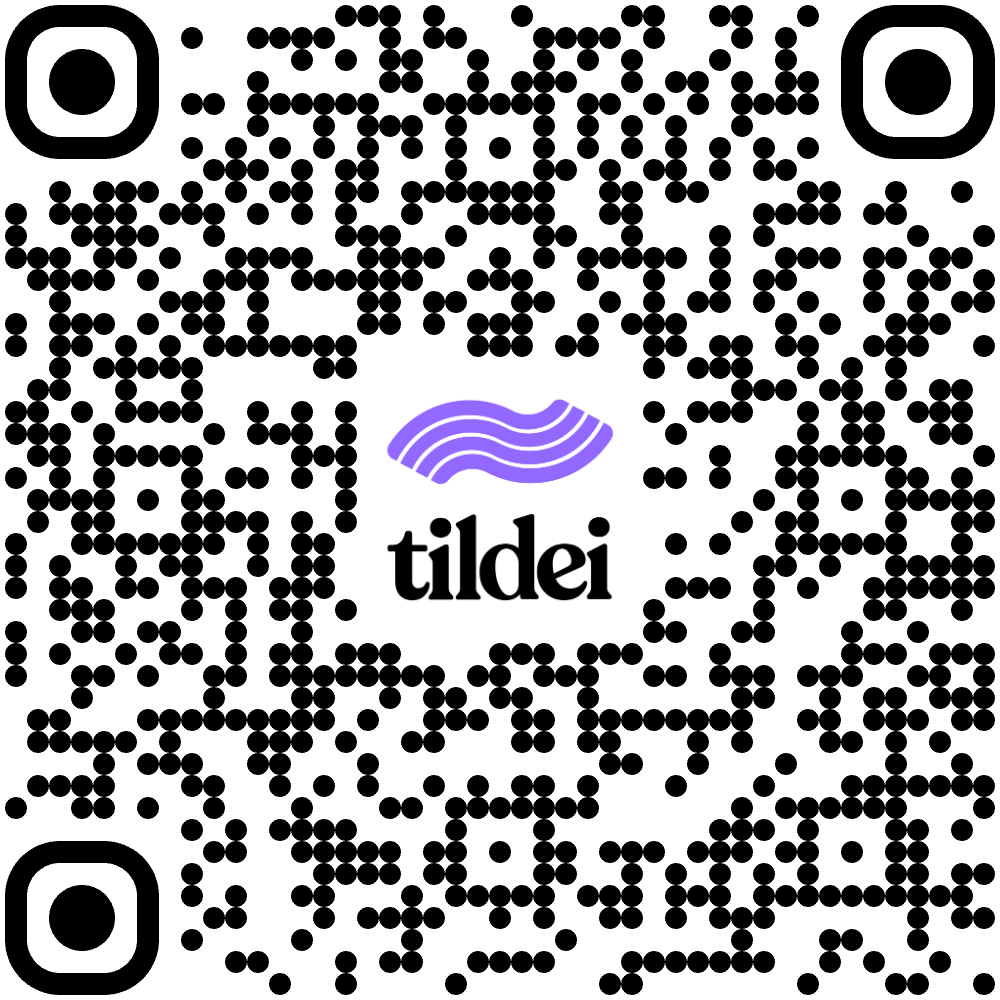
Sometimes it is best to learn by experience. To better understand how WhatsApp marketing messaging works, test out an interactive Tildei campaign by clicking or scanning the QR code below.
How Does WhatsApp Marketing Compare to SMS Messaging?
Security
WhatsApp’s motto is “Message privately.” They provide privacy and security in a variety of ways, most notably with their end-to-end encryption. Message encryption ensures only the sender and the receiver can see the message. That same level of security also extends into their WhatsApp business app.
An additional level of security built into business messaging is verification. Businesses can go through verification that proves they’ve been verified by Meta to be who they say they are. This gives customers the peace of mind that they’re speaking with the correct business.
SMS
Messages sent over SMS aren’t encrypted, and SMS doesn’t provide standardized business verification. When receiving messages from businesses on SMS customers can experience a level of uncertainty about the sender of the message as it’s becoming a popular scamming technique to spoof sending numbers. It’s a standard channel that millions use to communicate, but it’s fairly basic in what it offers for security.
Interactive Conversational Messaging
Another key feature of WhatsApp business messaging is to provide interactive elements for their users to express themselves. They support this goal by providing users with integrated media elements and interactive response methods. Those same interactive capabilities can be used by businesses as well. Businesses can send files, images, and locations. Additionally, businesses can send messages with List Messages or Reply Buttons to structure responses or provide a clear call-to-action for potential customers.
SMS
Businesses have the ability to send files, images, gifs, and videos when sent as a multi-media message (MMS). When it comes to interactive elements, SMS (or even MMS) does not provide many options. To reply to messages, customers have to type specific keywords or reply to enumerated lists of options. It’s very simple and text-based. The most common reply brands receive over SMS is a customer sending ‘STOP’ to opt out.
Networks for Sending and Receiving Messages
WhatsApp relies on an internet connection for users to send and receive messages. That means users can send or receive messages whether they're connected through data on their cellular plan or over Wi-Fi. This makes message sending more affordable for users, allows them to use it when traveling outside of their home country, and has no cost for sending or receiving messages from other users or brands globally. One challenge of WhatsApp is that it requires a smartphone or desktop device since it is app-based.
SMS
The good news for your marketing team is that messaging apps SMS and WhatsApp aren’t competing channels, they’re complimentary of each other. You can easily have both in your marketing mix and use them for different purposes. You can also decide to use them similarly and let your customers decide in which channel they want to speak with you.
Deciding to use SMS or WhatsApp
The good news is that SMS and WhatsApp aren’t competing channels, they’re complimentary of each other. You can easily have both in your marketing mix and use them for different purposes. You can also decide to use them similarly and let your customers decide in which channel they want to speak with you.
Why is Tildei Starting with WhatsApp?
The future of marketing is conversational, and we believe WhatsApp is the channel to bring those conversations to life. There are countless reasons why we’re big on WhatsApp, but the most obvious is the market size. With a whopping 2 billion monthly active users, it’s by far the most popular chat app in the world.
As we center the conversation between brands and their customers, we think there are even more compelling reasons for WhatsApp. Our favorites are the interactive elements native to the channel. WhatsApp has intuitive, interactive features like quick replies, lists, voice memos, images, PDFs, and videos that actively encourage conversations uniquely to the channel.
We’re sensing a big shift for both marketers and customers in the near future, changing how we all interact. 80% of customers report they want to talk to brands in a chat or social app. AI technology like Chat-GPT has captured our imaginations and spurred thousands of new companies to test the limits of what is possible. Brands are being challenged to have real conversations with their customers. They are being asked to send more than a highly personalized message. They are being asked to talk to customers in a genuine, authentic way, and we’re excited to see that happen in WhatsApp.
The most important WhatsApp marketing tips and tools in one place to boost visibility and drive conversions.

Similar to how certain rules govern how you grow your email and SMS subscribers, WhatsApp also has specific opt-in rules. The rules give you the requirements and boundaries within which you can build your strategy. It’s like learning a language. Once you know the rules and structures, you have the information you need to express your creativity. In this guide, we’ll start with the WhatsApp opt-in rules, and then we’ll follow with WhatsApp opt-in strategies.
WhatsApp Marketing Opt-In Rules
WhatsApp Opt-In Terms to Know
Conversation: In this blog, conversation is defined as a back-and-forth dialogue between a business and a customer. When it comes to business-to-consumer communication, WhatsApp’s main intention is to be a conversation platform versus solely a message-sending platform. Below, you will see the term ‘message’, but it’s always used in a context related to a conversation where the message will either begin or be a part of a conversation.
Business-initiated conversation: A conversation that is started by a business, and the message is sent to a subscriber proactively. These conversations can be either marketing, authentication, or utility conversation types.
User-initiated conversation: A conversation that is started by a user, and the business responds. These conversations often begin when a user opts in to receive messages or starts a service inquiry.
Trigger phrase: Similar to a keyword in SMS, the trigger phrase is a word, phrase, or sentence a customer sends (whether they type it themselves or it’s auto-populated after clicking a specific link) that kicks off a predefined automated conversation. The trigger phrase can be used to start an opt-in conversation or used later for specific WhatsApp campaigns or customer support.
Golden Rule for Initiating a WhatsApp Marketing Conversation
Businesses must receive opt-in permission confirming a customer’s wish to receive future messages from them on WhatsApp before the business can initiate a WhatsApp conversation. This opt-in rule applies to proactively contacting customers with business-initiated conversations. Business-initiated marketing messages require template approval before the message can be sent.
User-initiated conversations follow different rules. If the customer actively messages your brand, you have 24 hours to respond to them. No official opt-in is required. Outside of the 24-hour reply window, you are required to follow the rules of a business-initiated conversation.
User-initiated conversations can begin the opt-in experience that then allows a brand to contact them in the future with business-initiated messages.
How WhatsApp Opt-In Differs from Other Digital Channels
WhatsApp provides unique methods for customers to begin conversations with brands and ultimately to opt in. Through QR codes and URL links, the moment the customer scans the code or clicks the link, a conversation with a brand has begun. For the customer, this way is much more similar to how they’re used to communicating with family and friends.
This method is unlike other marketing channels. In the more traditional digital channels like email and SMS, the customer is required to share their email address or phone number, submit that information, and then wait for a message.
Instead with WhatsApp, when they click a link or scan a QR code, the customer no longer has to wait for their data to be passed to a system. This approach allows them to take the lead, send the message, and begin the conversation.
The QR code or URL can pre-populate the message on behalf of the customer which acts as a trigger phrase. The trigger phrase launches an automated conversation.
To ensure the customer fully understands they are opting in for future messages from this conversation, it’s best to include a double opt-in experience and confirm their opt-in early on in the conversation.
How to Obtain WhatsApp Marketing Opt-In
You can receive opt-in from subscribers in any method that you prefer as long as it follows these main requirements:
- Businesses must clearly state that a person is opting in to receive messages from the business over WhatsApp
- Businesses must clearly state the business name that a person is opting in to receive messages from
- Businesses must comply with applicable law
The best practice is to ensure this information is included whenever and wherever you are gaining the customer’s opt-in. Examples of places you might gain opt-in:
- In-store
- On your website
- On your packaging
- Through a voice call interaction
- In another digital channel
- Through an action button on Facebook or Instagram Ad
- Through a user-initiated WhatsApp conversation
Best Practices for Obtaining WhatsApp Marketing Opt-In
WhatsApp’s goal, as well as ours, is to be a channel with high-quality conversations between businesses and customers. These best practices are important to consider when getting started on WhatsApp. Here are the key recommendations WhatsApp specifically provides:
- Users should expect the messages they receive. Set this expectation by:
- Obtaining an opt-in that encompasses the different categories of messages that you will send (ex: order updates, relevant offers, product recommendations, etc.).
- Obtaining separate opt-in by specific message category. This mitigates the risk that users will block your business if they deem them unsolicited messages.
- For example, if a customer opts in to receive utility types of messages like shipping updates, that doesn’t mean you can also start sending them marketing messages. Ensure you ask for their opt-in to each type of conversation category.
- Provide clear instructions for how people can opt out of receiving specific categories of messages, and honor these requests.
- Ensure your opt-in and opt-out flows are clear and intuitive for users.
- Clearly communicate the value of receiving this information on WhatsApp.
- Monitor your quality rating, especially when rolling out new opt-in methods.
What Happens if the Opt-In Rules Aren’t Followed?
WhatsApp’s main signal for potential policy violations is from customer feedback. Customers can block or report businesses. That information is shared back with WhatsApp. As Meta and WhatsApp state, "These user feedback signals are inputs into a business’ quality score and our systems will limit businesses if the business’ quality is low for a sustained period of time.”
After a high amount of feedback or flags, WhatsApp may look into opt-in flows to ensure they follow the set-out policy. Their aim is to provide a high-quality conversation channel, and the rules aim to protect that.
Ultimately, if your opt-in information is clear and easy to understand, you decrease the risk of customers blocking or reporting your business.
Helpful WhatsApp Opt-In Resources and Documentation
WhatsApp Marketing Opt-In Strategies
There are multiple ways to gain opt-in from your customers and grow your subscriber list. We’ve put together the main methods for acquiring new subscribers and ideas on where and how to apply those methods. Think of this list as a starting point. As long as your opt-in method includes the requirements mentioned above, the sky is the limit.
Tools for Growing Your WhatsApp Subscriber List
Think of these as the tools in your toolbox that you can leverage in different channels and locations. The goal is to capture a subscriber's phone number as well as permission to start a conversation with them in the future.
Links
Through Tildei, you'll be able to generate a link (you can also do this via the WhatsApp Business portal). When a customer clicks the link, it opens WhatsApp with a conversation window started with your brand. The message in the window can be pre-populated based on the link they click, or it can be a basic chat window allowing the customer to type their own request.
- Why we suggest this method: Customers who opt-in through a link begin as a customer-initiated conversation, so you don’t have to use WhatsApp-approved templates in your responses.
- Additional benefits to this option: pre-populated messages, easy one-click experience, WhatsApp campaigns can be associated with a custom link
Try it out and opt into our updates!
QR Codes
Similar to the link, through Tildei you'll be able to generate a QR Code (or you can also do so via the WhatsApp Business portal). When a customer scans the code, it opens WhatsApp with a conversation window started with your brand. The message in the window can also be pre-populated based on the QR code that was scanned.
- Why we suggest this method: Customers who opt-in through a QR Code begin as a customer-initiated conversation, so you don’t have to use WhatsApp-approved templates in your responses.
- Additional benefits to this option: pre-populated messages, used for offline acquisition, WhatsApp campaigns can be associated with custom QR codes
Scan to try it out and opt into our updates!
.png)
Facebook or Instagram Ads
- WhatsApp is a part of the Meta ecosystem, so there are connections built between their tools. you can add a “Send Message” button to Facebook or Instagram ads, and the button will open a conversation thread in WhatsApp. With this approach, your social ads can lead directly to a conversation with your brand.
- Benefits to this option: ease of opt-in from an ad, meaningful ad experiences for your customers
Capture Forms
Similar to capture forms for email or SMS opt in, WhatsApp opt-in capture forms most often live on your website (i.e. homepage, pop-up, purchase). With the form, you ask the prospect or customer to share their information and confirm their intent to opt-in to receive WhatsApp messages from your brand. Once you have their number and their opt-in, you're ready to start messaging them in Tildei.
- Keep in Mind: If a customer opts in this way, the initial message you send to them will have to be a WhatsApp approved template since it’s a business-initiated message.
- Benefits to this option: familiar process for customers, easier to capture additional profile data at sign-up
.png)
Additional options for acquiring subscribers include:
- asking a customer during customer service interaction
- replying to a WhatsApp thread
Again, these are all just starting points. This is your chance to think of ways in which you can share details of your program and provide a link to click or ask for a phone number. Anything that meets those criteria will work as a method to gaining WhatsApp opt-in.
Tactics for Gaining WhatsApp Opt-in
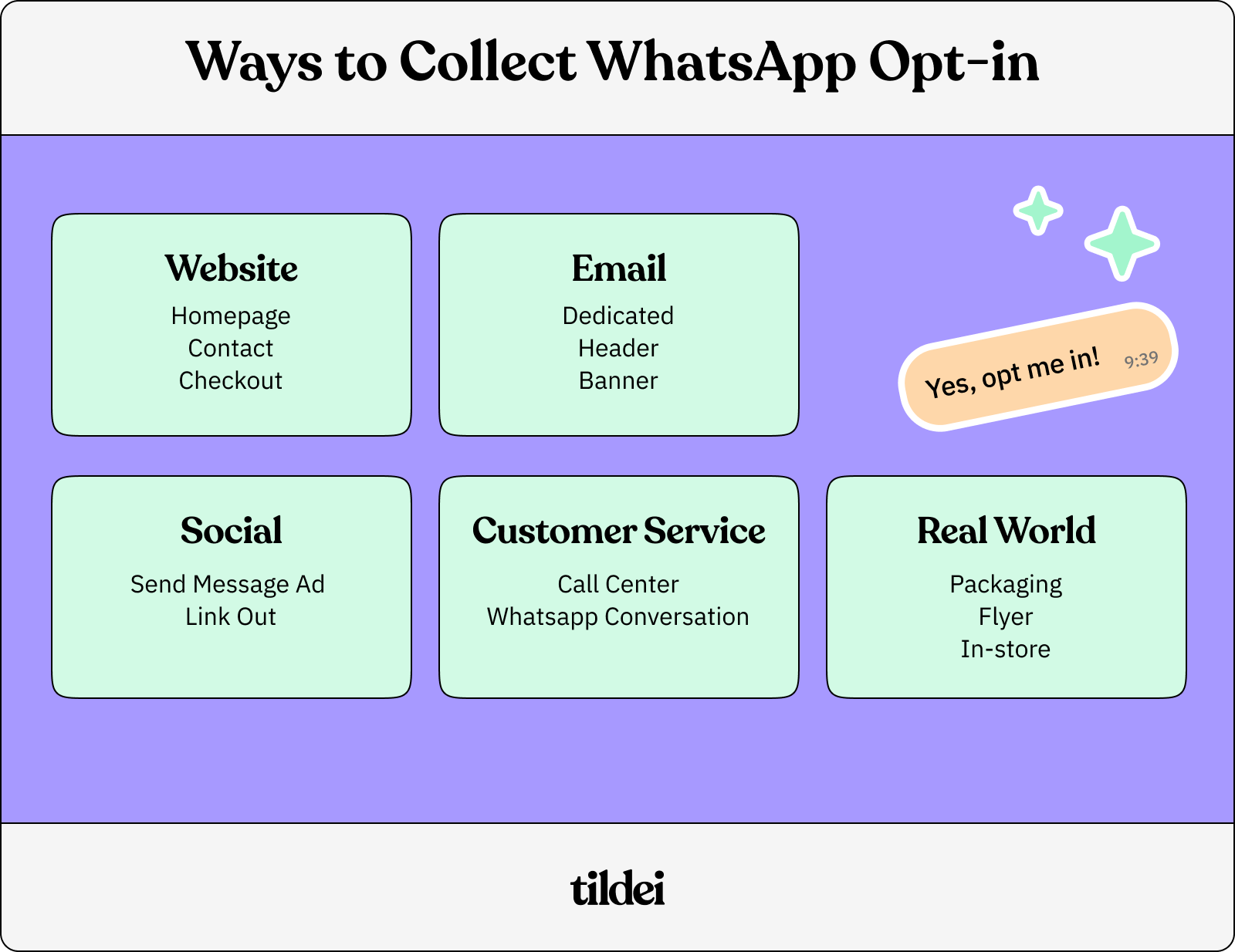
Now that you know the methods by which you can grow your subscriber list, you’re ready to put them into action. This section provides starting points and ideas on where you can place opt-in opportunities and how to plan the strategy. The opt-in strategies are grouped by the location to place them. The WhatsApp opt-in locations we cover in this blog include gaining opt in on your website, in your email messages, on your social channels, through your customer service, and offline in the real world.
Gain WhatsApp Opt-In On Your Website
The best method is through the capture form or link
Your website is your digital property, so it usually has the most flexibility with when and where you capture WhatsApp opt-in. There are many opportunities to acquire new WhatsApp subscribers.
Questions to ask when deciding to use this placement: When is a pivotal moment in the customer journey where a conversation could help? Is that on your homepage for customers to get to know your brand? Or is it on a product page when a customer is in a research phase? Choose the best placement for you and your brand, it could be both.
- Homepage - This is the most straightforward and expected place to ask for opt-in by using a form. The form may be in the header or footer of your homepage, in the middle of the page, a pop-up, or all of these. You may already have this in place for other channels like email or SMS. You have the option to repurpose one of those acquisition methods or add a new one. For example, you can ask for email in the header and WhatsApp in the footer or vice versa. Or you can ask for opt-in to both email and WhatsApp at the same time.
- Contact Us page - The Contact Us page is a great place to try out the link option. If a customer navigates to this page, they’re most likely hoping to have a quicker response. By including the link, they will be entered into a chat with your brand from the moment they click.
- Product page - A product page or a page that shares more information on your offering is perfect for a conversation-forward approach. Share a form or a link on your product pages to encourage a customer to opt-in to get more information and help with their research and shopping. At opt-in, you can ask for additional profile data to help tailor product recommendations or FAQ information for them.
- Checkout - Similar to how email is often captured at checkout, it’s also a great opportunity to include a field to ask for their WhatsApp number and opt-in confirmation. It can be used for purchase updates as well as providing recommendations and helpful tips after purchase.
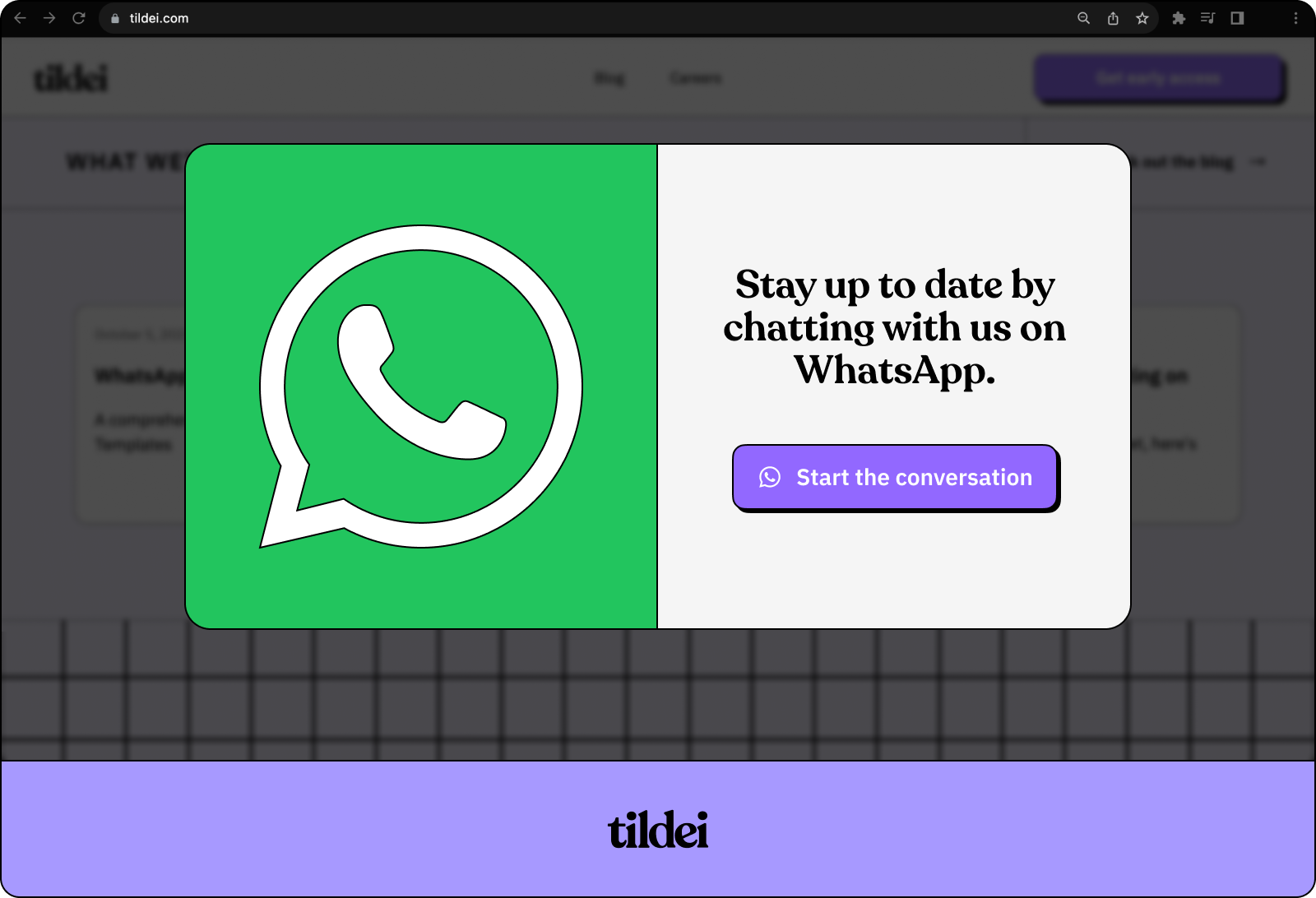
Here’s an example of what a pop-up could like on your homepage, encouraging your website visitors to connect with you on WhatsApp.
Acquire WhatsApp Opt-In Through Your Email
The best method is the link
Your email program is where you connect with customers, share product news and offers, and announce company updates. It’s a great place to let customers know you’re launching a new channel where they can interact with you more directly. Even more, those who are already signed up to receive emails from you, especially those who regularly engage, will also be those most likely to engage with you in WhatsApp.
- Send a dedicated email announcing the new channel - In the email, share the types of content you plan to send in WhatsApp and provide examples of how your customers can use it to get quick answers. Include the link to opt-in in multiple areas of the email. You can create a custom opt-in link for the email campaigns to know that those who opt-in are your email + WhatsApp subscribers.
- Include the WhatsApp link in the header or footer of the email - Similar to how you link out to other channels through icons, include the WhatsApp icon in your boilerplate email content and link out to your WhatsApp opt-in.
- Include an evergreen banner in your emails - Create a banner and include it in your weekly emails as a part of your template. It can include a call-to-action that shares the benefits of opting-in like being able to get additional information or help with questions they may have.
- Add WhatsApp opt-in to your welcome campaign - Use the initial welcome email to share a link to opt-in to your WhatsApp program. You can go further by including an email in the welcome series solely dedicated to your WhatsApp communication option (and save time by repurposing the content from your initial announcement email).
Here we’re sharing an example of how a brand could promote their WhatsApp program and encourage opt in through their email channel.
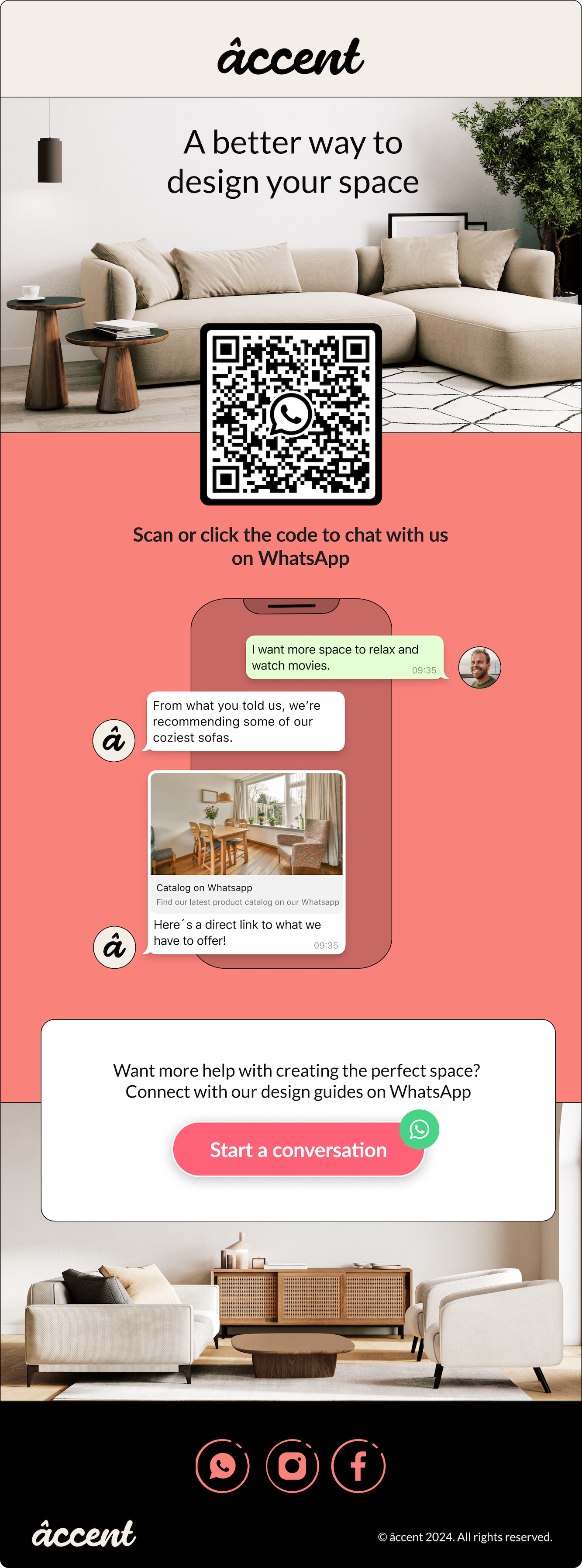
Obtain WhatsApp Opt-in On Your Social Channels
The best methods are the link and the Facebook or Instagram Ad
When a prospect or customer sees your brand in their social feed, they can feel inspired to want to know more and start interacting with your brand. The goal is to give them the ability to easily dive deeper. Additionally, WhatsApp is owned by Meta, the same company that owns Facebook and Instagram, so we expect to see more social integrations between the channels in the future.
- Share the link on your social channels - The linking approach allows the customer to start a conversation directly with your brand from the moment they click. The customer doesn’t need to know your phone number or details, they just need to click, and the conversation window opens. You can share the link in a variety of places on social:
- Include the link in your bio information on Instagram or TikTok
- Use the link in your posts on Facebook to direct customers to connect directly with your brand
- Include the link sticker on your Instagram stories to help customers complete the action associated with the story, like learning more about a new product or making a reservation
- Add the link to any digital experience where a customer might want more information and be able to easily click
- Use the Send Message button on Facebook and Instagram ads - When building an Ad for Facebook or Instagram, you pick an ad objective of starting a conversation on WhatsApp. It requires connecting your WhatsApp number with your Facebook page. The customer will see a “Send Message” button on the ad, and it will open a conversation thread with your brand.
.png)
Acquire WhatsApp Opt-In During a Customer Service Experience
The best methods are at the end of a phone conversation or the end of a user-initiated WhatsApp conversation
When customers reach out for additional help, whether that’s by calling your customer support team or asking their questions on WhatsApp, you can end the conversation by asking for their opt-in.
- Leverage your customer service team - If a customer calls customer service for questions or help, it’s a perfect opportunity to ask if they’d like to receive updates via WhatsApp once their requests are resolved. WhatsApp can be a great way for them to keep in touch with the brand and also a place for them to get help for other questions and concerns in the future. Provide your customer service team with a pre-defined script for asking for opt-in to ensure they cover the benefits as well as the required information.
- Ask at the end of a user-initiated WhatsApp conversation - After supporting a customer who has reached out with a user-initiated message in WhatsApp, follow up with the opportunity for them to hear more from you. Ensure you include the benefits of the program and only ask once you’ve confirmed their issue has been resolved.
Gather WhatsApp Opt-in Offline in the Real World
The best method is a QR code
When a customer scans the QR code, WhatsApp instantly opens to a conversation with your brand. There are many opportunities to include the QR code, and it depends on your industry, business goals, and access to working with other teams internally (i.e. in-store, packaging).
- Include a flyer with the QR code in purchases delivered to your customers - When they scan the code, it opens a conversation so they can quickly leave a review or get assistance if needed.
- Add the QR code to your packaging - Once scanned, it can launch a message for them to provide a product review, get insider access, or see behind-the-scenes content.
- Share the QR code in physical spaces - Place QR codes outside on posters, advertisements, or in-store next to products, all moments that would open a chat with your brand.
Additional WhatsApp Marketing Campaign Strategies
For other examples of how to grow and build WhatsApp campaigns:
- See how we reimagined a variety of existing marketing campaigns as conversations in WhatsApp
- Set your foundations with these essential WhatsApp marketing campaigns to get started
- Find inspiration from these creative WhatsApp marketing campaigns
A Renewed Mindset for WhatsApp Marketing Opt-In
Growing your WhatsApp program can feel challenging and exciting while also comfortable and familiar. There is comfort in the ways that WhatsApp is similar to other digital channels. You can leverage existing opt-in flows and follow opt-in best practices in general. The excitement comes from taking on a new channel that provides new opportunities to engage with your customers. With WhatsApp, you have new tools and tactics available to you to drive deeper connections than ever before.
Everything you need to know about growing your WhatsApp Community
“Can I use WhatsApp for top of funnel marketing?” We hear this from marketers of all kinds, but particularly from direct-to-consumer brands working on awareness and bringing new people into their brand. In a nutshell: yes. And we’d go as far as saying WhatsApp is actually uniquely positioned to help brands at the top of the funnel vs. other channels.
Let’s get into WHY you should be including WhatsApp in your top of the funnel marketing strategy.
Defining the Marketing Funnel
The marketing funnel describes the ways a customer is obtained, nurtured, and converted. It’s a cycle that not only guides a customer to a transaction but also helps you segment your audience based on data gathered at different stages.
The Three Stages of the Marketing Funnel
Top of Funnel (TOFU) - The awareness stage
Customers discover your brand for the first time and experience their initial interactions.
Middle of Funnel (MOFU) - The education and consideration stage
Customers learn more about your product and your company. They begin weighing their need to make a purchase and commitment to a brand.
Bottom of Funnel (BOFU) - The conversion and re-engagement stage
Customers complete a transaction or their commitment is secured. It is also one of the most important phases to consider re-engagement.
Top of Funnel Marketing
The top of funnel is the beginning of the cycle. It is the stage where a brand focuses on two main strategies:
- To acquire opt-in and gain interest from new or returning customers.
- To build awareness, nurturing the relationship between brand and customer as they get to know each other better.
This first phase of the funnel can be the most challenging because of the focus on generating net new interest. Marketers have to turn to innovative and engaging ways as they tune into meeting their customers where they are and recognizing their needs.
Why WhatsApp is Primed for the Top of Funnel
For the top of the funnel, WhatsApp can’t be beat. The conversational nature and interactive experience is engaging by design, and perfect for both nurturing new customer relationships and reinvigorating old ones. Let’s see how:
WhatsApp Offers Unique, Real-Time Entry Points into Marketing Conversations
A key difference with conversational marketing is that customers are not simply opting in to receive pushed marketing messages. They are being invited into conversations. And even more, they can also initiate conversations with you. When we talk about the right message, at the right time - what could be more right than a customer telling you what they want to talk about and when?
To that end, customers can opt-in to conversations on WhatsApp in the same way they can in other channels. But there are also unique-to-WhatsApp features for opting in, both online and in the real world. From the moment a customer clicks a link or scans a QR code, they’re instantly entered into a chat with your brand, with no wait time. Some of the main tools you can use to acquire new customers include:
- WhatsApp conversation links placed on website pages, in email campaigns, or any marketing
- QR Codes on product packaging, receipts, in-store, at POS, and any advertising
- Instagram and Facebook ads with the ‘Send Message’ on WhatsApp call-to-action
- Links from social media stories
Each of these tools can be used in countless ways, and each opt-in experience can be tailored based on the entry point. You can check out our post on growing your WhatsApp community for more ideas.
WhatsApp is Directly Integrated into Instagram and Facebook Ads
Meta Ads are a common strategy for top-of-funnel marketing. But what happens after a customer clicks from the ad to your website? Unless you capture them in another channel, you don’t “own” that contact. You can re-target them in ads, but you can’t capture them, create a customer profile, or start your relationship. It’s entirely dependent on finding them again in the ad space.
American Dream partnered with Tildei to promote their Holiday Dreamland. Ads on Facebook and Instagram initiated a WhatsApp conversation that drove ticket sales.
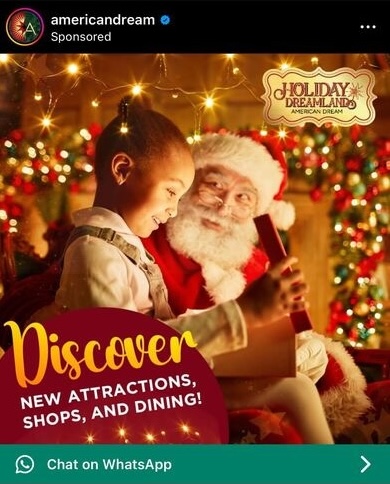
Enter the new call-to-action from Meta - click-to-WhatsApp. When a customer seeing your ad clicks, WhatsApp opens with a pre-populated message of your choosing. They hit send, and voila, you are in a conversation! One that Tildei and WhatsApp makes easy to make engaging. If a conversation is the start of a relationship, what better way to approach top-of-funnel marketing? Use Tildei to create easy conversation flows where you learn about your customer, create a profile in real-time, and capture the contact for future, equally engaging marketing. Check out best practices for this first conversation and beyond.
WhatsApp Cultivates Engaging and Interactive Early-Stage Awareness
71% of customers want to speak with companies in real-time. This is not only an important data point; it's also something that probably wasn’t true a few years ago. Consumer technology has evolved, and our behavior has changed alongside it. As apps become more social in nature, and take up more of our time and headspace, our expectations have shifted too. We are quickly getting used to a world of near-instant responses, whether via chatbots on sites or from our friends and family on messaging apps.
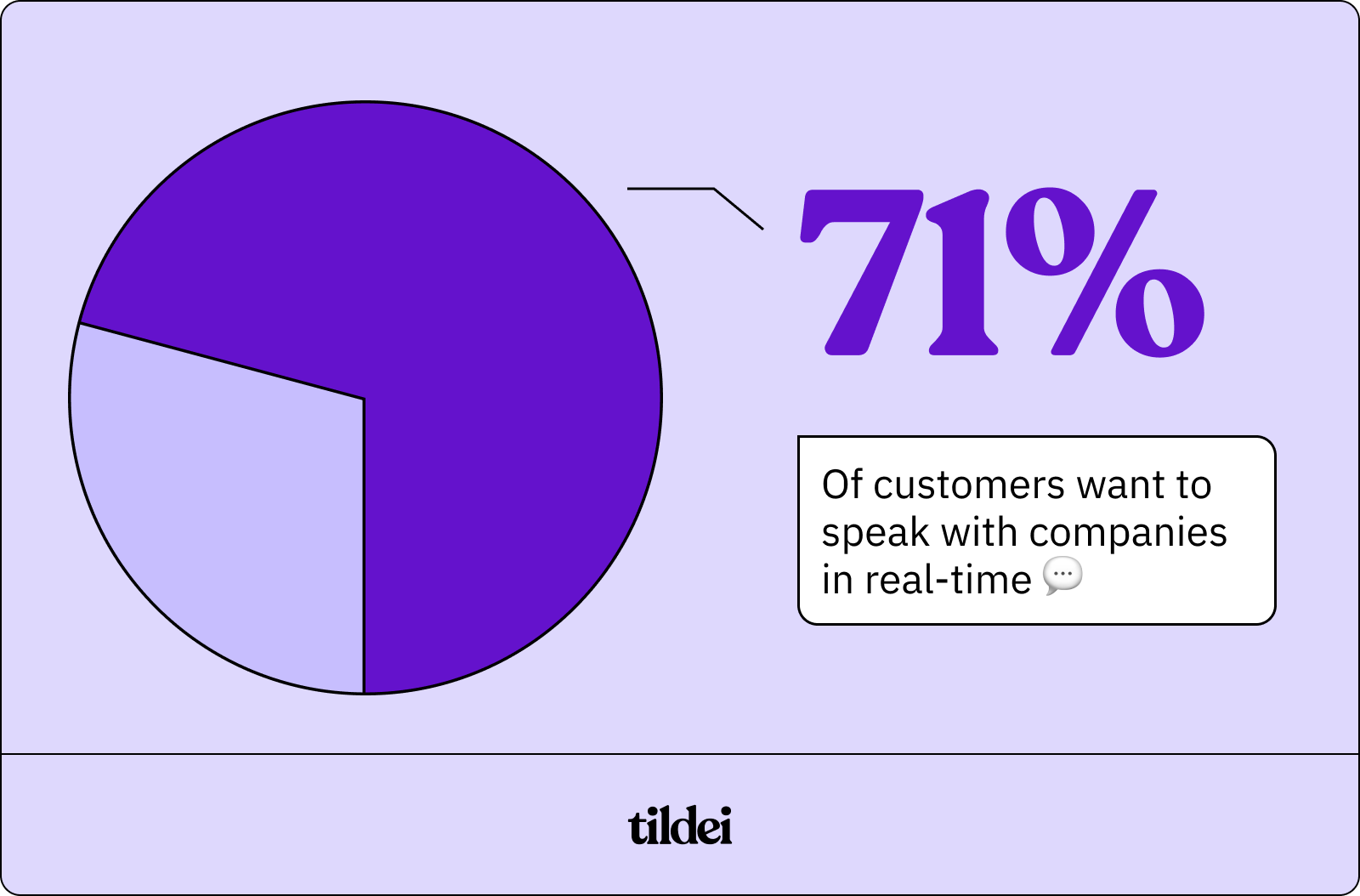
WhatsApp is inherently a conversational channel, which allows companies to communicate and engage with their audiences in the ways they want. And these conversations carry a deeper meaning than a one-off message in an inbox. When an interaction becomes a conversation, the customer instantly has more investment in the relationship. It’s simply a better experience.
The customer's engagement in a conversation also becomes a brand’s opportunity; to learn about your customer, to invite them into your brand, to educate them, and more. Listen, ask questions, and provide answers to keep the conversation flowing in the right direction while building profiles and filling your funnel.
WhatsApp Supports Different Types of Awareness Goals
Awareness is a key goal for the top of the funnel, but awareness can mean different things for different objectives. For some, the objective may be to share the brand with a wider audience. For others, the objective might focus on growing interest in a new product or category launch.
How WhatsApp Supports Company Awareness:
- Conversations support the initial stages of customers and brands getting to know each other
- Brands can ask about customer preferences in interactive ways
- Brands can share multimedia content (videos, images) to immerse customers into the brand
How WhatsApp Supports Category Awareness:
- Conversations can create excitement around new offerings
- Brands can use quizzes or message-based games to launch products
- Brands can use the channel to ask for feedback or input to shape new products
WhatsApp Marketing Top of Funnel Campaign Ideas
To get started, here are two top of funnel marketing campaigns using WhatsApp. We chose these two based on their ease and speed to get up and running quickly while making a meaningful impact.
Product Recommendation Quizzes
Goal: Acquire new customers
A quiz is a low-commitment, low-effort way to pique your customers’ interests. It gives them a reason to start a conversation, to opt in to your brand, and to begin building a better understanding of your offering. Depending on your product or industry, the output of the quiz can be a specific product recommendation, a set of products, a segment of your business, or information for them to learn more about your processes.
The opt-in moment can start with a link placed on your website homepage or email, or it can be a QR code on your in-store signage. Once clicked or scanned, the quiz commences. Each question can have a variety of options that gently guide the customer on the right path. This quiz is a win-win. Your customers find the right products and it helps your brand acquire new subscribers. As a brand you can also save customer preferences to customize any future interactions.
![Two phone shapes on an orange background, the left phone is a pop-up on a website asking to begin a WhatsApp conversation, and the right phone is inside a WhatsApp conversation where the Accent brand shares a quiz and a direct link to what products are recommended.]](https://cdn.prod.website-files.com/685e877588f58c65af0d2dbb/685e88f689c05524d9f669c0_685db77f2401408c39d2b33b_6564ec117bd1b607d57b27ed_img-2-ad%252520(3).png)
New product launch campaign
Goal: Drive Awareness
A new product launch is an exciting moment for both the customer and the company. It’s also the perfect opportunity to gain new opt-ins, foster engagement, and re-engage with returning customers. Give your customers a reason to engage with this new launch. Offer them something unique like a countdown to the product launch so they don’t miss out, early access to purchasing, or a limited edition version.
Opt-in to this experience can happen through a QR code in-store, on packaging or a link on a product landing page. For your current subscribers, you can make it a special campaign for them to sign up to or you can automatically include them in these VIP-like messages. Leading up to the launch, you can provide further information about the product's benefits and provide behind the scenes insights with engaging content like photos and videos.
Additional WhatsApp Marketing Campaign Ideas
Looking for more WhatsApp marketing campaign inspiration? Get started here:
- 3 Essential WhatsApp Marketing Campaigns to Get You Started
- 5 Creative WhatsApp Marketing Campaigns for Retail
Top of Funnel WhatsApp Best Practices and Challenges
First things first, while WhatsApp has specific rules and regulations, none of this needs to be complicated. Working with a WhatsApp Business Service Provider, like Tildei, streamlines this and removes the complexity. If you want to learn more, contact us any time.
Regulatory Compliance and Top of Funnel WhatsApp Campaigns
Different channels for marketing have regulations on customer opt-in and how a business interacts with its customers. With WhatsApp, it’s important to clearly gather customer opt-in to enable further messaging. You can achieve this through an early statement in the messaging explicitly asking for opt in. More ideas on opt-in can be found in our How to Grow Your WhatsApp Audience post.
Strategies to Avoid Spam and Maintain a Positive Reputation
WhatsApp has an emphasis on quality messaging. Prepare your content and strategies with customer-focused outcomes to avoid being flagged as spam. You want to maintain a positive reputation with customers in WhatsApp and a high message quality rating. Make sure any messaging is relevant to what a customer has initially signed up for, and don’t over-send messages.
Continuous Optimization for Top of Funnel Success
The marketing funnel is a cycle, so continuous optimization is crucial for top of funnel success. Remember to nurture your customer conversations. When bringing a customer back to the top of funnel consider their previous conversations and any other data points for a more customized experience.
WhatsApp Top of Funnel Best Practices Checklist:
- The top of funnel is about acquisition, so make sure your opt-in processes are clear and meet WhatsApp requirements.
- Make sure customers know what they’re signing up for. Remember opt-out options are better than low-quality ratings.
- Keep an eye on performance and nurture those returning opportunities.
For additional WhatsApp best practices, check out this post on WhatsApp template best practices.
WhatsApp’s Value in Top of Funnel Marketing
WhatsApp is already proving to be a valuable and multifaceted conversational tool for acquiring customers and driving awareness at the top of the funnel. By using QR codes, links, and capture forms, customers can easily and directly begin a conversation with your brand that both increases their satisfaction with and their awareness of your company.
Consumers are choosing WhatsApp as the trusted, preferred messaging channel to interact with businesses. This provides a large audience of prospective new customers for companies and interesting conversations to be had for both the company and the customer.
To start your top of funnel marketing on WhatsApp sign up to the Tildei platform.
WhatsApp is uniquely positioned for top of funnel marketing. Find out why, and get the strategies you need.
Another new channel with an empty list of subscribers is just as intimidating as a blank page at the beginning of a blog post or a blank slide when starting a new presentation. Similar to how you’ve started many other projects and other channels from scratch and watched them flourish, growing your WhatsApp community is no different. Those previous experiences provide great inspiration for growing your WhatsApp audience with ease. By the end of this post, your list of WhatsApp subscribers won’t be empty for long.
In this post, we're covering the strategies, tactics, and best practices to consider when acquiring new subscribers for your WhatsApp community. For you to get this far and send your first message, you'll need to have set up a WhatsApp business account. The initial WhatsApp Business setup and getting started on WhatsApp topics aren't covered in detail in this post, but we share all that you need to know in our Getting Started with WhatsApp guide.
So now that you have a fresh WhatsApp business account created, how do you actually start gathering subscribers? Build it, and (with a little marketing) they will come!
How to Grow Your WhatsApp Community
There are 3 main tools for capturing a subscriber's phone number and adding them to your WhatsApp community so you can message them now and in the future.
Links
Through Tildei, you'll be able to generate a link (you can also do this via the WhatsApp Business portal). When a customer clicks the link, it opens WhatsApp with a conversation window started with your brand. The message in the window can be pre-populated based on the link they click, or it can be a basic chat window allowing the customer to type their own request. Once the customer sends that message, the conversation has started, and they’ve opted-in.
Benefits to using a link: pre-populated messages, easy one-click experience, campaigns can be associated with a custom link
Try it out and opt-in to our updates!
QR Codes
Similar to the link, through Tildei you'll be able to generate a QR Code (or you can also do so via the WhatsApp Business portal). When a customer scans the code, it opens WhatsApp with a conversation window started with your brand. The message in the window can also be pre-populated based on the QR code that was scanned.
Benefits to using a QR code: pre-populated messages, used for offline acquisition, campaigns can be associated with custom QR codes
Scan to try it out!
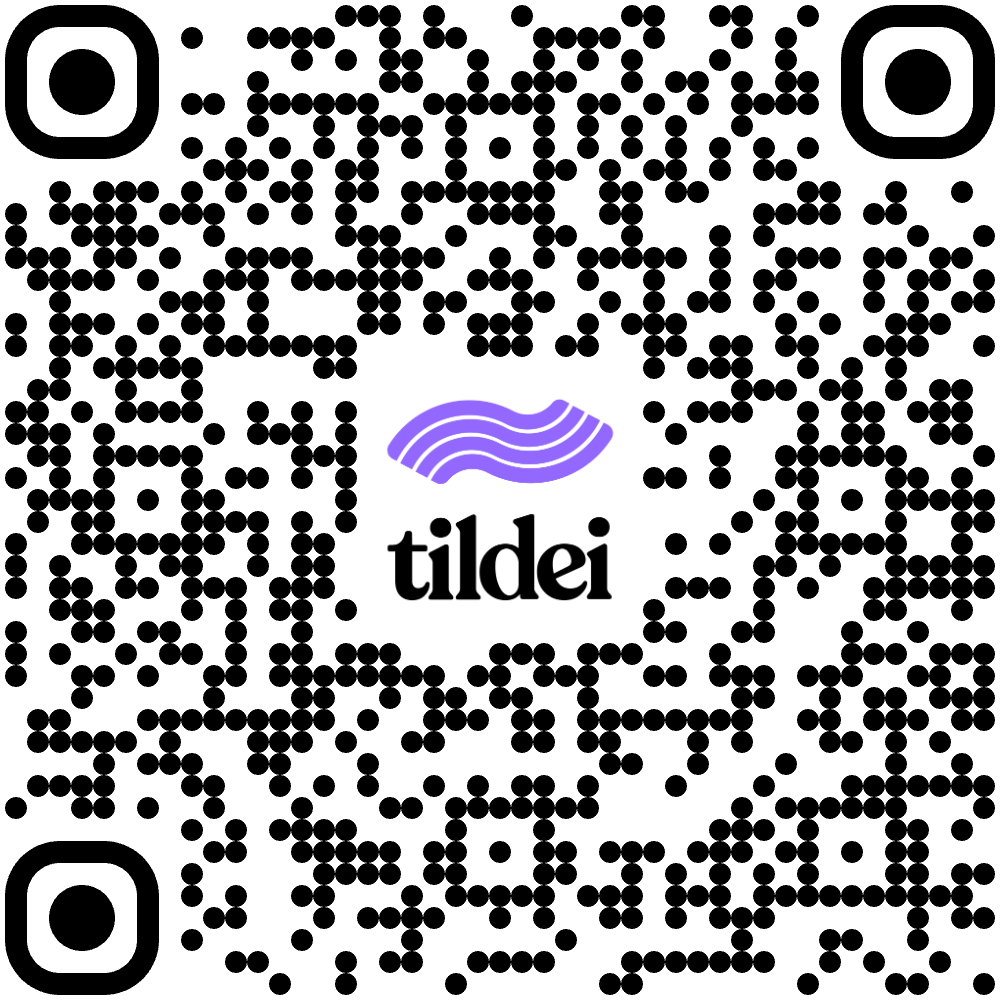
Capture Forms
Similar to opt-in forms for email or sms capture, WhatsApp capture forms most often live on your website (i.e. homepage, pop-up, purchase). With the form, you ask the prospect or customer to share their information and confirm their intent to opt-in to join your WhatsApp community and receive messages from your brand. Once you have their number and their opt-in, you're ready to start messaging them in Tildei.
Benefits to using a capture form: subscribers are familiar with this opt-in experience; easier to capture additional profile data at sign-up
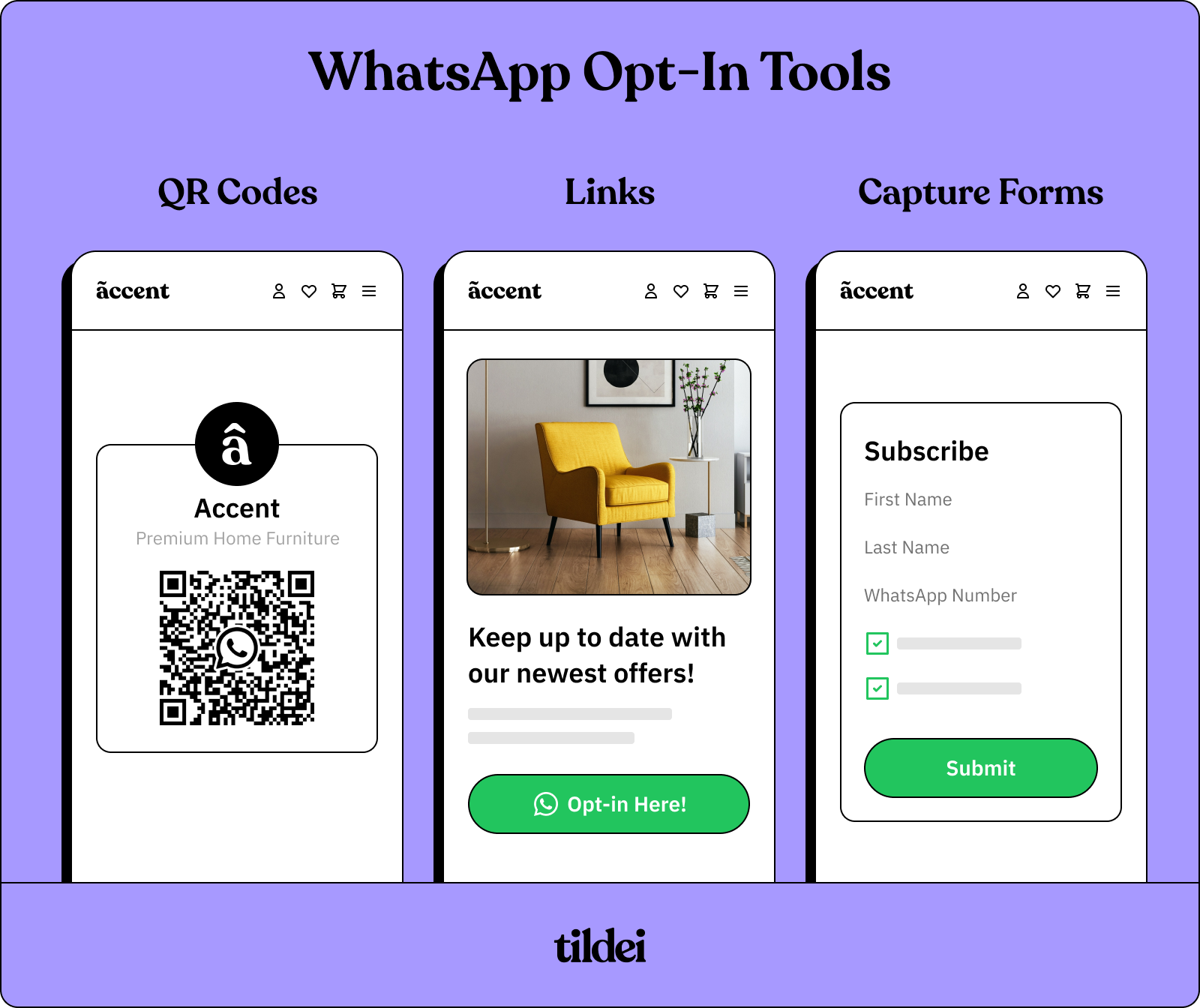
Choosing the Right Opt-in Tool for the Strategy
We recommend using a combination of all three methods. Depending on your strategy and your business goals, which you use and where you place them will vary. In the tactics below, we’ve paired acquisition channels with the recommended method.
No matter which you use and where you use them, the two most important elements are to ask for explicit opt-in from your subscribers and include information on how you intend to use the channel. Share how many messages you plan to send and the types of messages the subscriber should expect to see from you. Both of these actions will help prevent your account from being blocked and also foster engagement with your audience.
Strategies for Growing Your WhatsApp Community
Acquiring WhatsApp subscribers is fairly similar to how you acquire subscribers for your other messaging channels. If you already have some of those processes in place, you don't have to recreate the wheel. You can repurpose those methods and use them for your WhatsApp audience.
That said, WhatsApp does provide new and different ways for communicating with your customers thanks to its quicker reply experience and the potential to chat in a dynamic way.
The tactics below play on both the tried-and-true tactics as well as the newer ways to communicate in messaging channels. Each tactic is centered around an acquisition channel and has one or two recommended methods.
Grow Your WhatsApp Subscriber List through Your Website
Best method is through the capture form or link
Your website is your digital property, so it usually has the most flexibility with when and where you capture WhatsApp opt-ins. There are many opportunities to acquire new WhatsApp subscribers on your website, and here are a few to get you started:
- Homepage - This is the most straightforward and expected place to ask for opt-in by using a a link or a form. The form or a link to the conversation may be in the header or footer of your homepage, right in the middle of the page, a pop-up, or all of these. You may already have this in place for other channels like email or sms. You have the option to repurpose one of those acquisition methods or add a new one. For example, you can ask for email in the header and WhatsApp in the footer or vice versa.
- Contact page - The contact page is a great place to try out the link option. If a customer navigates to this page, they’re most likely hoping to have a quicker response. By including the link, they will be entered into a chat with your brand from the moment they click.
- Product page - A product page or a page that shares more information on your offering is perfect for applying the new conversation-forward approach. Share a link on product pages to encourage a customer to reach out if they have questions about the product or its features. This is a big step towards making sure you’re there for your customer in the moment they need something from you. At opt-in, you can ask for additional profile data to help tailor product recommendations or product information for them.
- Checkout - Similar to how email is often captured at checkout, it’s also a great opportunity to use the number capture form option. It can be used for purchase updates as well as providing recommendations and helpful tips after purchase.
Grow Your WhatsApp Subscriber List through Email
Best method is the link
The tried and true digital marketing channel, email marketing, is one of the best places to announce and advertise your other communication channels. Those who are already signed up to receive emails from you, especially those who regularly engage, are some of your most loyal customers and often those most likely to connect with you on other channels. Leverage your engaged email audience to acquire your first WhatsApp subscribers through a variety of ways:
- Send a dedicated email announcing the new channel - In the email, share the types of content you plan to send in WhatsApp and provide examples of how your customers can use it to get quick answers. Include the link to opt in in multiple areas of the email. You can create a custom opt-in link for the email campaigns to know that these are your email + WhatsApp subscribers.
- Include the WhatsApp link in the header or footer of the email - Similar to how you link to other channels through icons, include the WhatsApp icon in your boilerplate email content and link out to your WhatsApp opt-in.
- Add it to your welcome campaign - When someone signs up to your email program, it’s a great opportunity to give them a quick overview to your brand. At the very least, use the initial welcome email to share a link to opt in to your WhatsApp program. Go further by including an email in the welcome series solely dedicated to your WhatsApp communication option (and save time by repurposing the content from your initial announcement email).
Grow Your WhatsApp Subscriber List through Your Social Channels
Best method is the link
There are two main ways to grow your WhatsApp community through social channels. One is more straightforward by utilizing the link option and one is more advanced by adopting a newly released approach built into Facebook ads.
.png)
Grow Your WhatsApp Subscriber List Offline
Best method is using the QR Code
The QR code option is perfect for acquiring WhatsApp subscribers offline. QR codes have become more ubiquitous over the past couple of years and customers are more comfortable using them. In this case, when the customer scans the code, they’ll be able to start interacting with your brand instantly. There are many opportunities to include the QR code, and it depends on your industry and your strategy.
Some example use cases we’re excited about:
- Include a flyer with the QR code in purchases delivered to your customers - When they scan, it opens a conversation so they can quickly leave a review or get assistance if needed.
- Add the QR code to your packaging - Once scanned, it can launch a message for them to get insider access, see behind-the-scenes content, or get a promotion code for a future purchase.
- Share the QR code in physical spaces - Different from the online, digital examples mentioned earlier, QR codes can be placed outside on posters or ads or in store next to products, all moments that would open a chat with your brand.
Will Growing Your WhatsApp Community Take Away from Other Channels?
This a question on every marketing team’s mind whenever a new channel comes onto the scene. When SMS and push messaging became more popular for marketing and driving connections between brands and customers, the concern was that it would take away from email. We can take the lessons learned from the SMS and email balance and apply them to adding WhatsApp to the marketing mix.
Ultimately, what we learned is that these channels don’t need to be competitive, but instead, they’re complimentary. One step is to learn the strengths and weaknesses of each channel and lean into them for different use cases. The other step is to learn the preferences of your customers.
WhatsApp doesn’t ‘take away’ from other channels if that’s how your customers want to engage with you. You’re ultimately giving them another means of communicating, and by having options for different channels, you allow them to pick the path that fits best for them.
In terms of the time and effort of you and your team and the real estate on your website, yes you may need to re-prioritize to make room for this new channel. This is the time to see what elements in other channels you can automate, which elements aren’t doing well that you can remove, and which elements you might want to prioritize in one channel over another.
How to Get Started with your WhatsApp Acquisition Strategy
Growing your WhatsApp program doesn’t have to become another overwhelming project to start. Here are a few tips to get going:
- First and foremost, take it one step at time.
- List out the requirements specific for your team to get started and come up with a few goals to keep you focused.
- You can also play off of your hard work in other areas. Ask yourself, how are we capturing other contact points and can we use something similar for WhatsApp?
- Last but not least, you don’t have to embark on this challenge on your own. We’re here to help.
Get started with Tildei today!
A guide to starting conversations and building your WhatsApp Community.
.png)
When the end of November approaches, inboxes around the world begin to fill up with a constant flow of deals, percentages off, and various offers. It can be a noisy time for both brand and consumer. But what if we were to tell you we know of the perfect tool to help your brand stand out from the pack and quiet the noise? What if this approach also helped you build strong connections with your customers?
WhatsApp marketing has emerged as a powerful method to turn big events into longstanding relationships between consumers and brands.
You haven’t set up WhatsApp yet?
Well, never fear, Tildei is here to help you grow your WhatsApp marketing program in plenty of time to engage your customers, new and existing, during Cyber Week (and beyond).
In this blog post, we give you step-by-step strategies and tactics to establish your WhatsApp marketing presence and prepare for a successful Cyber Week campaign that turns this one-week sales event into lifelong relationships.
Why Black Friday and Cyber Week is a Good Time to Launch WhatsApp Marketing
This time of year, your customers will check with your brand regularly. They’ll want to receive updates about deals and offers as early as possible so they can plan their holiday shopping accordingly. You’ll already have their attention, and you have a great offer to share with them at no cost to you.
Give your customers early insight into sales and offers and early access to the promotions in return for their opt-in.
This busy, high-traffic event coupled with the real-time elements of WhatsApp makes it a perfect fit for the holiday season.
Why WhatsApp is Uniquely Positioned to Help You Excel at Cyber Week
Most consumers have become fatigued by the deluge of messages in their email and text inboxes. By messaging them in a channel that isn’t overly saturated, you will make it easy for them to find the latest updates from you and your brand.
With WhatsApp you’ll be able to create a more dynamic experience with conversations instead of just one-way messages. The moment an interaction turns into a back-and-forth conversation, it creates more sticking power with the consumer. As consumers, we don’t always remember a one-off email, but we do remember conversations.
The opportunity to reply to a message and engage back with your brand ultimately gives the customer a vested interest in the relationship versus remaining a passive recipient.
Equally exciting, WhatsApp integrates directly with Facebook and Instagram Ads. When you look over your ad budget for the holiday season, you can allocate some to the action of starting a WhatsApp conversation. This not only starts a conversation with a new or existing customer in their awareness phase, but it also gains their opt-in for future messages.
WhatsApp Black Friday and Cyber Week Strategy Countdown
The countdown below gives you plenty of time to establish the new channel, grow your list, and prepare for a successful holiday season. If you find yourself with less time than the weeks mentioned, this post is still for you, just on an accelerated schedule. We’re more than happy to help craft a tailored timeline for you and help you have a successful holiday season, so contact us!
Here is the plan to get up and running with WhatsApp for Black Friday in 6 weeks (or less):
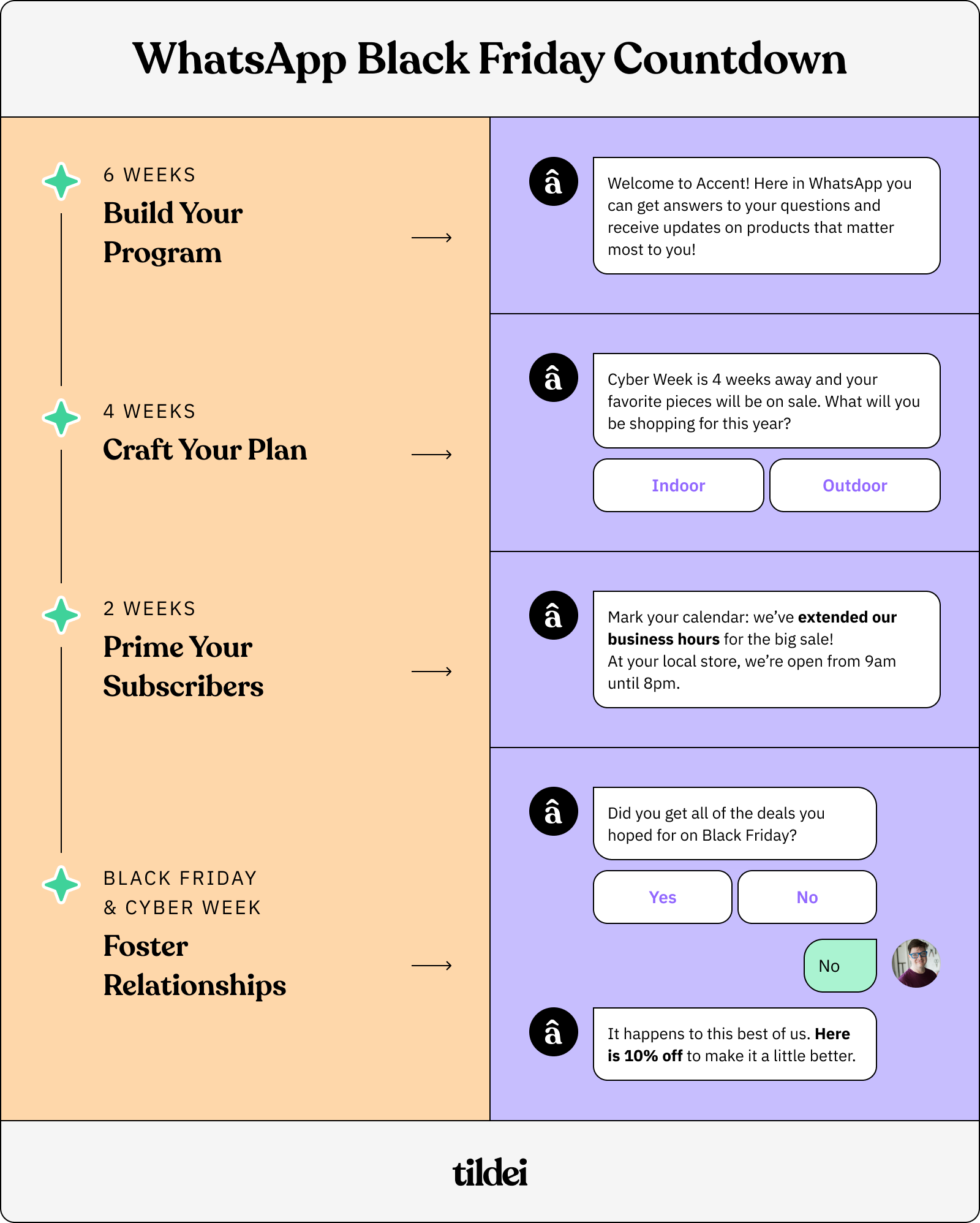
6 Weeks Before Black Friday
Set your foundations and grow your subscribers
If you have already set up your WhatsApp program, skip to ‘4 Weeks Before’. If you haven’t set up WhatsApp yet, this is where you should begin.
Establish Your Business on WhatsApp: A few different elements are needed to set up your business on WhatsApp including a business name and a phone number, but you can find all of the specific details in the Getting Started with WhatsApp blog.
Select a Business Solution Provider: A business solution provider facilitates sending and automating messages and conversations with your subscriber base, especially at scale (which will be critical for the holiday season). You can use Tildei as your business solution provider where you can build your messages and create meaningful conversations in just a matter of clicks.
Add Your Opt-in Opportunities: Now you’re ready to start building your foundational strategy and messaging. Most of your WhatsApp conversations and messages will originate from opt-in points. You’ll want to decide where you’ll have your customers opt-in (your website, in-store, through your email, social ads) and create messages that support the opt-in experience.
Create Your Welcome Message: The opt-in message and experience can be treated as your welcome campaign, or you can also develop a series of welcome messages or conversations that flow from the initial opt-in.
Black Friday and Cyber Week Focus: This is one of the best times to grow your list because it aligns with a peak moment when customers want to hear from you. Give your subscribers an exciting reason to opt-in. Offer them sneak peeks on deals or early access opportunities if they opt-in to this new channel, and apply that messaging across your opt-in points.
4 Weeks Before Black Friday
Craft your plan and prepare for the big event
Reference Your Goals for Black Friday:
- What are your Black Friday and Cyber Week business goals?
- How do you want WhatsApp to support or influence them?
Think about the goals you want to achieve overall this holiday, like subscriber growth, products purchased, and revenue generated. If you have target numbers for these goals, determine the percentage you think WhatsApp will contribute in addition.
Keep in Mind Customer Needs:
- What will be the most helpful for your customers during this holiday season?
- What kinds of questions do they often ask to facilitate their purchase?
Check with your customer service team to understand the most commonly asked questions. You can use this information to influence the content you send. Conversation content could focus on proactively sharing store opening hours, current offers available, length of the deals, return policies, or product recommendations.
Submit Template Approvals: Once you know the content of the messages you want to send, begin to submit those messages for approval. WhatsApp requires business-initiated messages to be approved before they can be sent. Check out this blog post for more details on all things templates.
Test Your Messages: Experiment and send test messages to yourself and your team. See what the messages will look like and get a better understanding of the customer flow. In the best-case scenario, your WhatsApp messages will be framed in a conversation, so test the full experience.
Start sending!: On the days leading up to Black Friday, focus message content on helping your customers become more familiar with this channel. Send an easy conversation flow or try interactive elements like video.
WhatsApp Black Friday Campaign Ideas for 4 weeks out:
- A quiz that ends in a personalized Black Friday shopping list
- A game (through back-and-forth messages) that provides customers with a promo code that they can redeem during Black Friday
2 Weeks Before Black Friday
Prime your audience and discover the messages that drive engagement
Refine Your Black Friday Cyber Week Plan: Most of the hard work is done at this point. Your foundations are set and you’re growing your list. Evaluate what’s working and what’s not and calibrate accordingly. Submit any new content through template approval.
Keep Sending Messages: You’ve likely already sent a few conversation-driving messages by now. It’s a fairly personal channel, so you don’t want to overwhelm your customer base with too many messages. You want to show your customers that you’re respectful of their opt-in. Send one to two messages each week, preparing them for the big shopping holiday.
WhatsApp Black Friday Campaign Ideas for 2 weeks out:
- Check in and ask how your customers plan to shop during Cyber Week. Ask if they plan to shop in-store or online and provide helpful tips for either. Ask what days they’re planning to shop and let them know if they’ll miss out on any deals or what they can expect.
- Start your countdown messaging to Cyber Week. Let them know which most popular items will be on sale. Help them avoid the fear of missing out by letting them plan accordingly.
- Share operational updates. Helpful information includes delivery times, store opening hours, and return policies.
Black Friday Week
Watch your plan lead to success and foster relationships for the future
Trust in Your Plan: You’ve worked hard over the past 6 weeks (or likely longer) to get to this point. Trust in your team and the plan you established. You’re venturing into a new channel that will take you to new places.
Monitor Your Program: Keep an eye on opt-ins and messages to ensure everything is working how you intended during this pivotal week. If offer amounts or dates change, update your messages accordingly.
WhatsApp Black Friday Campaign Ideas for the Week of:
- Share promotion updates: Use it as a channel to let customers know if time is running out on a specific offer or if stock is running low on a best-seller.
- Give them extra time: Treat these customers as VIPs for engaging with you in a new channel and extend to them an after-hours offer code.
- Ask how their Black Friday went: Ask a few questions to gather preferences and have a conversation. If they missed out on deals, maybe give them an offer code for the following week. If they could purchase everything they hoped, give them a post-holiday offer.
Why It’s NOT Too Late to Start WhatsApp Marketing for Black Friday
Getting started on WhatsApp only takes a few small steps, and you already have a lot of the structure in place. Gaining opt-in is as easy as adding a link to your website. You can easily turn your previous email and SMS campaigns into WhatsApp conversations.
Black Friday is a fantastic opportunity to grow a new channel because it's often the peak of customer engagement. They actively want to hear from you during this time because they don’t want to miss out. Use that to your advantage and give them something in return, like early access or sneak peeks.
2.7 billion people worldwide are actively using WhatsApp today, so it’s the perfect place to meet your customers where they are. Ready to get started marketing on WhatsApp? Join our early access today.
Turning the sales event of the year into a lifetime relationship