What we’re chatting about
All the latest trends and best practices in conversational marketing.
Instagram isn't just about pretty pictures anymore. With over 2 billion active users each month, it’s become one of the most powerful tools for businesses looking to connect with customers. But here’s a surprise for many brands—Instagram Direct Message (DM) is a hidden gem for boosting engagement and driving conversions.
Yet, many businesses still don’t maximize this opportunity. Why? Managing direct messages is often seen as time-consuming, unscalable, or reliant on delayed responses that lose potential customers. Until now.
With AI-powered agents, brands can streamline their Instagram DM interactions, meeting customers in real time and converting chats into sales moments. The strength of this channel lies in its organic nature - engaging directly through actions users already take like commenting on posts or replying to stories.
With Instagram Direct Messages, you can encourage customers to start conversations in three impactful ways:
- Comment-to-DM Interactions
- Replies to Stories
- 'Send Message' Ad CTAs
Here’s how these strategies can help you tap into Instagram’s true potential.
Why Marketers Need to Prioritize Instagram Direct Messages
Instagram isn’t just about discovery—it’s about driving action. 44% of Instagram users shop weekly on the platform, making it a key funnel for connecting consumers to brands.
Behavior is changing and moving away from pure feed engagement, and we know you've seen it with your own brand accounts. Even Instagram app CEO Adam Mosseri acknowledges the dramatic shift in how users interact with the app, stating, "More friends post to stories and send DMs than they do posts on the feed."
Here’s where the real opportunity for businesses lies—managing DMs isn’t just about answering questions anymore. It’s about creating tailored experiences that feel as good as chatting with a trusted friend. With agentic technology, it’s become scalable, efficient, and incredibly personal.
Here are three ways to entice your audience to strike up a conversation.
1. Encourage Engagement with Comment-to-DM Posts & Reels
Marketers know the power of comments for algorithm ranking—but did you know comments can also launch direct conversations? With Comment-to-DM, you not only encourage comments, but you create opportunities for private, personalized interactions in Instagram messages.
How Comment-to-DM Works:
- On a feed post, prompt your followers to comment with a certain phrase to receive something in return.
- When they comment with the phrase, your Tildei AI agent direct messages the user automatically with relevant, corresponding information.
- The AI agent can continue the conversation, answering questions and guiding the customer toward conversion.
Comment-to-DM Use Case:
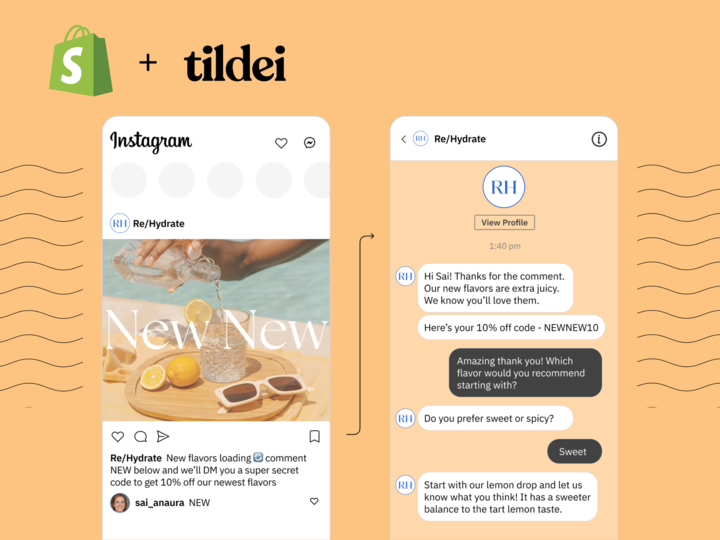
A beverage brand promotes its newest flavor lineup by sharing a vibrant post with the CTA, "Want 10% off? Comment ‘NEW’ below!” When a customer comments “NEW” under the post, they receives a DM instantly from the brand with the discount code. The AI agent is at the ready to answer any follow up questions and provides tailored recommendations based on their response. The overall experience drives purchase intent and enhances the customer journey.
2. Inspire Story Replies with Reply-to-Story CTA
Instagram Stories are both high-impact and deeply engaging. 500 million users tune into Stories daily, spending an average of 20 minutes each day swiping through updates. But beyond passive views, replies are a powerful tool to boost visibility and engagement.
How Reply-to-Story Works:
- Post a story with a CTA asking followers to reply with a specific word (e.g., “SALE” or “SPRING”) to learn more.
- When the viewer replies with the trigger phrase, Tildei’s AI agent automatically replies back to them with the information, codes, or next steps.
- Once the conversation begins, the AI agent can take it further, answering questions, helping find the perfect product, or connecting them with customer service.
Reply-to-Story Use Case:
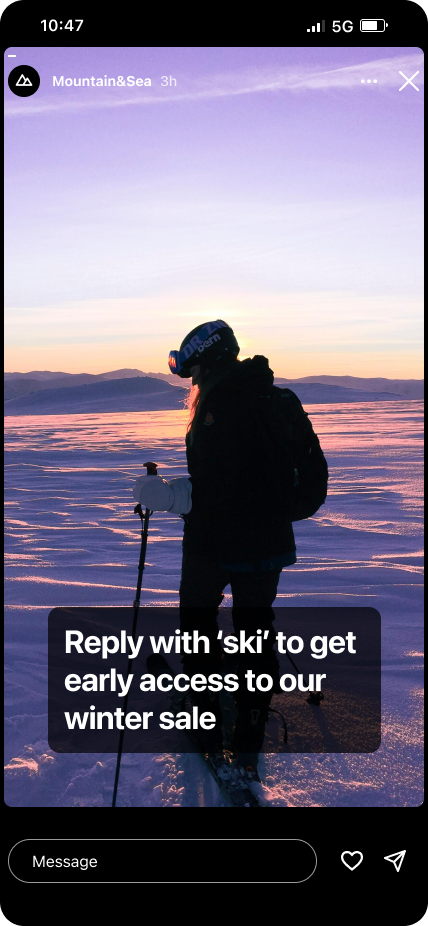
An outdoor brand teases followers with an early-access ski sale on their Instagram Story. The caption reads, "Reply ‘SKI’ to unlock exclusive deals!" When followers reply, they receive a DM with their early-access code and additional support from the AI agent, like curated recommendations for ski gear.
3. Run Ads That Start Conversations with Send Message CTAs
Instagram ads are already a marketing favorite for driving traffic, but adding the ‘Send Message’ CTA takes engagement one step further. Clicking this CTA triggers a DM conversation, allowing customers to connect directly with your AI chat assistant.
How a 'Send Message' Ad Works:
- Design a Meta ad that aligns with what your ideal customers need and a reason to have a conversation.
- Use the ‘Send Message’ CTA to bring users straight into a direct conversation with your brand.
- Your branded AI agent can handle queries, provide personalized suggestions, and seamlessly guide customers through their buying decision.
'Send Message' Ad Use Case:
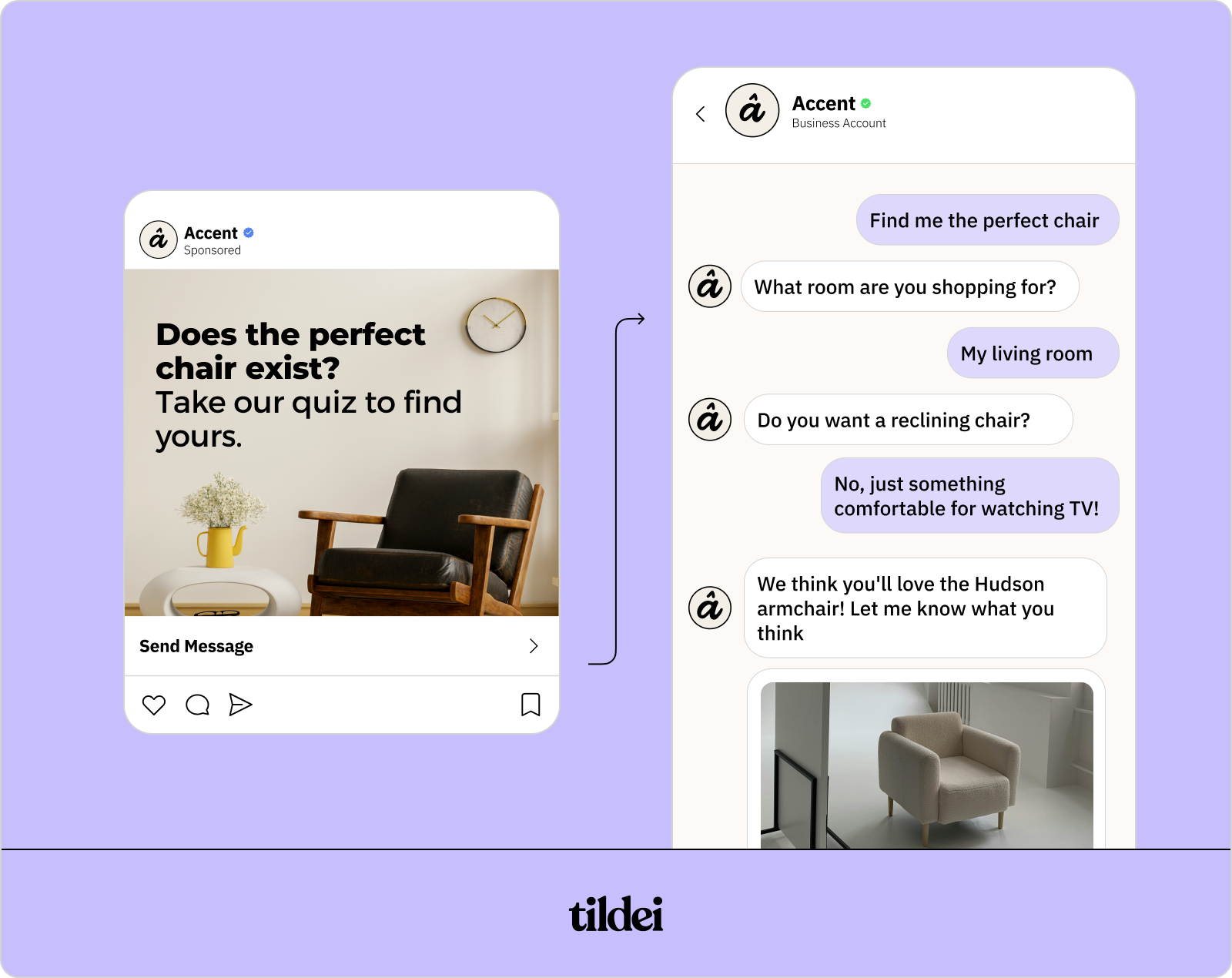
A home goods brand launches an ad for a “Perfect Chair” quiz. With a ‘Send Message’ CTA, customers immediately receive a DM from the AI agent inviting them to take the quiz. After taking it, the AI agent offers tailored chair recommendations based on their input, answers any design related questions, and sends them a link to purchase.
Why Tildei is the Key to Instagram DM Success
Instagram DMs represent an incredible opportunity to create tailored marketing experiences, but it takes the right tool to unlock their potential. That’s where Tildei’s AI agents come in.
Here’s how Tildei turns your DMs into revenue:
- Harness the Conversational Triggers: ****Comment-to-DM, reply-to-story, and ad-to-DM are all accessible out of the box with Tildei and ready to use instantly.
- Tailored Interactions in Real Time: Tildei’s AI agents engage with customers using your unique brand voice, delivering thoughtful, human-like responses with guardrails in place.
- Data-Powered Insights: The agent pulls relevant product info (e.g., pricing, sizes, or availability) directly from your knowledge base (or your Shopify catalog if you're a Shopify store), enabling seamless and accurate recommendations.
- Full Lifecycle Strategy: Activating conversations with your customers in their DMs is more than just a one off campaign. You can create different trigger phrases for different campaigns, for different stages of the lifecycle, and get them to engage again and again.
- Conversations Across their Lifetime: Once you customers experience communicating with your branded AI agent, they can continue to come back with new questions, customer service, and guidance for new purchases.
Real-Life Success Story:
One Tildei-powered brand saw a 43% click through rate and 10% transaction rate just by leveraging reply-to-story strategies. These interactions turned passive viewers into loyal, paying customers—all through automation.
Take the Next Step in Instagram Marketing
Instagram Direct Message isn’t just a new channel—it’s the channel to connect meaningfully, scale relationships, and drive conversions. With Tildei, you can harness the power of AI to create personalized conversations that matter.
Are you ready to elevate your Instagram marketing strategy?
Launch your AI-powered Instagram DM experience with Tildei today.

With more than 2 billion monthly active users and climbing, Instagram is one of the best channels for reaching a wide audience in meaningful ways. Instagram Direct Message (DM), also called Instagram Direct, has remained relatively untapped as a marketing channel. Historically seen as just another inbox to monitor, Instagram DM is the next new marketing frontier, ready for a transformation.
Your customers are already on Instagram and actively messaging your brand, so now it's time to take advantage of it. Launch your Instagram AI agent to automate the DM experience and let the revenue flow. Instagram has built-in triggers that launch conversations based on commonly used interactions, and your AI agent is there to respond in real-time.
To ensure that you’re set up for success, here are some of the rules you need to consider to do it right and do it well.
Unique Benefits of Instagram Direct Message
Instagram DMs have a number of specific capabilities beyond traditional chat that make it a useful feature for improving reach, engagement, and conversion.
- Conversation Starters: Instagram makes it easy for your customers to start conversations through actions they already take. When a follower comments on a Post or replies to a Story, using a partner like Tildei, a DM conversation can automatically begin.
- Programmatic Ads: More ways to grow your audience, Meta Ads can also link directly to starting a conversation with your brand in Instagram DM
- FAQs: A small way to optimize your conversations, you can set up Frequently Asked Questions directly in Instagram DM to reduce time responding to repeat questions
- Saved Replies & Auto-Replies: Another small way to begin optimizing, you can quickly leverage pre-saved responses to reply to customers faster
- Automation: Partnering with a third-party provider like Tildei allows you to automate messages and responses. AI-powered conversations go beyond traditional chatbot functionality and serve as an AI agent learning, evolving, and adapting to context.
The above are just a few examples of how you can leverage Instagram messaging as a tool for growing your audience, unlocking new revenue streams, and improving customer loyalty.
Instagram Direct Message Rules
We’ve all sent DMs to our friends and brands from our personal accounts on Instagram, but the world of Instagram DM for business operates a little differently. The rules for using Instagram DM as a business are spread out over different developer pages, so we've gathered a list of some of the basics in one place. Use the below list as a guide to ensure your Instagram business account checks all of the boxes when communicating with and marketing to customers over Instagram DM.
1. Instagram DM Message Types and the 24-Hour Response Window
Instagram has set some general rules and limits around how businesses can use Instagram DM. The rules below are helpful whether you’re messaging customers manually or automating your responses with a third-party tool on the Instagram API.
Standard Messaging Window: 24-Hour Response Requirement
When a customer sends an Instagram DM to a Business account, the business has up to 24 hours to reply. After 24 hours from a customer interaction, a business can no longer reply to the customer, except in specific situations (we cover this in more detail below).
If more time is needed to allow a human agent to respond, you can add a tag to your response to send the message outside the standard 24 hour messaging window but still within 7 days of the user’s message.
Message Types
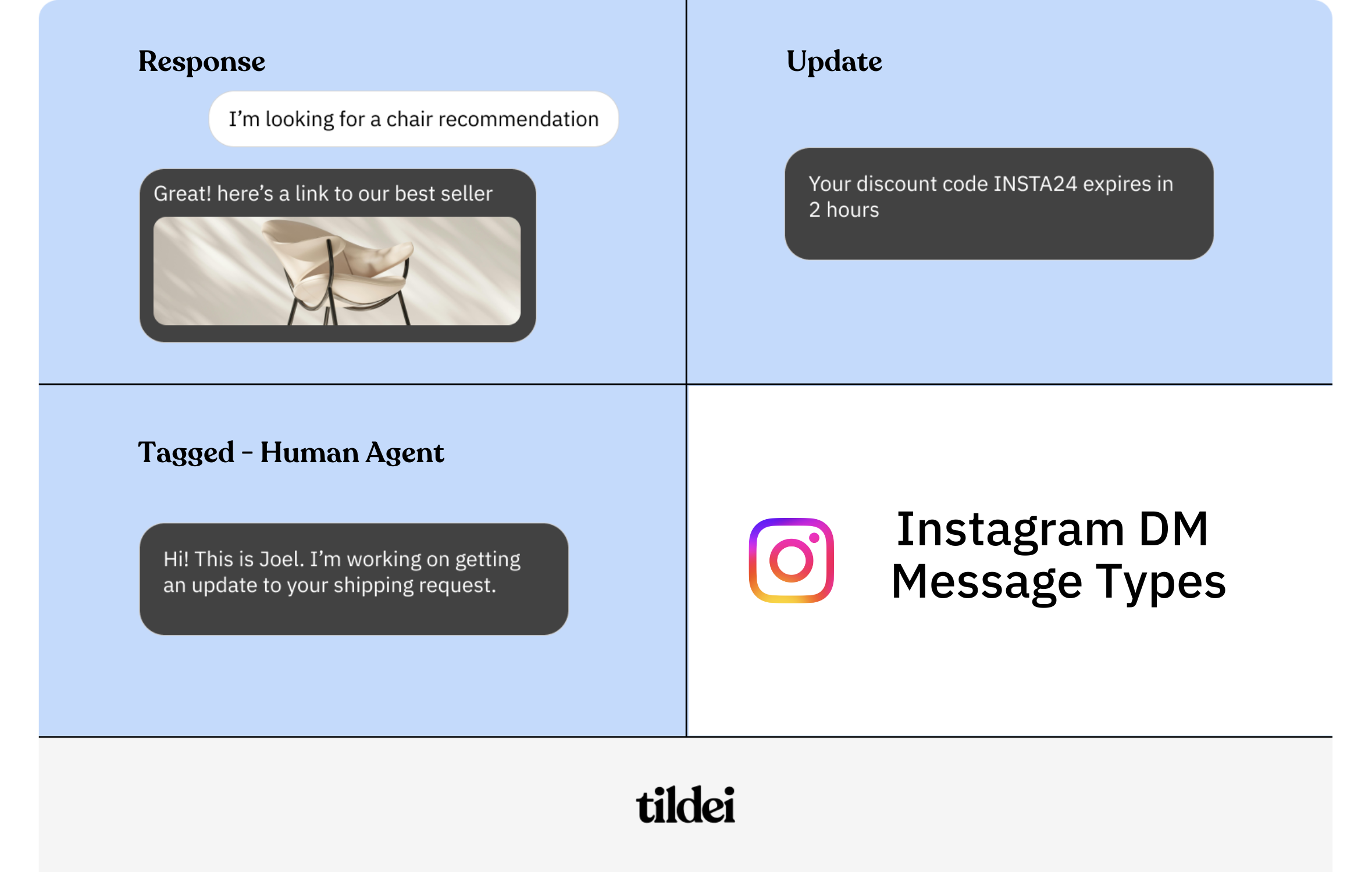
There are three types of messages that you can send:
- Response: As it states, this is in response to a customer’s message. The message can contain promotional and non-promotional content and must be sent during the standard messaging window (within 24 hours of the last customer message).
- Update: These messages and sent proactively and not in response, but they too must be sent during the standard messaging window (within 24 hours of the last customer message). These can also include promotional and non-promotional content.
- Tagged: There are different types of tagged messages, but only the ‘Human Agent’ tag is available on the Instagram API. This message can be sent outside of the standard messaging window and is for issues that cannot be resolved within the 24-hour window.
Message Limits
At the high level, Instagram states that it has, “ . . . limits in place to stop direct messages that people may not want to get, like spam.” It’s a general statement, and we haven’t seen specific limits on the number of messages that can be sent.
Our guidance is to respect the 24-hour response window, ask for opt-in for future messages, and ensure messages are helpful for your customers.
2. Image File Formats, Sizing, & Aspect Ratio on Instagram DM
Instagram Direct allows you to send text-based chats as well as images and videos as a way of increasing engagement. With most messaging applications, there are limits imposed on the sizing of images and videos sent via DMs on the Instagram app.
PNG, JPEG, and GIF file formats are accepted for images sent through Instagram. Any other formats may be automatically converted to one of these two formats, so avoid using others (like TIFF or BMP). Instagram DMs provide a maximum resolution for sent images of 1080 pixels wide. While no specific limit on resolution has been set, all images above 1080p resolution will be compressed to that size, and image quality may therefore be affected. Images must have a minimum resolution of 320 pixels wide; any images with lower resolution may similarly experience quality issues due to resizing.
The maximum image file size is 8 MB.
A number of different image aspect ratios are supported in Instagram messages, including:
- Square: 1:1 aspect ratio
- Landscape: 1.91:1 aspect ratio
- Portrait: 4:5 aspect ratio
Images are automatically adjusted to fit the window for a new message, so stick to these available aspect ratios to avoid any quality issues.
3. Video File Formats and Sizing
Like images, videos are limited to certain file formats and size requirements for use in a DM. Accepted file formats are MOV, MP4, OGG, AVI, and WEBM files for messages, and the maximum file size accepted is 25 MB. Videos generally may be up to 15 seconds in length; longer videos may be split or trimmed by Instagram automatically.
The same aspect ratios as those available for images are available for videos.
Audio files are also available up to 25 MB, and the supported formats for audio are AAC, M4A, WAV, and MP4.
4. Content Restrictions
In an effort to keep Instagram safe for all, the app places content restrictions for DMs. This includes restrictions around sensitive or inappropriate content. Inappropriate content includes offensive, abusive, misleading, harmful, hateful, and/or sexually explicit content.
In most cases, these restrictions shouldn’t be a worry for business accounts. Keeping your messages focused on your brand and product offering in a helpful manner will ensure you stay well above this line.
In any case, Instagram's algorithm scans all messages and message requests for violations of these rules regularly. If an account is found to be in violation, the account can be flagged, restricted, suspended, or banned. Users also have the ability to report accounts that violate these restrictions, which may lead to similar account action.
5. Instagram DM Automation
While Instagram places limits on automation for personal accounts, the good news is that business accounts are not subject to the same limitations.
Accounts registered as businesses are permitted to use automation tools for direct messaging, saving your team time and improving the overall customer experience.
Automation Embedded into Instagram DM for Business
A number of embedded automation tools exist within the app itself, like Saved Replies and Auto-Reply.
Saved Replies allow you to create keyboard shortcuts for quickly sharing commonly used replies. After creating the keyboard shortcut, when you want to use your saved reply, type the keyboard shortcut as your message and tap the chat icon that appears to autofill your saved reply.
With Auto-reply you can add, delete, or edit your frequently asked questions and your automated responses. These questions will be displayed automatically when people message your account on Instagram.
Next Level Automation with AI Agents on Instagram DM
Instagram only offers very light automation to help with managing your DM inbox, as it’s meant more for very small businesses or individual creators. Instead, most businesses benefit from third-party tools that help elevate the customer experience in Instagram DM.
At Tildei, we’ve built our conversational AI platform to support your marketing experiences in Instagram DM. Conversations begin with marketer-defined experiences, while the AI agent is ready to respond when the customer asks something outside of the intended path. Trained on your brand tone, guidelines, offerings, and more, the AI agent follows the context of the conversation and evolves with the customer.
Not only does that mean your customers receive the information they need in real time without having to wait for a response, but they are also experience a dynamic conversation instead of a static chatbot.
Conversations start from comment-to-DM triggers, reply-to-story triggers, ads-to-DM flows, and— the most traditional—a customer coming directly to your platform to send you a message.
Leveraging Instagram Direct Message to Grow Your Business
While there are some rules and guides to keep in mind, Instagram DM is one of the most powerful tools in a marketer's toolkit to not only grow brand awareness but facilitate conversions and drive revenue.
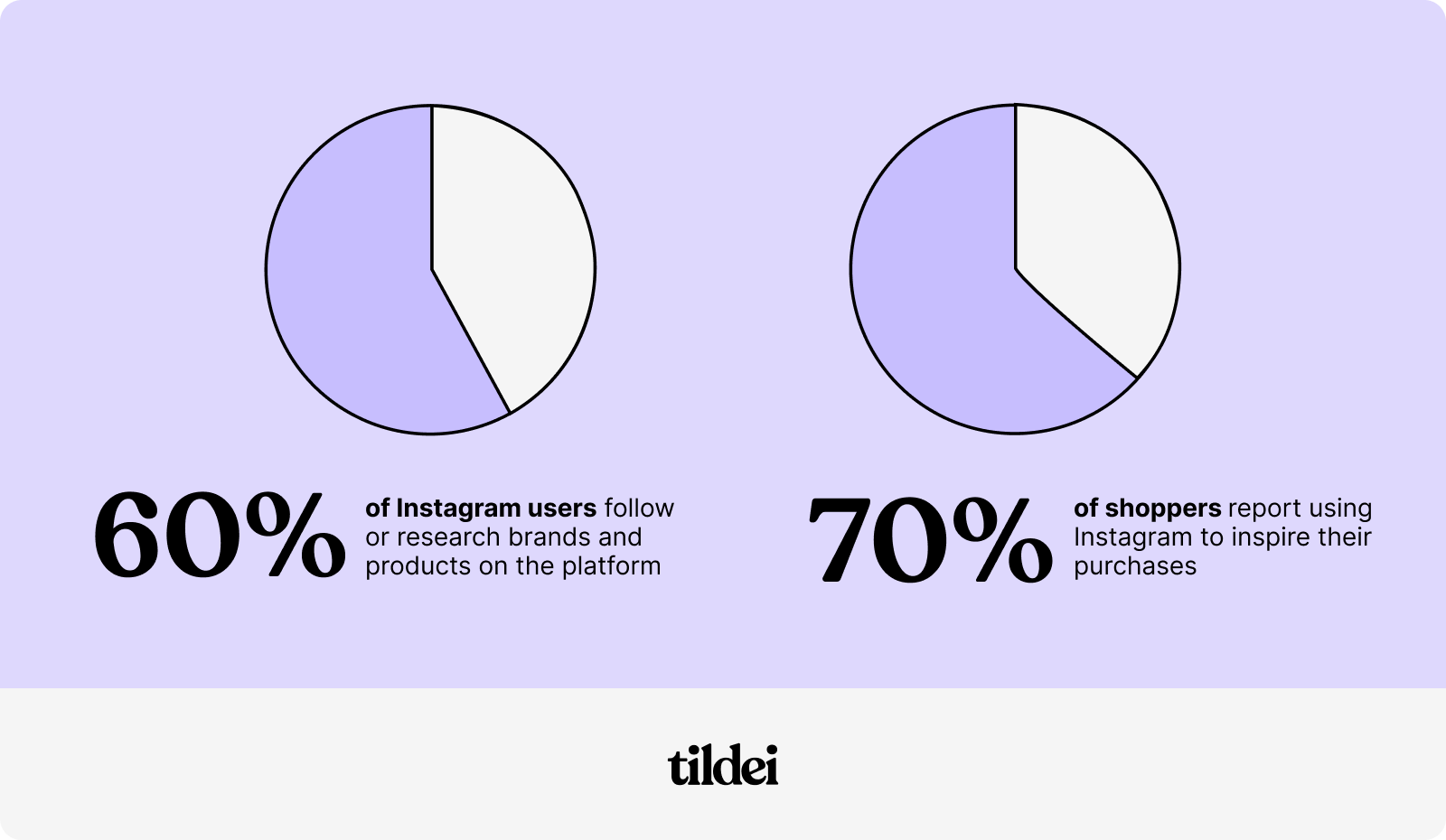
More than 60% of Instagram users follow or research brands and products on the platform, and 70% of shoppers report using Instagram to inspire their purchases. These statistics show a strong connection between consumer behavior and Instagram engagement—and Instagram DMs allow businesses to capitalize on that connection. Follow these rules and your business is bound to grow!
What you need to know to market in Instagram DMs
Tildei Emerges from Stealth with $6 Million in Seed Funding to Revolutionize Conversational Marketing in Instagram and WhatsApp
NEW YORK, October 2024 — Tildei, a pioneering conversational marketing platform, today announced its emergence from stealth with $6 million in seed funding. The company aims to transform how brands interact with customers in social channels like Instagram and WhatsApp by leveraging artificial intelligence to enable personalized, intelligent conversations at scale. Susa Ventures led the round with participation from Ludlow Ventures, Gradient Ventures, Lerer Hippeau, Vine Ventures, MXV Capital, Marcelo Claure, Jason Lemkin, and other angel investors. The company was incubated out of MXV Capital, a NYC based early stage fund.
Tildei will use the funding to further develop the platform's AI capabilities, expand its channel support, and grow the team.
In an era where consumers increasingly prefer chat and social apps for communication, Tildei offers a paradigm shift from traditional mass messaging marketing approaches. The platform empowers brands to engage in real-time and context-aware conversations with customers which can range from answering basic queries to assisting with purchases. According to a study by eMarketer, in 2023, consumers spent an average of 151 minutes a day in social and chat apps like Instagram, TikTok, and WhatsApp. Tildei's vision is to meet consumers in their platform of choice and power conversations where they are happening.
Tildei was founded by marketing technology industry veterans Mark Ghermezian, Kevin Dutra, and Manisha Shah. Ghermezian was the co-founder and founding CEO of Braze (BRZE), a lifecycle marketing platform that IPO'd in November 2021. Dutra and Shah were founding team members at Rebel, which was acquired by Salesforce in 2018.
“The proliferation of LLMs could not have come at a better time. Today's customers expect personalized, immediate interactions. But that’s out of reach for the average brand," said Ghermezian, co-founder and CEO of Tildei. “Our platform bridges the gap between this expectation and the limitations of current marketing tools, allowing brands to connect directly with their customers in social channels like Instagram and WhatsApp.”
The first channels supported by Tildei’s AI conversational platform are Instagram and WhatsApp, leveraging their respective 2 and 3 billion global active users. The company plans to add additional social channels this year, quickly expanding to help brands engage with customers wherever they are. The AI powered platform understands both a brand’s voice and the nuances of each channel so that marketers can take advantage of templates, quick replies, and other features for the best experience regardless of what social app is hosting the conversation.
"Tildei represents the future of marketing in a world dominated by chat and social apps," said Chad Byers, co-founder and General Partner at Susa Ventures. "What impressed us most about Tildei is not just their innovative approach to conversational marketing, but also the team's deep expertise in the martech space. With their AI-driven platform, Tildei is poised to revolutionize how brands engage with customers, creating more meaningful and personalized interactions at scale. We're excited to support Tildei as they lead this shift in customer engagement."

About Tildei
Tildei enables brands to have meaningful conversations with their customers at scale. The platform makes it simple for marketers to create engaging conversations, capture data, and convert customers through truly personal interactions. Tildei was founded in 2022 and is based in New York City. For more information, visit www.tildei.com
Contact info: support@tildei.com
About Susa Ventures
Susa Ventures has been leading pre-seed and seed stage rounds since 2013. We invest $1m-$4m into software, internet and technology-enabled businesses. Each investor at Susa partners with only 2-3 startups per year, so each relationship is meaningful to us. Since inception, we’ve been partners to Robinhood (HOOD), Flexport, Viz, Stord, Human Interest, and many other unicorns, all from the seed stage.
About Gradient Ventures
Gradient Ventures has been investing at the forefront of artificial intelligence since 2017. We are led by former founders, technical experts, and domain specialists, who know how to take an idea to product-market-fit and beyond. Gradient Ventures is headquartered in the San Francisco Bay Area. For more information, visit www.gradient.com.
About Lerer Hippeau
Lerer Hippeau is an early-stage venture capital firm founded and operated in New York City. Our portfolio includes more than 400 leading enterprise and consumer businesses including Guideline, MIRROR, Blockdaemon, K Health, Allbirds, ZenBusiness, and Thrive. We're experienced operators who invest early and stay in our founders' corners as they build iconic companies. Learn more at lererhippeau.com.
About MXV Capital
m]x[v Capital is a New York-based early-stage venture capital firm dedicated to funding and founding the future of B2B enterprise SaaS. m]x[v brings a founder and operator perspective to the table, providing hands-on support to help early-stage companies successfully launch, scale, and grow their businesses. For more information, visit www.mxv.vc.
Tildei emerges from Stealth with $6 million in seed funding.

As co-founders, Kevin Dutra, Manisha Shah, and I share a key commonality: we believe marketers and customers have the best experiences when there’s real connection. Before Tildei, Kevin and Manisha were pioneering the email inbox as the ultimate landing page through interactivity at Rebel and Salesforce, while I was exploring the importance of a multi-channel platform that seamlessly manages engagement at Braze. Both our previous innovations changed the way marketers and customers interact by breaking down communication silos.
The modern customer is savvy, expects a certain level of personalization, and is burnt out from hollow attention grabbing marketing stunts. The modern marketer understands that success is about keeping the relationship with their customer alive, relevant, and timely. It’s about building connections through nuanced customer interactions rather than relying on one-way, mass communication, or triggered events in a journey flow. Through our collective insights, we recognize that creating brand experiences to meet the modern customer requires a different approach. Tildei was born from the idea that marketers need a best-in-class platform for building experiences on conversational channels.
AI and LLMs are baked into Tildei's DNA, allowing the platform to immediately understand our customers' voice, goal, and values. Marketers can devise campaigns that turn conversational channels like WhatsApp and Instagram DMs into personal shoppers, a concierge, or bespoke guide that tailors customer experiences at scale—without building out complicated journey flows. The foundation of Tildei is twofold: Elevate the marketer to empower the customer. By seamlessly integrating with your brand's universe—from websites and product catalogs to CRM data - Tildei becomes a digital embodiment of your brand, capable of engaging in meaningful, impactful conversations that authentically reflect your unique identity and values.
It’s been an enthralling ride so far, and I’m thrilled that Tildei has officially emerged from stealth with $6 million in seed funding. Our AI-driven conversational marketing platform is revolutionizing how marketers create campaigns and deepen customer relationships.
This funding round was led by Susa Ventures, with additional participation from Ludlow Ventures, Gradient Ventures, Lerer Hippeau, Vine Ventures, MXV Capital, Marcelo Claure, Jason Lemkin, Ben Lang and other esteemed angel investors.
With this funding, Tildei will further enhance its AI capabilities, expand channel support, and grow our team. The feedback from our current customers has been both positive and constructive, and we’re proud to partner with marketers who are driving innovation in their regions and industries. The future of marketing is conversational.
On that note, I want to express my deepest gratitude to our early customers, partners, and of course our investors for their belief in Tildei and our mission. We’re committed to equipping marketers with a new way of thinking about campaigns, ensuring that customers and prospects have a voice.
I invite you to reach out to me and our team to learn more about conversational marketing and how Tildei can help you connect with your customers.
We believe marketers and customers have the best experiences when there’s real connection. Tildei is the platform to bring this to life.

The Challenge: Simplifying the Purchase Process
Double, a leading Australian rug retailer, faced a common e-commerce challenge: helping customers navigate an overwhelming array of options. Their existing chat support, while functional, was underutilized, tied to their website, and often forgotten mid-conversation. Double needed a solution to guide customers effectively towards purchase and boost conversions.
The Solution: Tildei's Interactive Stylist
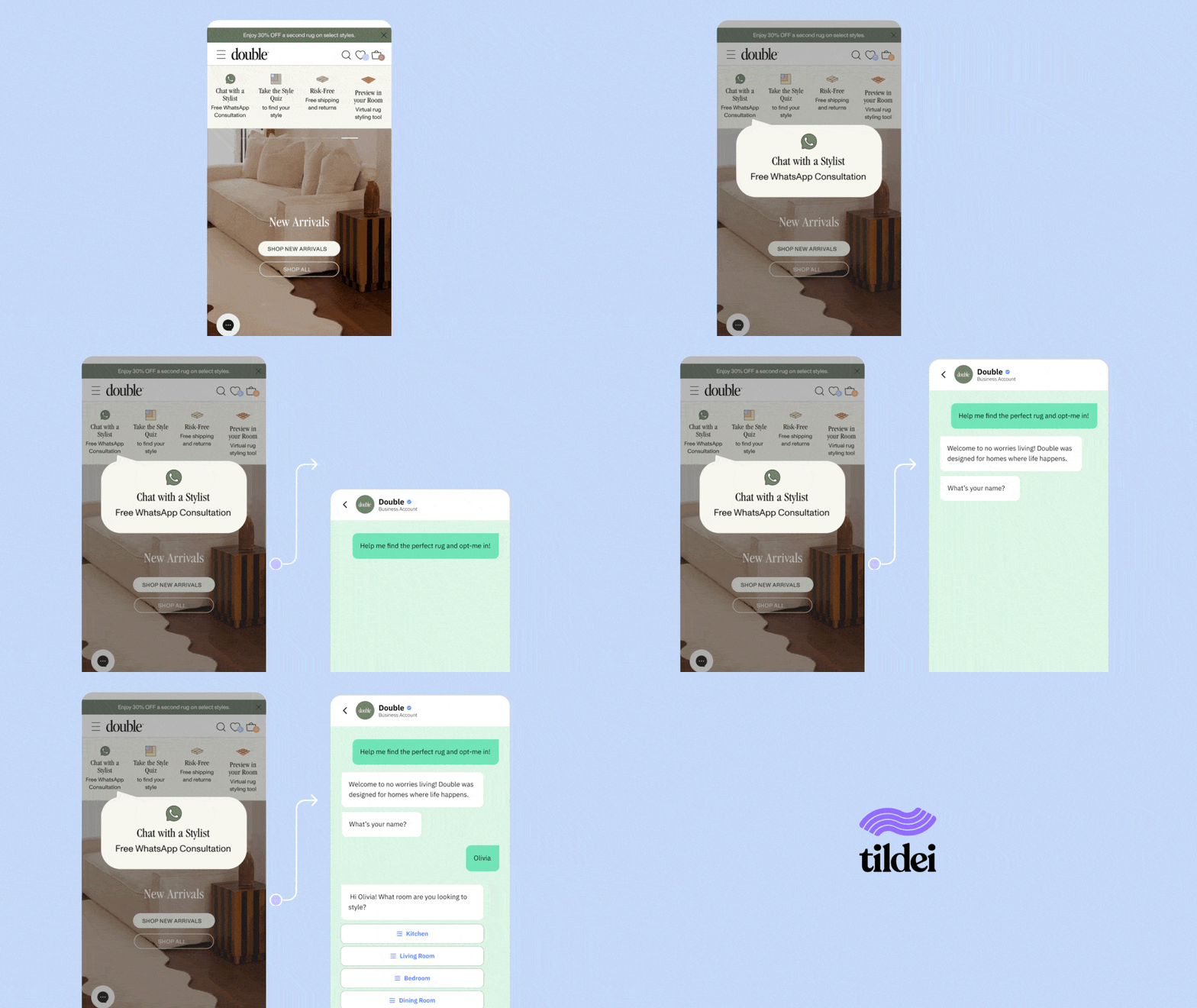
Enter Tildei's conversational marketing platform. Double reimagined their customer experience by moving the marketing campaign out from their support chat and onto an engaging, WhatsApp-powered conversational interface. This approach allowed customers to:
- Share their preferences through natural dialogue
- Send Double photos and videos of their space right from their phone
- Receive personalized recommendations from Double’s stylist
The reimagined quiz feels more like consulting a personal stylist than completing a stale form. By moving the experience to WhatsApp, customers could continue their journey on-the-go with mobile marketing, enhancing engagement.
Implementation: Seamless and Visible
Double prominently featured a "Chat with a Stylist" button on their homepage, making the new experience highly accessible. Tildei's no-code setup allowed for easy integration, empowering Double’s marketing team to implement the solution effortlessly.
Impressive Results: Engagement and Sales Soar
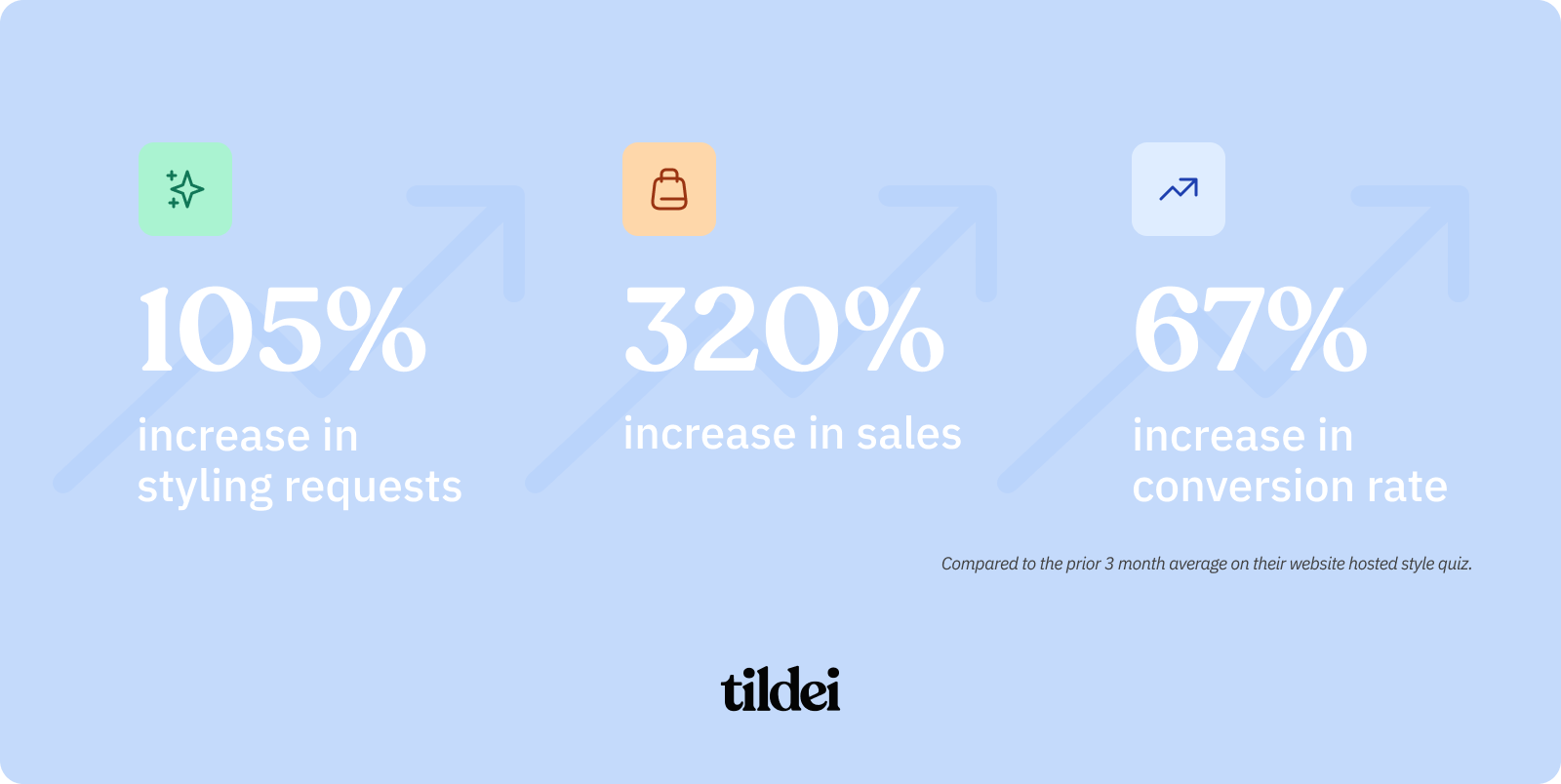
The impact of Tildei's solution was significant:
Importantly, these conversations generated valuable opt-ins to be used in future marketing campaigns, allowing Double to nurture customer relationships well beyond the initial interaction.
Notably, these results were achieved without tying the quiz to any specific promotion. The organic boost in engagement and sales showcases the power of Tildei’s personalized, conversational marketing solution.
Data-Driven Insights and Ongoing Engagement
Beyond immediate sales, Double gained valuable customer data and opt-ins. This information not only fueled real-time conversions but also provided insights for future marketing strategies across their marketing stack. The opt-ins created a pipeline for ongoing customer engagement, enabling Double to continue the conversation and drive repeat business over time.
Building Customer Relationships
The new conversational style finder served as a powerful tool for guiding customers through the rug selection process. The interactive nature of the quiz fostered positive sentiment and subscriber growth. With the partnership of Tildei, Double created a more relaxed and engaging experience for their customers; this approach not only helped customers find the perfect rug but also fostered a deeper connection with the brand, driving brand loyalty.
Future-Proofing the Customer Experience
The success of this initial campaign has laid a strong foundation for Double to continue growing relationships with their customers. The wealth of data collected through these interactions, including preferences and room images, will enable further refinement of offerings and marketing approaches. Double will use the data gathered from this quiz information to tailor future conversations effectively.
Interested in driving sales through the power of conversation? Get started with Tildei today.
Boost your sales and engagement with Tildei's AI-powered conversational platform, offering personalized recommendations and turning chats into marketing gold!

The holiday season is a busy time. It’s filled with shopping for gifts, spending time with family and friends, and taking part in holiday traditions. Most consumers don’t have a minute to spare, let alone time to sit down and search for holiday experiences that they’d rather just be, well, experiencing. American Dream used WhatsApp conversations powered by Tildei to guide their customers in discovering and booking the best holiday experiences yet.
American Dream — a center for fashion, food, family, and fun — is not only a place to find the perfect item, but also a place where visitors can ride a rollercoaster, glide down a water slide, and ski groomed slopes all under one roof. American Dream customers expect mind-blowing experiences, and 2023’s Holiday Dreamland was the opportunity to craft the perfect holiday getaway. The challenge was, how do they make it easy for their customers to discover all of the fun they had on offer?
Driving Event Awareness: Meta Ad
For similar events in the past, American Dream used Meta Ads to reach their target audience. A click on the ad would direct the customer to an event landing page or individual booking and events pages. The American Dream team wanted to elevate the experience and provide personalized information. They were in search of a tool that would continue the conversation, foster engagement, and make life easier for their customers versus just linking them out to a landing page.
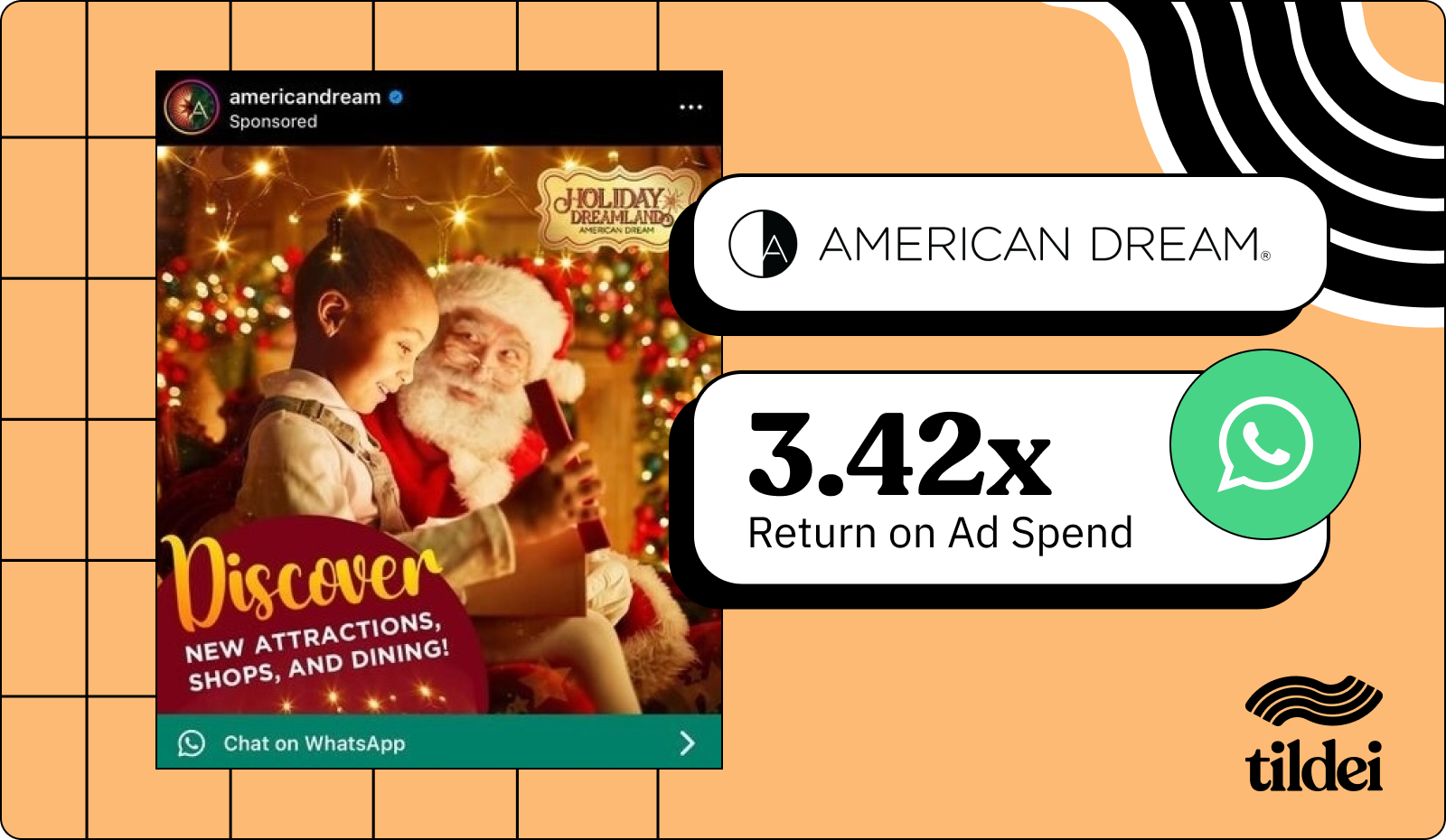
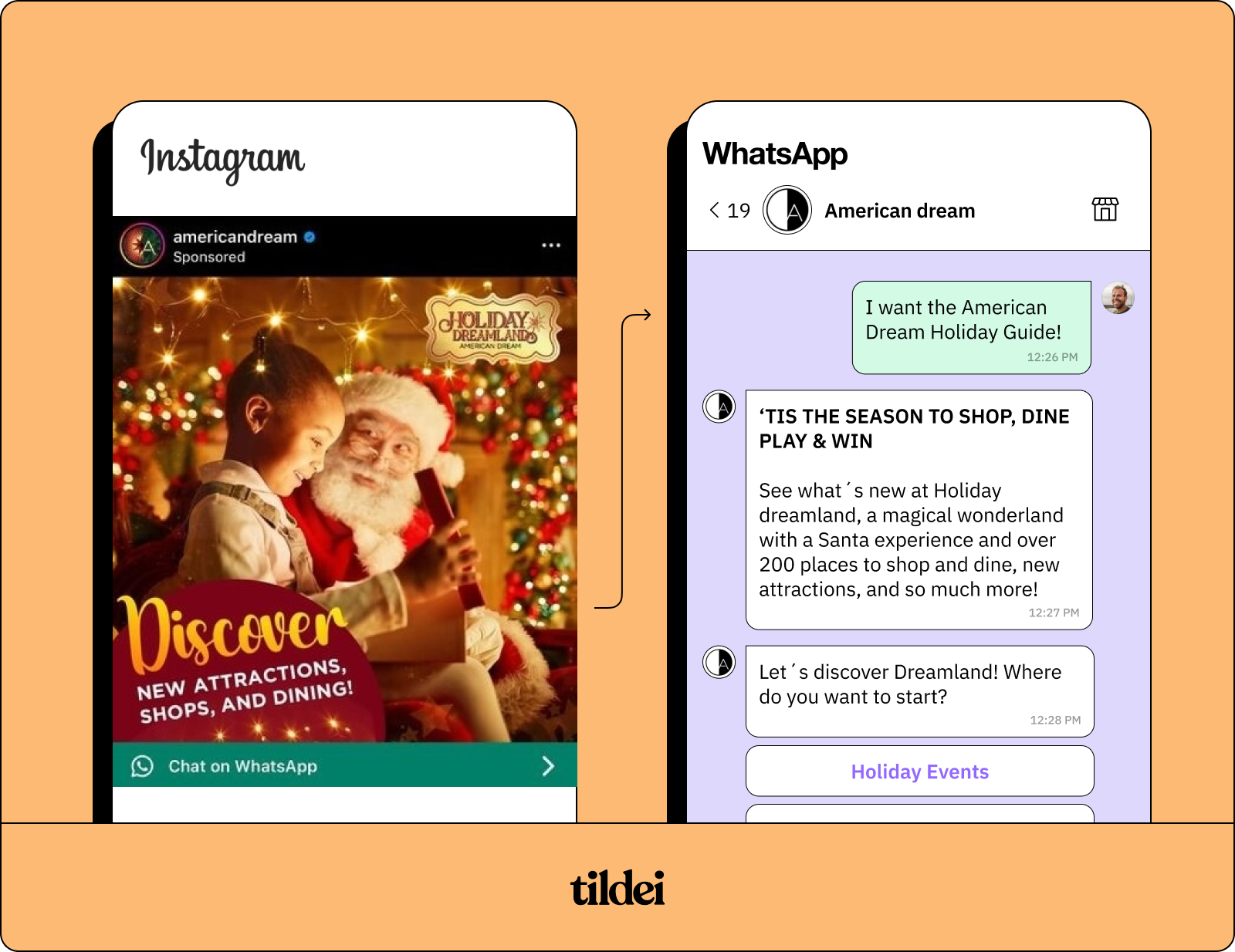
That’s where American Dream turned to WhatsApp marketing with the help of Tildei. By launching their WhatsApp channel and leveraging the ‘Send Message’ action from the Meta Ad, American Dream was able to use a single ad to target a broader audience and build the deeper connections they sought. Instead of the ad opening a new page, the ad now led directly to a 1:1 automated conversation for the customer to learn more about the holiday experiences.
Boosting Engagement and Supporting Discovery: WhatsApp Conversation
The primary goal of the campaign was to take the stress out of the holiday season and make it easier for their customers to plan meaningful holiday experiences using the American Dream Holiday Guide. The conversation allowed customers to choose their own adventure by giving them three main categories from which to select: Holiday events, shop and dine, and entertainment.
Within each of the three main categories, they included additional areas to explore from photos with Santa to finding the perfect restaurant. Based on the unique customer’s area of interest, the automated conversation shared a link directly to that landing page on the American Dream website.
Growing Conversions: Tickets sold
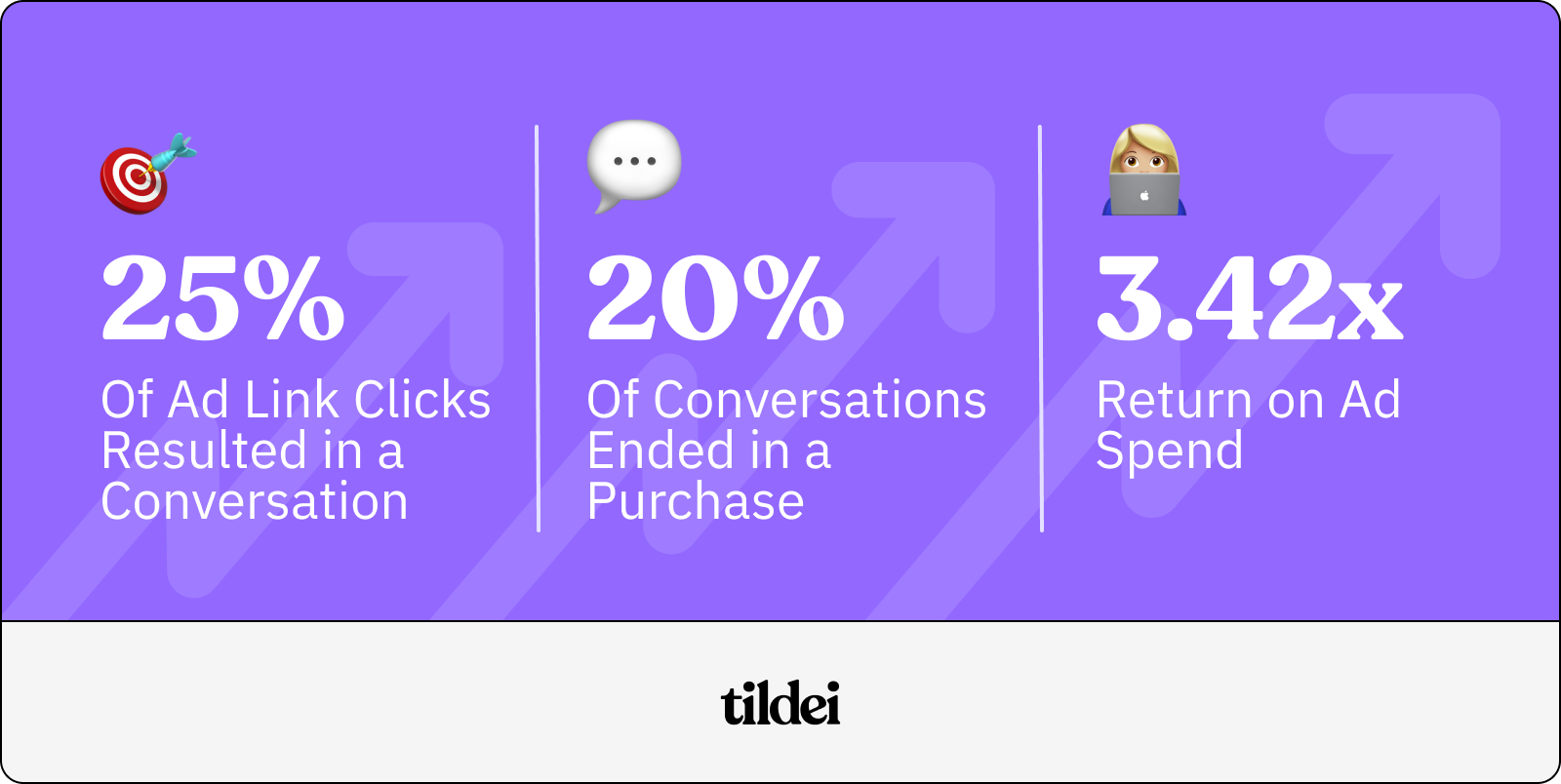
This was American Dream’s first foray into WhatsApp marketing. As an exploratory campaign, their main goal was to drive awareness for their events. They were quickly surprised to find that not only did their customers engage in conversations, but they also went on to book experiences: 1 in 5 conversations started, resulted in a purchase.
Higher Conversions Through Conversational Messaging
The American Dream Holiday Guide on WhatsApp served as a single source for relevant event information and ticket booking for their customers. The conversational style of WhatsApp marketing was a perfect fit for event discovery. Customers communicated with American Dream similarly to how they interact with their family and friends. The conversation provided a relaxed dialogue where they could explore the American Dream holiday offering in their own time and in their own way.
The initial campaign has set the foundations for growing deeper relationships with those who started conversations and has inspired American Dream to test new WhatsApp campaigns in the future.
Interested in getting more return from your Meta ad spend? Get started with Tildei today.
A choose your own adventure guide to holiday fun that converts!
For so long marketers have been chasing the elusive right message to the right person at the right time, and today’s technology gets you pretty darn close. But being a marketer also means staying ahead of your customers’ wants and needs, and personalized isn’t the same as personal. Today, 80% of consumers want brands to offer a conversational channel and 77% want to use messaging to get help in their initial buying stages. Consumers want it, brands want to meet them there, and now, we can make it happen.
We’re excited about conversational marketing. It’s at the forefront of bringing customers and brands closer together. True 2-way communication is what builds relationships, and it’s a future that’s no longer difficult to imagine. Here at Tildei, whenever we receive emails or SMS messages, we turn those campaigns into conversations. Today, we’re sharing those conversation ideas with you.
Now let’s reimagine these campaigns as if they were conversations:
Suggesting the right gear based on your court of choice / Guiding the product search
Asics has the right gear for the right sport. With pickleball being America’s fastest growing sport, it’s important for their active customers to know that Asics supports them on any court. This kind of message not only drives awareness to other product categories, but it can also be used for progressive profiling and tuning into the specific interests of customers.
Subject line: Total support on any court 🏸
.gif)
Building engagement and intrigue into onboarding
Email isn’t the only channel that we reimagine as conversations. SMS messages as well can become more dynamic and interactive when moved into WhatsApp. From the outset, when a customer first signs up to receive messages from you brand, it’s a chance to show them how fun the experience can be. Instead of only saying hi nice to meet you, use the first message as an opportunity for them to get something in return. In this first interaction, leverage the more interactive components available to you in WhatsApp and share videos of the product, send store locations, or at the very least ask them a little about themselves.
.gif)
A Beauty Quiz to Recommend the Best Routine / A quiz
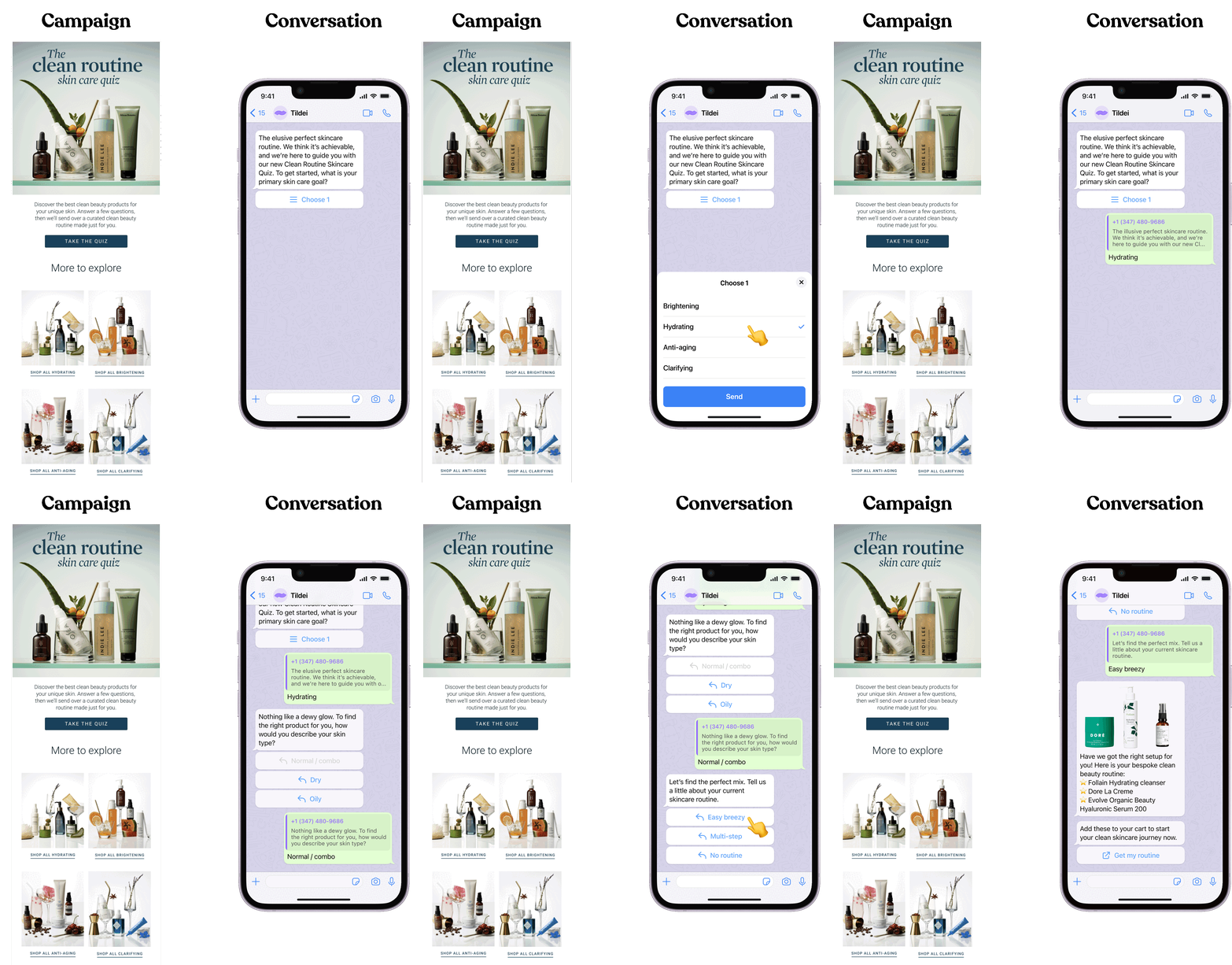
For customers, quizzes help narrow down the right products, make sense of the latest trends, and fill in when speaking with someone directly isn’t an option. For brands, quizzes provide an organic opportunity to learn more about their customers and begin to capture data points, specifically conversational data. And what better way to learn about someone than through a conversation? Moving a quiz to WhatsApp reduces friction and increases completion, staying in one channel versus jumping from email to web to complete. So what if we turned this quiz into the type of conversation it’s trying to mimic?
Subject line: Meet our new Clean Routine Skin Care Quiz
Simplifying the review process
Is it even possible to make a purchase or a reservation or a decision without reading a review? The majority of the decision-making process happens online so reviews provide the information needed to make an informed decision. To make the review ecosystem work, we too have to leave reviews from time to time. It’s not always the easiest process to leave a review though, so we’re turning to WhatsApp to remove friction. What does it look like if reviews became a conversation?
Subject line: Write a review for Robert
.gif)
Reinventing the newsletter
Newsletters can be long and include a lot of information your readers might not always find relevant to their specific needs or situations. Usually in email, the big debate is about what to put above the fold. But what if we let each individual customer decide what they see first and remove the fold all together? An interactive newsletter enables you to shorten your message and only show the required information relevant to the reader. The options your reader selects can be stored and used for future personalization.
Subject Line: Investing Insights for August
.gif)
What does a marketing conversation even look like? Let's take a look at 5 great campaigns reimagined as 5 even greater conversations.
Over the last 20 years we have witnessed 2 major shifts in marketing. We are now on the precipice of a 3rd.
20 years ago a slew of amazing marketing platforms emerged. They centered on reaching people where they were - the email inbox. The technology has inched itself closer and closer to the truly one-to-one content. The personalization we dreamt of 20 years ago in now in your customer’s inboxes, even being personalized to the second the email is opened.
10 years ago we saw a second shift. In 2007 Apple released the iPhone and changed the world. We were still in our inboxes, but we were no longer tied to our computers. We took our inboxes with us everywhere, and our phones didn’t stop at email. Smartphones, combined with native apps, real time GPS and more, made channels like SMS, push and in-app messaging ubiquitous. The customer journey morphed into a fragmented experience. Now brands had to find ways to communicate across smartphones, tablets, watches, and TVs, in addition to the traditional places like our computers. A new set of marketing platforms emerged to help brands meet customers where we now were - on our phones, and on-the-go.
Today, we are on the cusp of another shift. 80% of customers report that they want to talk to brands in a chat or social app. AI technology like Chat-GPT has captured our imaginations and spurred 1000’s of new companies that are testing the limits of what is possible. Brands are being challenged to have real conversations with their customers. They are being asked to send more than a highly personalized message. They are being asked to talk to customers in a genuine, authentic way.
But what does that even mean? What does it look like, or better yet…what could it look like?
Today, most conversations are simply support requests that have moved from email to web chat or SMS; tracking order status, checking product inventory, or technical support. By now we have all had this experience. And its great! I would guess most of us prefer it to waiting on hold and answering telephone prompts!
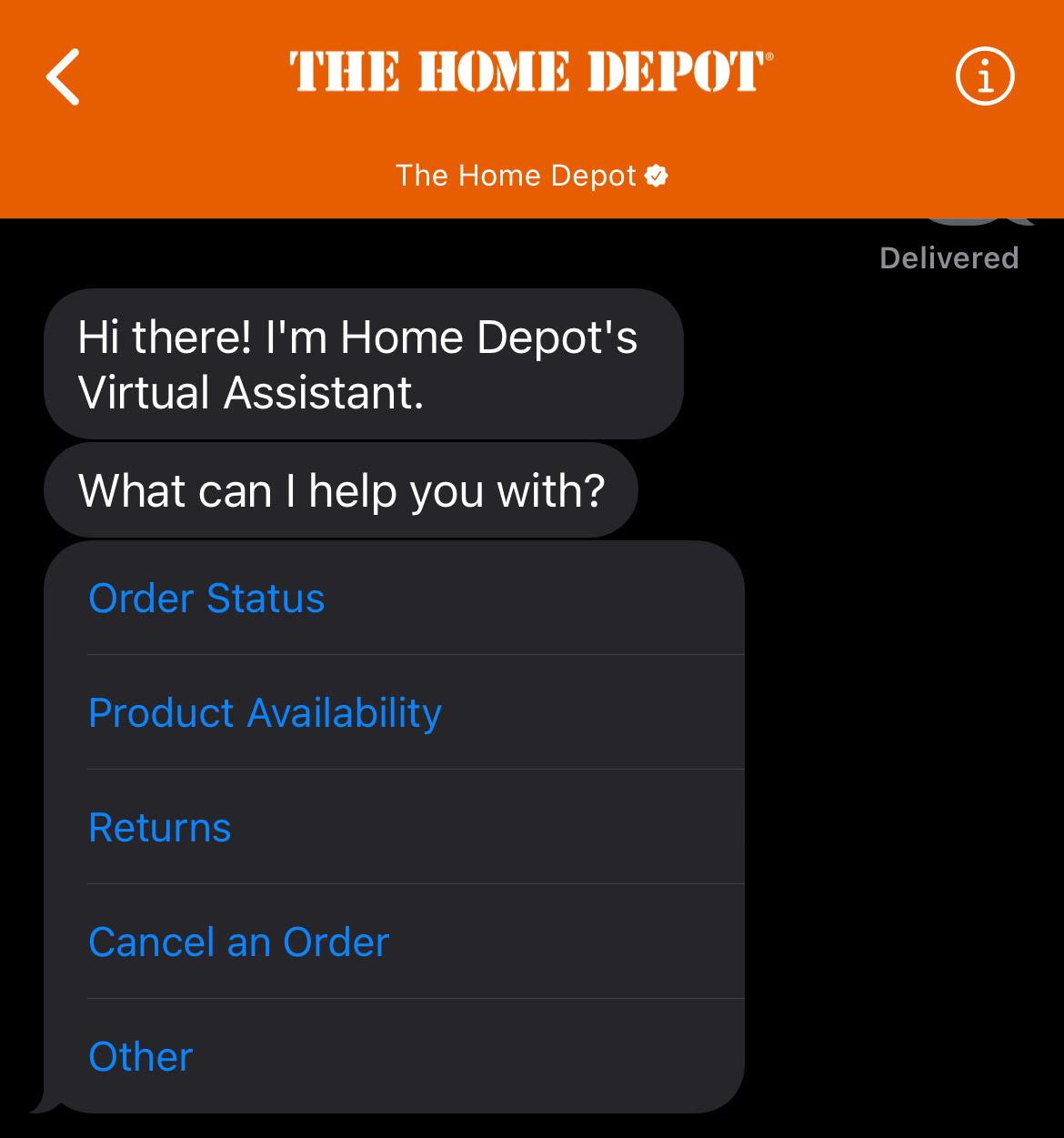
We love this experience. And we think this is just barely scratching the surface. A conversation is more than a transactional exchange - I send my order # and you send me a tracking link. A conversation is an opportunity to develop a genuine relationship. Each one is a chance to tell the other side who you are, what is important to you, and what you stand for.
So what could it look like instead? Imagine this. Your favorite shoe brand invites you to sign up for their newsletter. You scan a QR code on your phone, and WhatsApp opens with a pre-populated message. You hit send, and instantly get a response thanking you and asking you about yourself. Do you hike, run, walk or commute? You reply that you are a hiker and they ask you what kind of hiking you do. Within seconds you have a link to customer favorites that match your needs.

This is more than a promotion and it's more than a service exchange.
THIS is a true conversation. It's the future of marketing, and it's just the beginning. Stay tuned.
Over the last 20 years we have witnessed 2 major shifts in marketing. We are now on the cusp of a 3rd.