The Post-Visit Window: How to Turn Every Appointment Into the Next One

The appointment is over, and the guest loved it. They tipped well, said "see you next time", and walked out the door.
And then nothing. Time passes by, and the customer doesn’t return; they go somewhere else, not because they were unhappy, but because you weren't in the conversation when it mattered.
This is the post-visit window: the period right after a customer leaves, where loyalty is either built or quietly lost. Businesses growing their customer lifetime value treat the post-visit window as the most important marketing opportunity they have.
Where this fits in the booking lifecycle
The post-visit window sits at the end of one appointment cycle and the beginning of the next:
Booked → Pre-Visit → Service → Post-Visit → Rebook → Repeat
Everything before the visit has gotten significant attention: confirmation emails, reminder texts, and intake forms. But the post-visit stage, the window immediately after the guest leaves, is at the highest risk and biggest opportunity to build an exceptional customer experience. And it covers more than just rebooking. Done well, it's a sequence of distinct conversations, each with a different job.
The post-visit sequence: four conversations that build lifetime value
Moment 1: The Product Follow-Up (same day or next day)
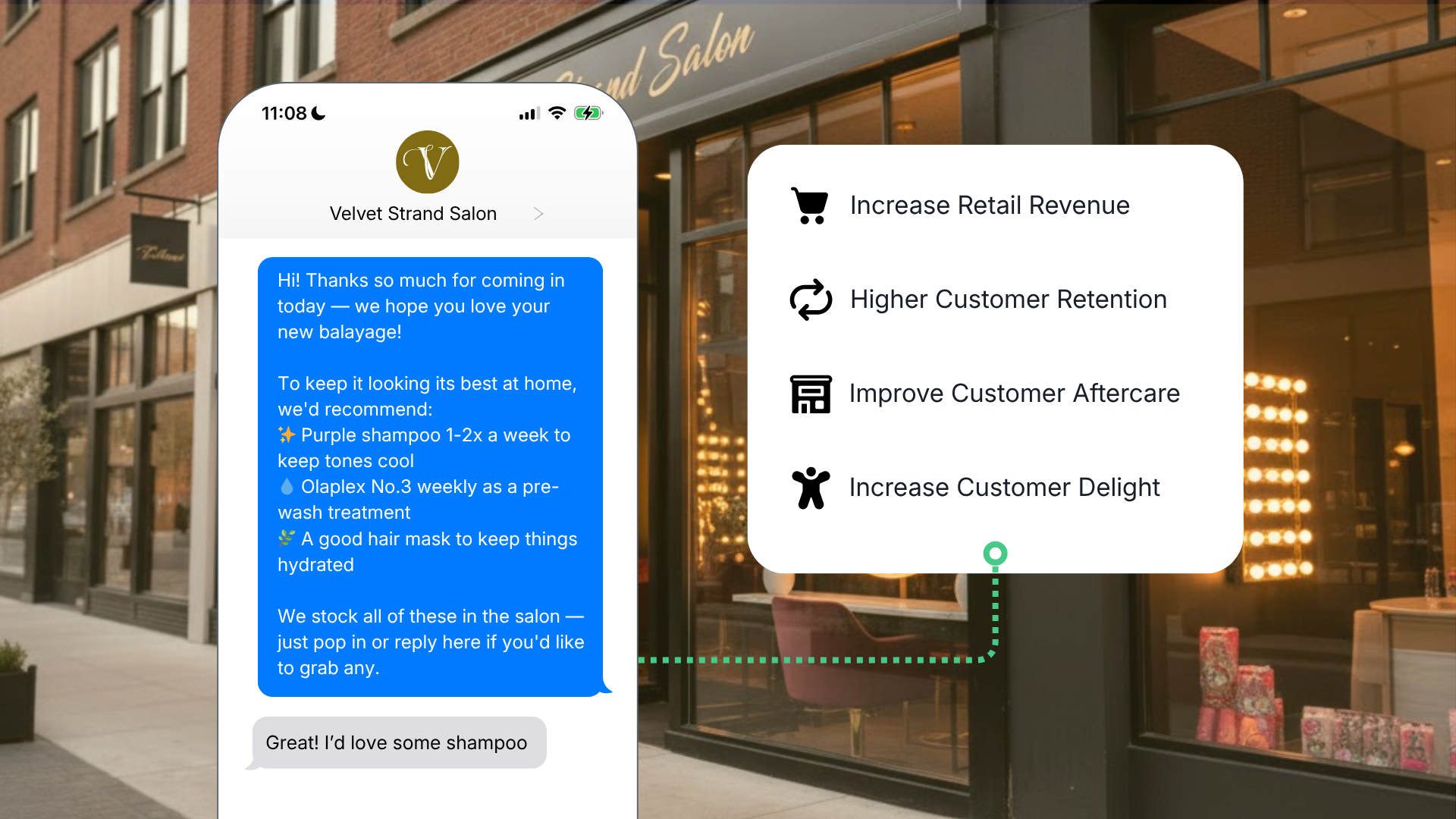
A guest just got a balayage. Their stylist used three specific products during the service. The guest loved the result and would genuinely buy those products; it’s an ideal opportunity to tell them what they were and make it as simple as possible for them to make a purchase.
Most of the time, this is a missed opportunity. The stylist mentioned it chair-side, the guest nodded, and by the time they got home, they'd forgotten the brand name. The front desk didn't bring it up at checkout, so the sale didn't happen.
The post-visit product follow-up fixes this without putting the burden on your staff. The day of or after the appointment, the agent sends a message: “Here are the products your stylist used today, and here's how to recreate the look at home. You can purchase the products here.”
This isn't a simple sales push; used correctly, it's a useful extension of the service itself. Stylists are experts and don’t always have time to act as the salesperson, and this framing keeps it that way. The agent does the follow-through that your stylists don't have time to do themselves.
The same logic applies beyond beauty:
- A spa treatment recommends products that the guest could use at home.
- A tour operator has gear, add-ons, or related experiences worth surfacing.
In every case, the moment right after the service is when the customer's interest is highest.
Moment 2: The Review Ask (24–48 hours after)
Reviews drive discovery, especially on Google, where they influence search ranking and first impressions. But many businesses either don't have the means to ask, ask at the wrong time, or ask in a way that gets ignored.
Asking at checkout is too early. The guest is still processing, gathering their things, and managing payment, but asking via email days later gets buried. The sweet spot is 24 to 48 hours after the appointment, when the experience is fresh, but the guest has had time to settle.
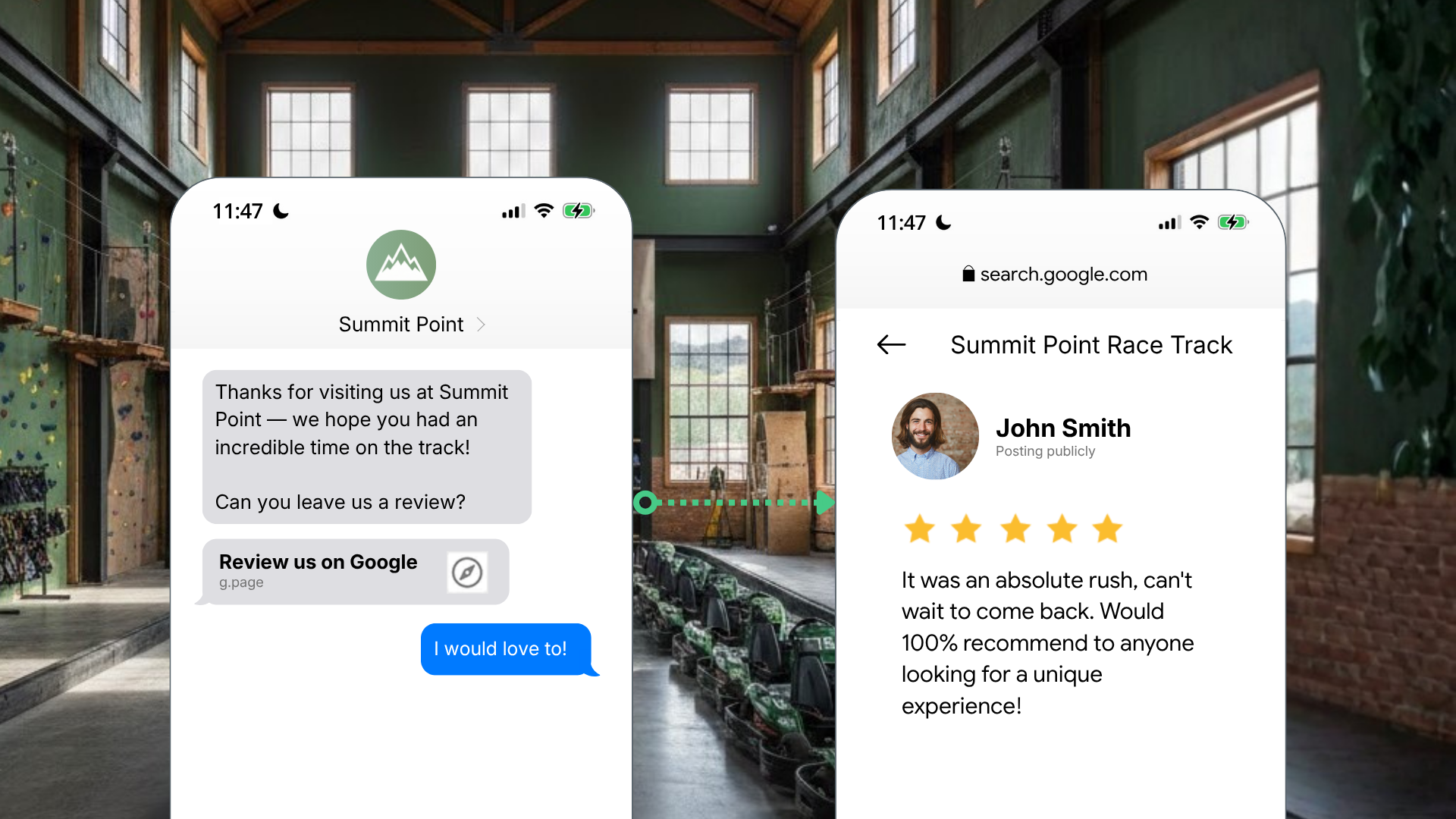
A short, conversational message: "Hope you loved your visit! If you have a moment, a quick Google review would mean a lot to us." Paired with a direct link outperforms anything more elaborate. The brevity respects the customer's time, and the timing catches them while their visit is still fresh in their minds.
A review request is exactly the kind of follow-up that is valuable and consistent in theory, but can be manual and forgettable in practice. An agent handles it automatically, for every customer, every time.
Moment 3: The Service Upsell (timely, not generic)
Not every customer who books a haircut knows what else your business offers. Not every spa guest who comes in for a massage knows about the facial package. Post-visit is a natural moment to introduce services that complement what the customer just experienced, because you now have the context and preferences of your customer that you didn't have before.
A generic "check out our other services" email is easy to ignore. A customized message that says "You came in for a color last month and we just launched a glossing treatment that a lot of our color clients have been loving." is a different conversation. It's relevant, it's personal, and it's based on what the customer actually did.
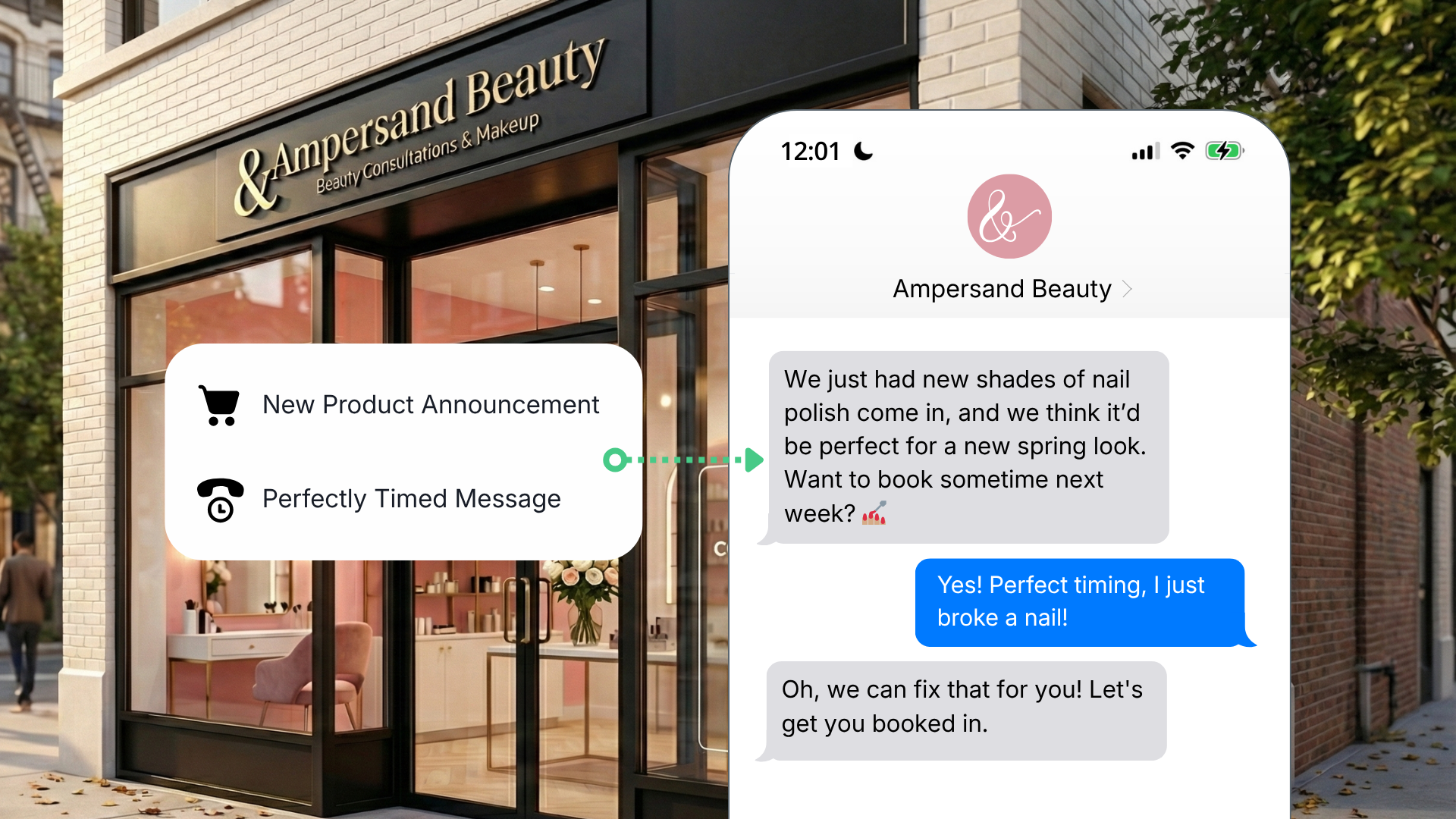
This is also where new service or product launches live. Existing customers who already trust you are the best audience for anything new. The post-visit window gives you a natural reason to reach out that doesn't feel like a blast campaign.
Moment 4: The Rebooking Conversation (service-window timed)
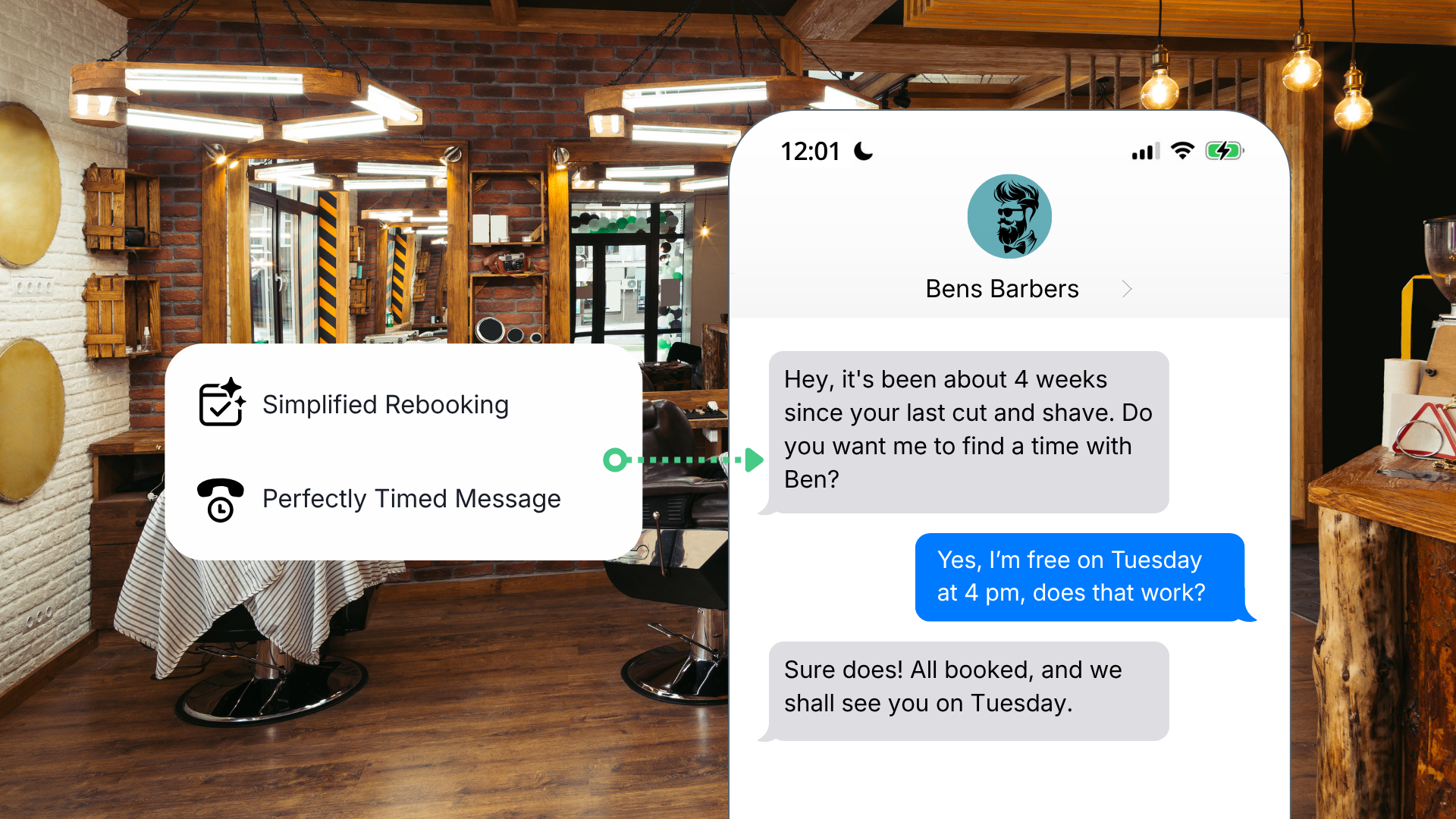
Rebooking is the most familiar piece of the post-visit sequence, but it's still the most commonly dropped. Asking at checkout puts the guest on the spot. A generic "we miss you" email sent 90 days later is too late and too impersonal. What actually works is reaching out at the right moment, based on the service they received, not a fixed campaign schedule.
You can estimate when your customers should be revisiting for their next booking:
- A short-cut client needs to come back in 4 weeks. A long-cut client in 8–12.
- A nail gel manicure client in 2-3.
- A guest who attended a seasonal tour event has a natural window the following year.
The timing isn't a guess; it's built into the service itself.
When outreach arrives at the right moment, with the right context: "Hey, it's been about 6 weeks since your last color, want me to find a time with Jen?" Rebooking becomes a one-reply decision instead of a multi-step research project. The customer doesn't have to remember, and your stylist or service provider doesn't have to make an awkward ask.
Why doesn't this happen consistently today?
Every one of these conversations is valuable, and every operator knows they should be happening. They often don’t happen reliably at scale because they all require someone to remember, initiate, and follow through for every customer, at the right time, with the right message.
Stylists are busy behind the chair, and front desk teams are managing check-in, checkout, and phones simultaneously. Marketing teams can send email blasts, but a blast isn't a timely, personal follow-up; it's the same message to everyone, on a fixed cadence that has nothing to do with when any individual customer actually needs to hear from you.
The result: the post-visit window closes with most of the value in it being lost:
- Retail sales don't happen.
- Reviews don't get asked for.
- New services don't get surfaced.
- And rebooking happens late, inconsistently, or not at all.
What the post-visit sequence looks like with Tildei
When an agent handles this sequence, each moment can be triggered based on what that specific customer did, not just a campaign calendar.
- The product follow-up goes out the same day, tied to the services recorded in the appointment notes.
- The review ask goes 24 hours later, with a direct link.
- The upsell or new service introduction goes when it's relevant to what that customer has done before.
- The rebooking outreach goes when the timing is right for the service they received.
None of these messages are the same for every customer, and none of them requires you to remember to send them.
The result is a post-visit experience that feels like it came from a business that knows its customers and stayed in touch, because in every practical sense, it did.
What to measure
Post-visit isn't one metric; it's a sequence, and each stage has its own signal:
- Product Attachment Rate: What percentage of guests purchase a product following a post-visit recommendation?
- Review Conversion Rate: The number of guests who receive a review request, and how many complete one?
- Upsell Conversion Rate: How many guests book an additional or new service following a post-visit introduction?
- Rebook Rate within service window: What percentage of guests rebook within the natural window for their service?
- Customer Lifetime Value: What is the average revenue per customer over 12 and 24 months? The ultimate downstream indicator of how well the post-visit is working.
A guest who experiences the full sequence: product follow-up, review ask, timely upsell, well-timed rebooking prompt, is a fundamentally different customer than one who got a checkout reminder and a generic email 90 days later.
Where to start
You don't need to deploy the entire sequence at once. Simply pick the moment where you're losing the most value today.
If retail sales are the gap: Start with the product follow-up. Log what was used at the appointment and let the agent send it the same day. The customer's engagement with what they just experienced is highest in that window.
If reviews are the gap: The review ask is one of the simplest automations to deploy and one of the most visible in its impact on discovery. Start there, measure lift, and build from it.
If rebooking is the gap: Start with your highest-volume service and define the natural rebooking window. Let the agent handle outreach for that segment before expanding to others
Tildei's agents handle the full post-visit sequence: product follow-ups, review requests, service upsells, and smart rebooking, automatically, for every customer, every time. Book a demo to see it in action.
.jpg)